
Universitas Padjadjaran (Unpad) has developed a comprehensive Eco-Friendly Campus Management Policy as the foundation for sustainable campus operations. The policy, formalized under the Rector Regulation on Eco-Friendly Campus Management, promotes environmental protection, resource efficiency, and climate action in alignment with the Green Campus framework and the Sustainable Development Goals (SDGs). Its key focus areas include waste and water management, green open spaces, energy conservation, sustainable transportation, and disaster risk mitigation. The policy emphasizes integrated management based on environmental, economic, and socio-cultural balance, ensuring that all campus activities support ecological preservation and sustainability.
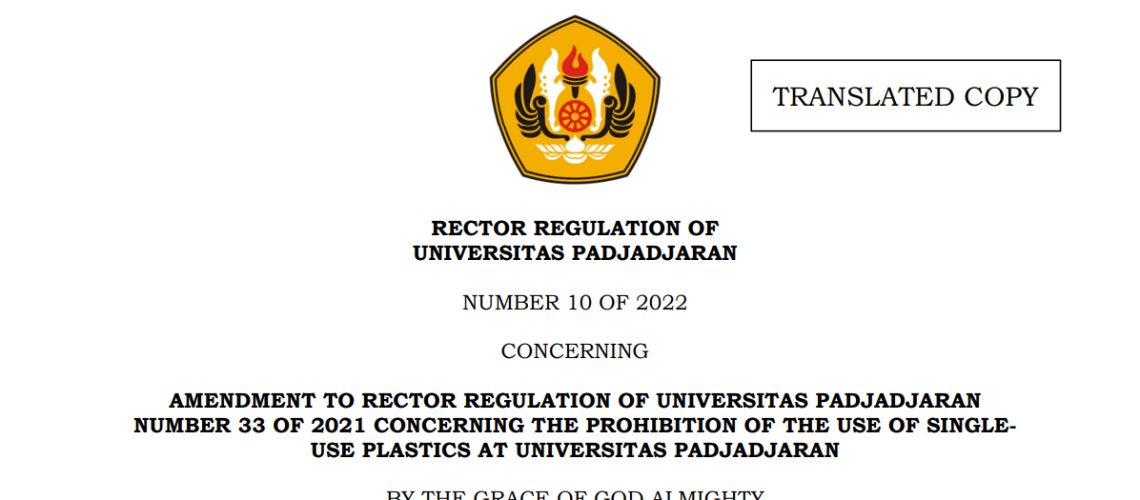
As part of this system, Unpad also enforces Rector Regulation Number 10 of 2022 concerning the Prohibition of the Use of Single-Use Plastics, reflecting a strong commitment to water-sensitive waste management. This regulation requires all work units to monitor, coordinate, and facilitate the reduction of plastic waste while promoting eco-friendly alternatives such as reusable and biodegradable materials. All staff, students, and guests are obliged to comply with and support the plastic ban across campus.
Through this integrated approach, Unpad aims to:
Prevent plastic accumulation in waterways and aquatic ecosystems.
Reduce microplastic contamination that affects biodiversity and human health.
Support the conservation of water resources through sustainable consumption habits.
Encourage community awareness and behavioral change toward environmentally responsible waste management.
These combined policies ensure that Unpad’s waste and water discharge systems are sustainable, pollution-free, and protective of ecosystems and human health, reinforcing its commitment to a clean, green, and climate-resilient campus aligned with SDG 6 (Clean Water and Sanitation), SDG 12 (Responsible Consumption and Production), and SDG 13 (Climate Action).