
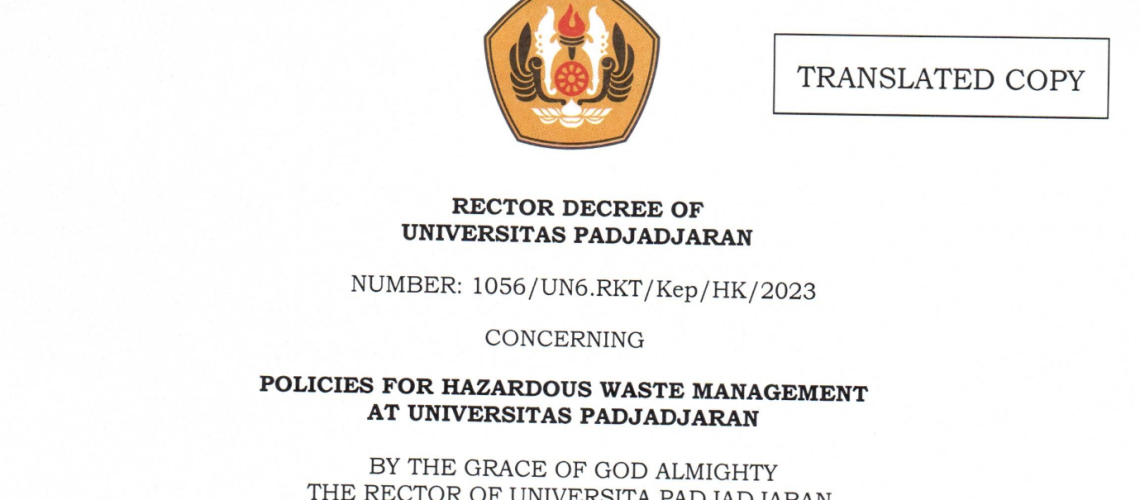
Universitas Padjadjaran (Unpad) has established a comprehensive framework for waste disposal and hazardous material management to ensure environmental protection, human health, and laboratory safety. The university follows strict guidelines aligned with national and international standards through several key regulations, including the Rector Decree Number 1056 of 2024 concerning Policies for Hazardous Waste Management, the Rector Regulation Number 3 of 2022 on Eco-Friendly Campus, and the Rector Regulation Number 14 of 2025 on Occupational Health and Safety Management System.
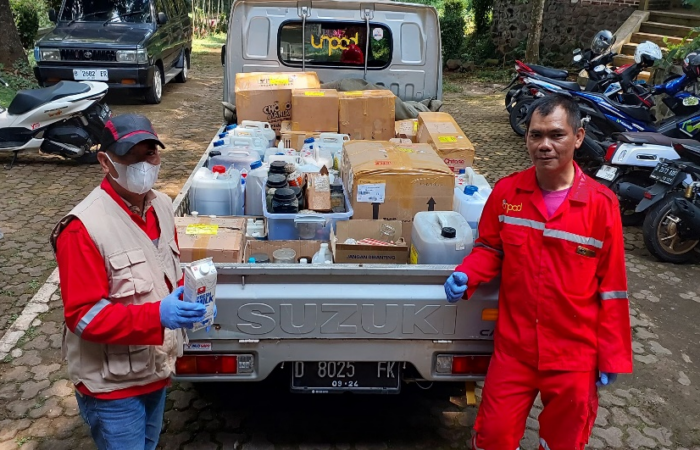
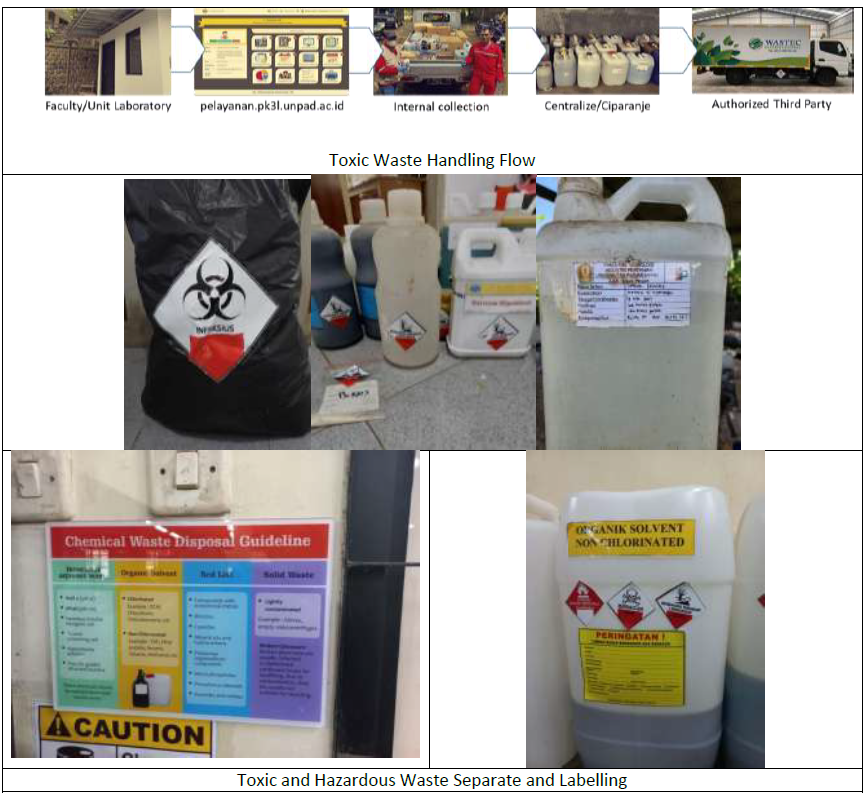
Unpad’s waste management system separates hazardous (B3) and non-hazardous waste, ensuring proper collection, labeling, transportation, and processing to prevent environmental contamination and ensure compliance with sustainability principles.
Key Procedures and Regulations
1) Central Laboratory Regulation on Hazardous Waste Management
This regulation defines procedures for the management of hazardous and toxic waste in Unpad’s Central Laboratory, which include:
Storage:
Temporary storage of hazardous (B3) waste until the volume is sufficient for transport or processing, ensuring economic and safety efficiency.Labeling:
Containers and jerry cans must be clearly labeled with the chemical name, concentration, and hazard classification. Unknown compositions must be labeled as “hazardous or unidentified chemical.”Transportation:
Hazardous waste is transported to designated storage, wastewater treatment (IPAL), or final disposal facilities if it cannot be treated on-site.Processing:
Processing activities aim to reduce or eliminate toxic and hazardous properties through techniques such as neutralization, sterilization, distillation, precipitation, stabilization, solidification, sedimentation, or incineration. Waste producers unable to process their own waste must work with certified third-party waste processors.
2) Faculty-Level Regulations and Standard Operational Procedures (S.O.P.)
At the faculty level, individual laboratories also apply S.O.P.s for safe waste handling. For example, the Food Microbiology Laboratory implements detailed procedures for handling and disposing of non-pathogenic liquid waste:
Liquid waste is poured into a designated sink for equipment washing.
Glassware containing waste is sprayed with 70% alcohol before disposal.
Solid residues or samples must be placed in sealed plastic bags and not disposed of in the sink.
Researchers must clean the sink after disposal and disinfect their hands with 70% alcohol and antiseptic soap.
https://drive.google.com/file/d/1nv9lmx0Aa3V7SorV8ZOoMa86unNWnbhX/view
https://drive.google.com/file/d/171dQcn20v0sREpcZV34iY_3Nzk2N8ZDT/view
Through these integrated regulations and operational practices, Universitas Padjadjaran ensures that hazardous waste management across all facilities is safe, traceable, and environmentally responsible. These efforts reflect Unpad’s ongoing commitment to sustainability, public health, and compliance with the Green Campus framework and Sustainable Development Goals (SDG 3 – Good Health and Well-being, SDG 6 – Clean Water and Sanitation, and SDG 12 – Responsible Consumption and Production).