
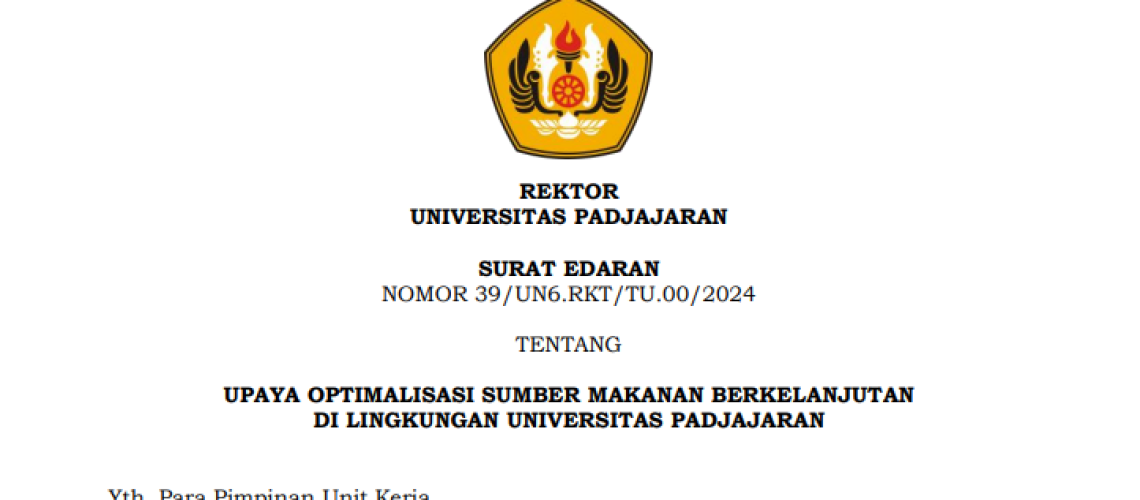
Universitas Padjadjaran (Unpad) demonstrates a strong commitment to ethical and sustainable food sourcing through the issuance of Circular Number 39/UN6.RKT/TU.00/2024 on Efforts to Optimize Sustainable Food Sources within the University Environment. This circular encourages all academic and administrative units to promote clean, healthy, and environmentally friendly canteens that provide diverse food options derived from sustainable sources. The policy ensures that food served on campus originates from organic farming and ethically managed livestock and fisheries, such as sourcing cage-free eggs and sustainably harvested fish. It also emphasizes the use of eco-friendly and safe food packaging to minimize environmental impact.
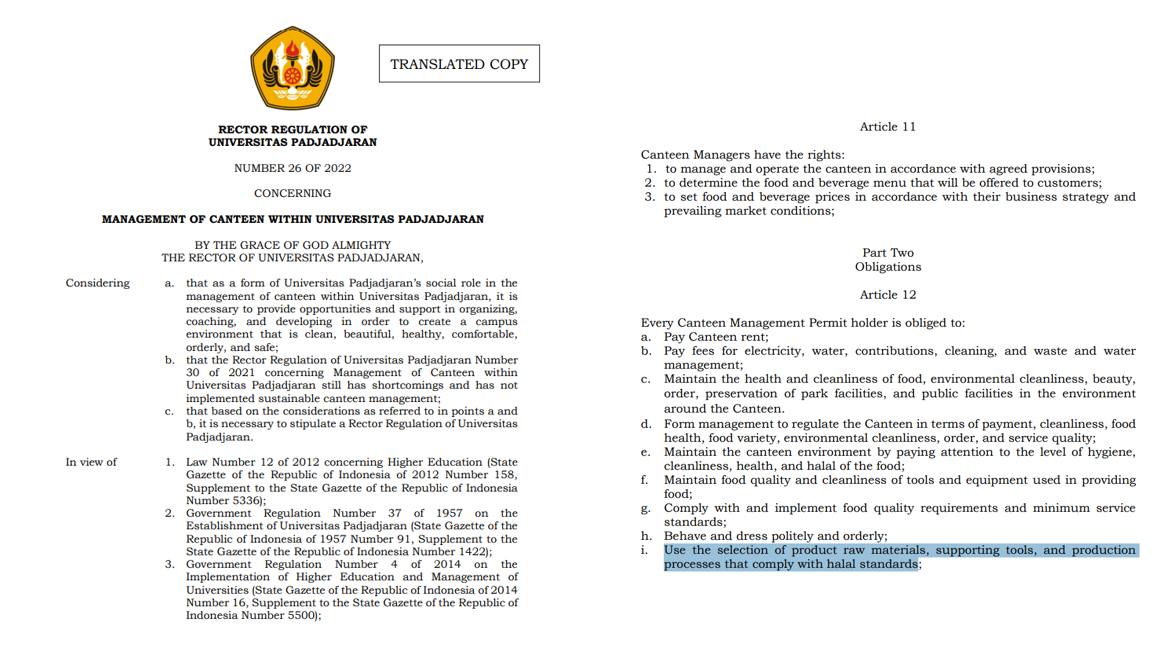
Complementing this initiative, Unpad’s Policy on Canteen Management outlines key principles, including maintaining food quality and safety, providing varied menus that accommodate dietary needs, ensuring food hygiene, and using sustainable raw materials.
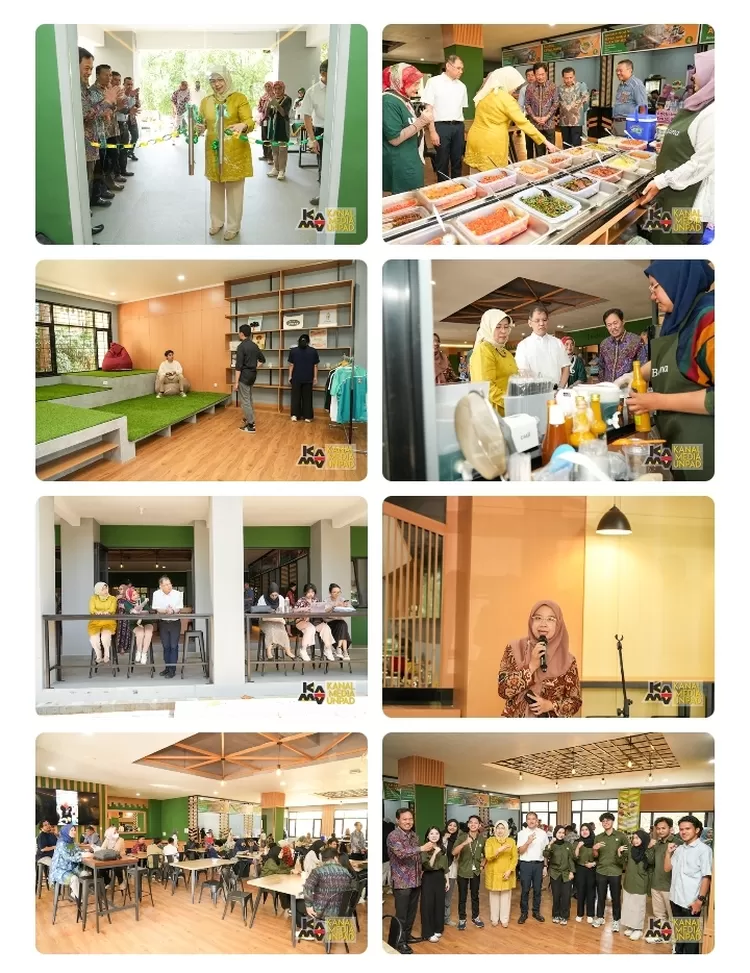
To support the consistency of these standards, several faculties have implemented a tenant selection mechanism. For example, the Faculty of Medicine conducts a food test and evaluation process to ensure only qualified and hygienic vendors operate in its canteen, as reflected in its official announcement of selected tenants.
In alignment with these principles, Unpad supports the Ministry of Cooperatives and SMEs and the West Java Provincial Government in strengthening halal product certification for micro, small, and medium enterprises (MSMEs). Through its Halal Research Center, laboratories, and certified auditors, Unpad fosters a sustainable and ethical food ecosystem that promotes responsible consumption, halal integrity, and environmental stewardship, reinforcing its alignment with SDG 2 (Zero Hunger), SDG 12 (Responsible Consumption and Production), and SDG 13 (Climate Action).