
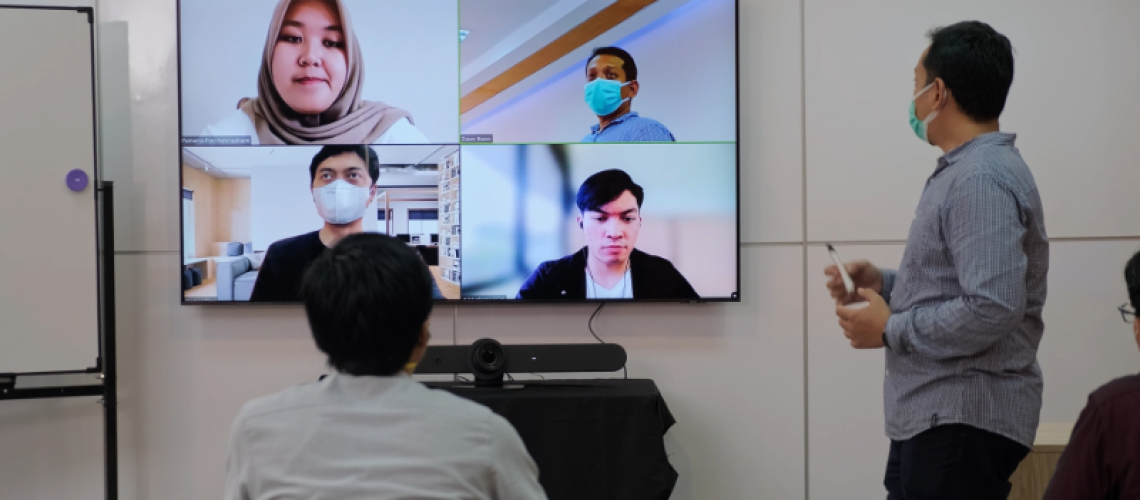
Universitas Padjadjaran (Unpad) actively supports remote working and flexible learning as part of its sustainability strategy to reduce commuting and environmental impact. One key approach to this policy is the implementation of a hybrid learning system that integrates face-to-face and online instruction. Through this model, Unpad enables both lecturers and students to participate in academic activities remotely while maintaining effective collaboration and productivity. By adopting hybrid learning across various faculties, Unpad not only enhances accessibility and digital competence but also demonstrates its commitment to sustainability, efficiency, and innovation in higher education.
Hybrid Learning and Remote Working at Universitas Padjadjaran
As part of its sustainability commitment, Universitas Padjadjaran (Unpad) promotes flexible working and learning arrangements, including remote working and hybrid learning, to help reduce the environmental impact of daily commuting. These initiatives are designed to support a more efficient, inclusive, and environmentally responsible academic ecosystem.
Through hybrid learning, Unpad combines face-to-face and online instruction, allowing students and lecturers to engage in both physical classrooms and virtual platforms. This model not only enhances flexibility and digital competence but also significantly reduces the need for transportation to and from campus, thereby lowering carbon emissions from private and public vehicles.
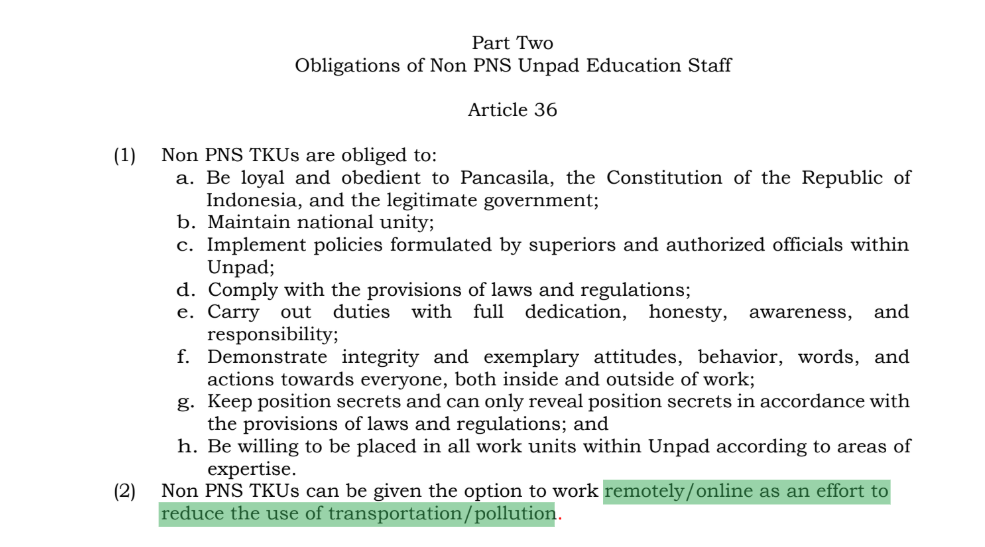
In addition, remote working for educational staff is formally supported by Rector Regulation No. 27 of 2022 on the Management of Non-Civil Servant Educational Personnel at Universitas Padjadjaran. Specifically, Article 36 allows eligible staff to perform their duties remotely or online, contributing to the reduction of transportation use and air pollution. Through these initiatives, Unpad continues to integrate digital transformation with sustainability, ensuring that education and work remain adaptive, efficient, and environmentally conscious.
https://drive.google.com/file/d/18WZz554PH9OXwWNMTd2SK-Zw6wanNyUP/view
One of the courses that organizes a hybrid learning program is the Hybrid Project-Based Learning Master’s Program. This program focuses on current knowledge and topics, implementing hybrid learning through a combination of face-to-face and online methods. The learning approach emphasizes solving real-world problems and case studies using project-based activities. Some of the study programs offered include:
- Master of Applied Economics – Specializing in Digital Economics
- Master of Regional Innovation – Specializing in Data Science and Law and Infrastructure Management
- Legal Studies Program
Related link:
Hybrid Project-Based Learning Master’s Program
FPIK Unpad Guides New Students in Adapting to Hybrid Learning System
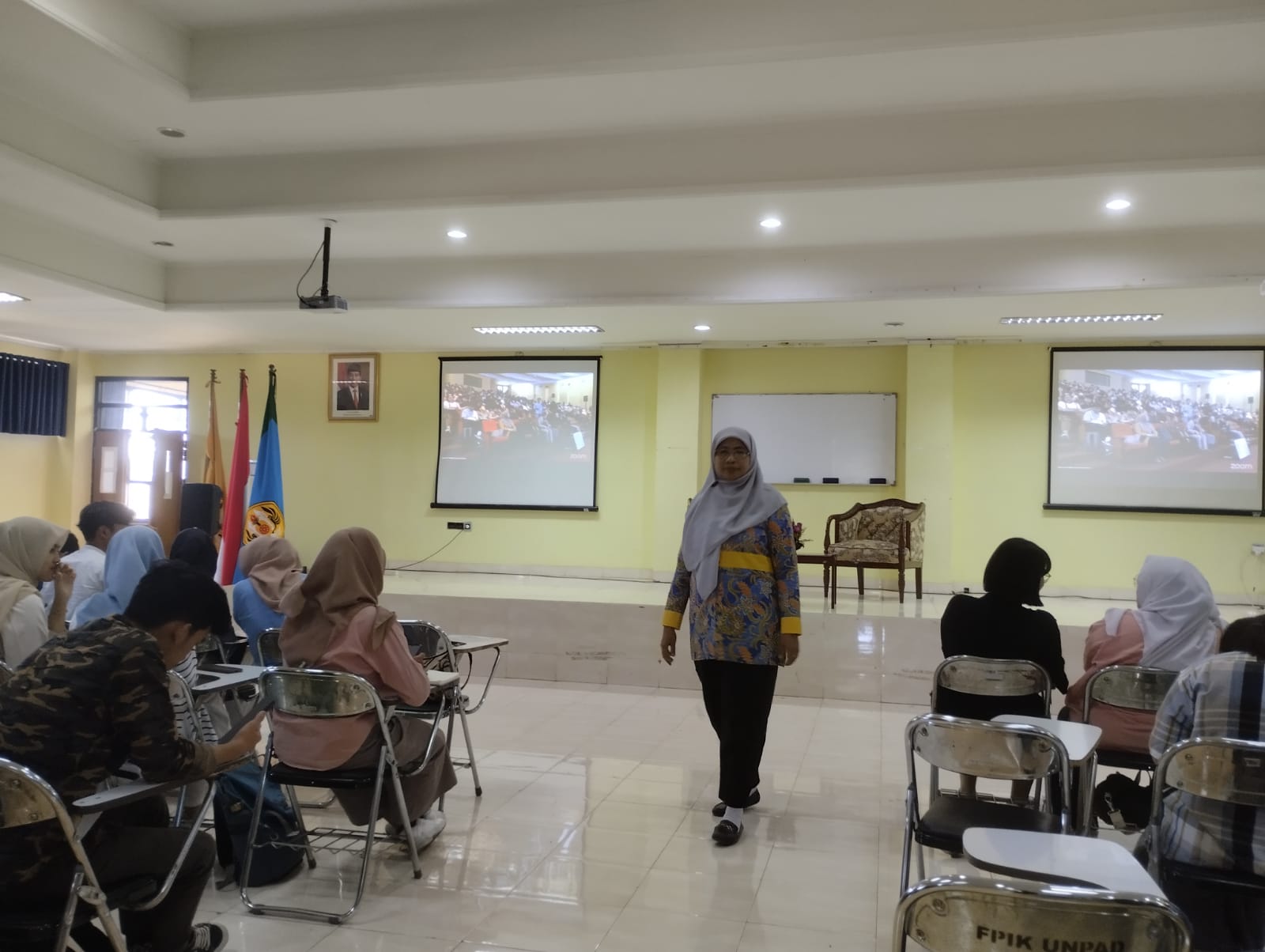
In 2024, the Faculty of Fisheries and Marine Sciences (FPIK) at Universitas Padjadjaran continued its commitment to implementing hybrid learning by holding an orientation session for new students. The activity provided comprehensive guidance on navigating Unpad’s hybrid learning system, including the use of online academic platforms and the Program-Based Learning Stage (TPB) curriculum. Students were introduced to a blended learning approach that combines in-person and digital instruction, promoting independence, digital literacy, and adaptability. Through this initiative, FPIK Unpad aims to ensure that new students are well-prepared to engage effectively in hybrid education and achieve academic success.