
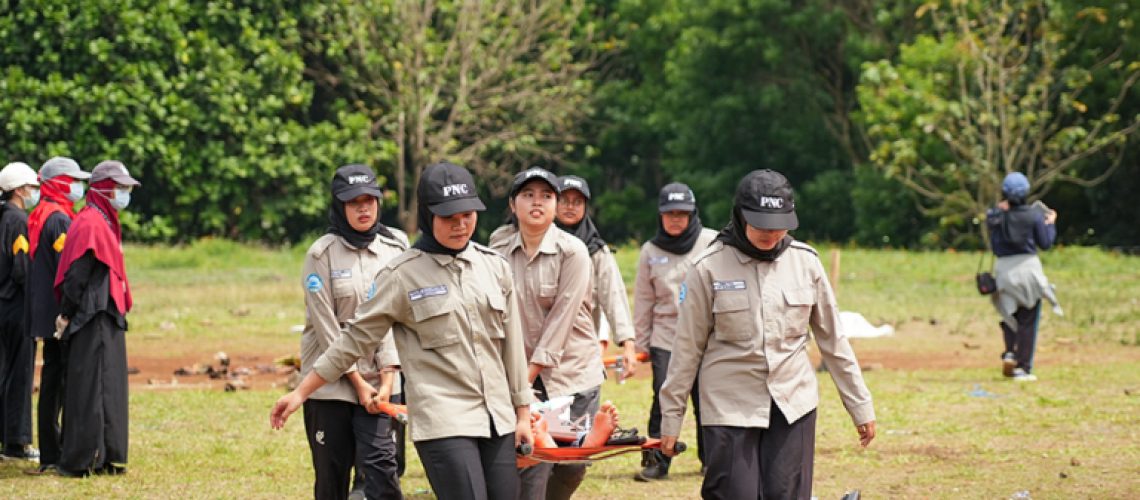
In 2024, Universitas Padjadjaran (Unpad) advanced its commitment to climate resilience and disaster preparedness through a series of educational and community-based initiatives. The Faculty of Nursing conducted Disaster Simulations (SIBEN and SIMEGA) in Jatinangor and Pangandaran to train students and local stakeholders in emergency response, evacuation, and post-disaster recovery, in collaboration with the Regional Disaster Management Agencies (BPBD) and local authorities. Complementing these efforts, the “Donasi Unpad Peduli Sumedang” program combined humanitarian aid with disaster education following the Sumedang earthquake, fostering community awareness, trauma recovery, and risk mitigation. Together, these programs exemplify Unpad’s holistic approach to integrating education, research, and community engagement in building adaptive and resilient societies aligned with SDG 13 (Climate Action) and SDG 11 (Sustainable Cities and Communities).
Disaster Simulation Strengthens Climate Resilience and Community Preparedness
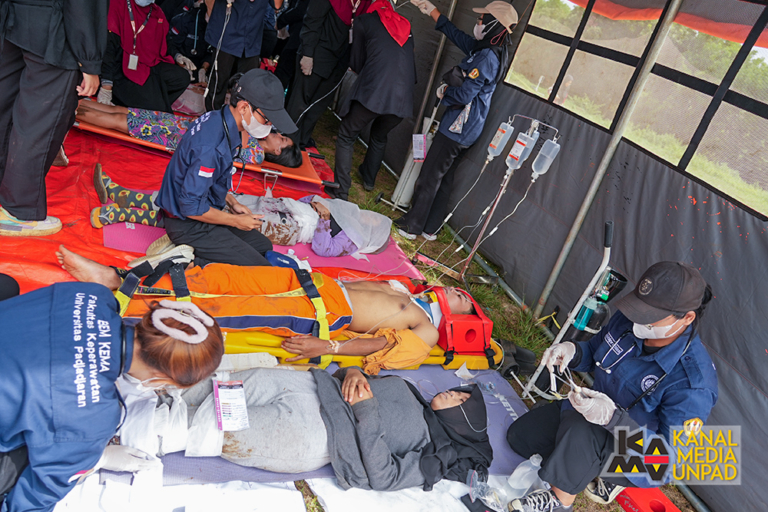
The Faculty of Nursing at Universitas Padjadjaran held a Disaster Simulation (SIBEN) on November 10, 2024, at the Lapangan Merah, Unpad Jatinangor, as part of its ongoing commitment to disaster risk reduction and climate resilience education. The event focused on landslide disaster response, one of the most frequent natural hazards in Indonesia.
The simulation engaged students in multiple emergency response roles, including evacuation teams, logistics, triage, and humanitarian assistance, providing hands-on experience in crisis management. Collaboration with key stakeholders such as the Regional Disaster Management Agency (BPBD) of Sumedang, Babinsa, Jatinangor Police, and local media enhanced the program’s practical relevance and inter-agency coordination.
Through this activity, Unpad aims to strengthen early warning systems, improve preparedness, and foster cooperation between academic institutions, local government, and communities. The program also supports the Sustainable Development Goals (SDGs), particularly those related to climate action, quality education, and community resilience.
By integrating theory and practice, SIBEN helps equip students with essential skills to respond effectively during emergencies. The initiative underscores Unpad’s proactive role in promoting climate change adaptation, disaster awareness, and sustainable community empowerment across Indonesia.

Universitas Padjadjaran, through its Undergraduate Nursing Study Program at the Pangandaran Campus, held the Megathrust Disaster Simulation (SIMEGA) PSDKU on November 30, 2024, to enhance preparedness for coastal disaster risks. The activity served as a local education program on climate change and disaster risks, combining classroom learning with field practice through a project based learning approach in the Disaster Nursing course. It involved collaboration between Unpad, the Regional Disaster Management Agency (BPBD) of Pangandaran Regency, and the Pangandaran Police Department, strengthening cooperation among academia, government, and the community. Students participated in all three stages of disaster management, including pre disaster, emergency response, and post disaster, while promoting public awareness and readiness for potential megathrust earthquakes.
In 2024, Universitas Padjadjaran (Unpad) implemented a local education program addressing disaster risks and community resilience through the initiative “Donasi Unpad Peduli Sumedang.” The program was launched in response to the earthquake that struck Sumedang on December 31, 2023, and January 1, 2024. Beyond collecting financial and material donations, Unpad, through its Disaster Research Center (Pusat Riset Kebencanaan Unpad), also conducted community education and outreach on earthquake disaster mitigation.
Led by Dr. Yoga Andriana Sendjaja, the program aimed not only to provide immediate assistance but also to raise awareness and understanding among affected residents about earthquake preparedness and risk reduction. The educational outreach encouraged the community to overcome fear and trauma while developing readiness for potential future disasters. By integrating scientific knowledge with local needs, Unpad’s initiative helped strengthen local capacity for early warning, adaptation, and disaster impact reduction.
This activity reflects Unpad’s strong commitment to providing local education programs on disaster and climate risks, aligning with the broader goal of building community resilience through education, awareness, and collaboration with local governments and residents.