

Universitas Padjadjaran supports and organizes events aimed at promoting the conservation and sustainable utilization of land, including forests and wildlands. These events often include workshops, seminars, and awareness campaigns that focus on environmental sustainability, biodiversity conservation, and responsible land management.
Faculty of Fisheries and Marine Sciences Unpad Plants 1,000 Mangrove Seedlings on Karang Tirta Beach
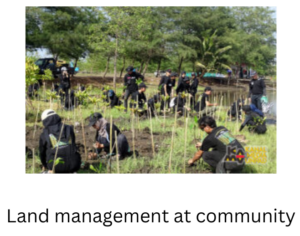
In an effort to support the restoration of coastal ecosystems through blue carbon coastal actions, BEM Kema Faculty of Fisheries and Marine Sciences, Universitas Padjadjaran held a social activity entitled “Coastal Action” in Tanjung Cemara Karang Tirta, Pangandaran Regency, on November 18, 2023. Coastal Action is a project that includes planting mangrove seedlings and cleaning the beach. This activity aims to restore the benefits of the mangrove ecosystem and protect the coastal area of Pangandaran Regency from marine debris.
This social action involved 170 FPIK Unpad students, farmer groups, Tanjung Cemara Karang Tirta managers, representatives of the Forestry Service Region VII, and the Environment and Sanitation Service (DLHK) of Pangandaran Regency. In the Coastal Action project, the team succeeded in planting 1,000 mangrove seedlings, consisting of 600 Rhizopora mucronata seedlings and 400 Burguiera gymnorrhiza seedlings. In addition, in the Coastal Clean Up activity, the team succeeded in collecting 428.49 kg of inorganic waste from the sea.
https://www.unpad.ac.id/2023/12/bem-fpik-unpad-tanam-1-000-bibit-mangrove-di-pantai-karang-tirta/
In addition to tree planting carried out by FPIK Unpad students, the campus also planted 250 tree seedlings in Leuwi Padjadjaran. In addition, the Padjadjaran University KKN Team Group 24 carried out a tree planting program “Ayo Ngariung Tanam Guava” (Arimbi) in Bukit Paesan, Tarumajaya Village, Kertasari District, Bandung Regency on Thursday (1/26/2023). In addition to guava seedlings, other seedlings planted were avocado, jackfruit, and orange seedlings. Planting these tree seedlings is intended for environmental preservation as well as so that the fruit production can be utilized by the community. The red guava tree seedlings themselves were obtained from a grant from the Coordinating Ministry for PMK as many as 4000 trees.
https://www.unpad.ac.id/2023/08/unpad-dan-elnusa-tanam-250-bibit-pohon-di-leuwi-padjadjaran/
https://www.unpad.ac.id/2023/02/mahasiswa-kkn-unpad-tanam-bibit-pohon-di-titik-nol-citarum/
National Forest Day Webinar “Greening the Future”
Paguyuban Padjadjaran Javanese (Padjadjava) Universitas Padjadjaran together with Teens Go Green Indonesia held a webinar entitled “Greening the Future: The Role of Students in Environmental Conservation”, Wednesday (9/8/2023). This webinar focuses on the issue of climate change which is a serious global challenge that threatens the sustainability of human life on earth. This webinar encourages students to actively participate in protecting the environment. This webinar is also expected to raise collective awareness about environmental problems and the effects of human activities. Students are expected to become agents of change who encourage innovation, initiate sustainable solutions, and participate in global efforts to maintain the sustainability of the earth.
https://www.unpad.ac.id/2023/08/padjadjava-unpad-gelar-webinar-peringati-hari-hutan-nasional/
Universitas Padjadjaran is dedicated to food sustainability and follows an ethical sourcing policy for food and supplies with sustainable farmed. This commitment is formalized in a Circular on Sustainable Food Sources, specifically Circular Number 39/UN6.RKT/TU.00/2024, which aims to enhance sustainable food sourcing across the university. Addressed to all academic and educational staff, the circular encourages clean, healthy canteens with diverse food options by ensuring food is sourced from organic agriculture that minimizes environmental impact. It also requires all university canteens to use food ingredients from ethically considerate farming and fishing practices, such as purchasing eggs from cage-free chickens. Additionally, the university promotes activities for sustainable use of harvest yields.
https://sdgs.unpad.ac.id/wp-content/uploads/2024/11/Optimization-of-Sustainable-Food-Sources.pdf
Sustainable farmed food in Halal canteen
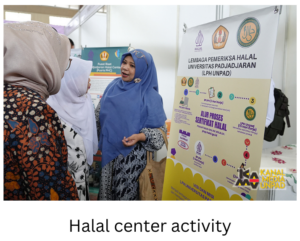
To guarantee quality food for students and the academic community, Unpad developed a halal and Tayib (Thayib) campus canteen. This canteen is located at GOR Santika, Jatinangor Campus, which is the main campus of Unpad. The soft launching of this canteen was held on October 4 2022, in collaboration between the Padjadjaran Halal Center and Bank Indonesia. As many as 34 canteen business actors were also involved in training on how to produce good food, such as choosing halal product raw materials, using supporting equipment, and creating processes that comply with halal standards. This canteen is open to all Unpad residents and operates from 08.00 to 18.00.
Policy of canteen management
The principles of canteen management are as follows:
- Maintaining the quality of food and beverage products served in the canteen, as well as providing friendly and efficient service to customers;
- Providing a variety of menu options for a variety of tastes, special dietary needs, and food preferences;
- Complying with applicable food safety standards, including storing, processing, and managing food safely to prevent contamination and disease;
- Providing quality raw materials by ensuring a consistent supply and selecting sustainable raw materials
Regulation of canteen management
In addition to the Regulation on Sustainable Food Sources, Universitas Padjadjaran has Bale Tatanen, which implements sustainable farming on campus. Bale Tatanen Universitas Padjadjaran is one of the initiatives that aims to provide space for students and the general public to learn and discuss various topics, especially those related to culture, environment, and sustainable development. Bale Tatanen is part of Universitas Padjadjaran’s efforts to support education oriented towards local wisdom and social values.
Greenhouse Bale Tatanen, typically used to protect plants from extreme weather conditions, must be adapted to resist unexpected climate changes. One improvement step is to strengthen the building structure, for example, using more durable materials resistant to strong winds and high rainfall. In addition, automatic temperature and humidity regulation technology is also the key to keeping the conditions inside the greenhouse optimal for plant growth, even though the temperature outside experiences extreme fluctuations.
With these improvements and innovations, the Bale Tatanen greenhouse can adapt to climate change, ensuring the sustainability of agriculture and the welfare of the sustainability of agriculture and the welfare of the surrounding community. This adaptation is a technical effort and a strategic step in facing an uncertain future.
Universitas Padjadjaran is actively engaged in maintaining and extending existing ecosystems and their biodiversity, especially focusing on threatened species and ecosystems. One key initiative is the collaboration with Bandung Zoo for elephant conservation, emphasizing the welfare and protection of elephants.
Elephant conservation collaboration with Bandung Zoo
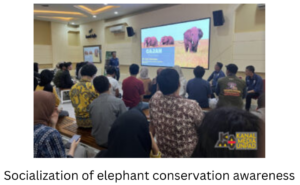
Elephants are one of the protected species in Indonesia. However, threats such as poaching and habitat loss continue to lurk. Therefore, it is essential to improve the welfare and conservation of elephants. A talk show entitled Elephant Festival was held at the Knowledge Theater, Unpad Rectorate Building, Jatinangor, on Friday (10/27/2023). This event was organized by the Department of Environment BEM Kema Universitas Padjadjaran in collaboration with Bandung Zoo. One way to improve the welfare and conservation of elephants is through the role of zoos. Every zoo applies five elements of freedom in caring for and protecting animals, especially elephants. The five elements include freedom from hunger and thirst, discomfort, pain, injury, and disease, freedom to express normal behavior, and freedom from stress and pressure. Among the five elements, freedom from stress and pressure is considered the most crucial in the care and conservation of elephants, considering that elephants are susceptible to disturbances and threats around them.
Monitoring and evaluating local ecosystems.
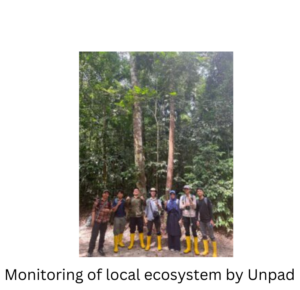
The Sekolah Pascasarjana (SPs) at Universitas Padjadjaran (UNPAD) is strengthening its commitment to environmental stewardship through the implementation of a comprehensive Biodiversity Management Plan (BMP) under the PUI PT CESS initiative. This new policy focuses on the identification, monitoring, and protection of species listed in the International Union for Conservation of Nature (IUCN) Red List, as well as national conservation species within areas impacted by faculty operations.
The BMP is a proactive measure to ensure that biodiversity considerations are integral to all planning and development activities at UNPAD Graduate School. The plan involves detailed assessments to identify critical species and habitats, continuous monitoring to track their status, and protective measures to mitigate the impact of campus operations on these species. By incorporating biodiversity considerations into new building projects and other developments, SPs UNPAD demonstrates its commitment to preserving local ecosystems and supporting conservation efforts. UNPAD Graduate School is committed to continuously enhancing its biodiversity management practices. Future efforts will include expanding the BMP to cover additional species and habitats, increasing community engagement in conservation activities, and exploring innovative approaches to integrating biodiversity into all aspects of campus life.
Universitas Padjadjaran offers educational programs on ecosystems, particularly focusing on wild flora and fauna, to support local and national communities. One example is the pesticide and plant protection training organized by the HPT department at FAPERTA UNPAD in collaboration with DGW Group. This program aimed to enhance the skills of agrochemical marketers and local farmers, equipping them with knowledge on sustainable crop protection methods.
Pesticide and Plant Protection Training
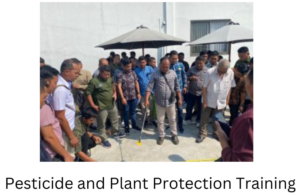
The HPT department at FAPERTA UNPAD collaborated with DGW Group to provide training for its employees from August 22 to 24, 2023. Led by Prof. Dr. Ir. Hj. Hersanti, MP, the training program focused on pesticides and plant protection. This collaboration went beyond traditional lectures, incorporating activities such as laboratory visits and practical demonstrations on the proper use of pesticides, all aimed at promoting ecological sustainability.
The training aimed to enhance the skills of employees, particularly marketers from PT Dharma Guna Wibawa, a division of the DGW Group specializing in agrochemicals. Additionally, it sought to educate local farmers on effective crop protection methods. The program’s success is reflected in the participants’ scores, which showed improvement from the pre-test to the post-test, indicating a deeper understanding of the material. This capacity-building initiative is designed not only to equip marketers to effectively promote the company’s products but also to empower farmers to enhance productivity, thereby contributing to national agricultural sustainability.
Universitas Padjadjaran offers educational programs on sustainable land management for agriculture, focusing on local communities. In Campakamulya Village, Unpad students worked to improve coffee plantation productivity by analyzing soil and environmental factors, while also addressing farming, disaster, and cultural challenges. In Arjasari, Unpad trained farmers on sustainable post-harvest techniques and corn cultivation.
Enhancing Coffee Plantation Land Productivity Based on Soil and Environmental Characteristics
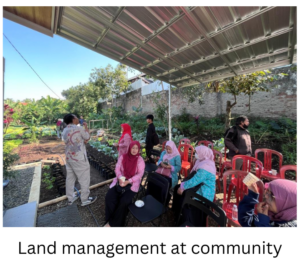
The ideal community service program is designed for students or campuses to apply their knowledge and skills to address existing societal challenges. Additionally, it serves as a manifestation of the Tridharma (three main purposes) of higher education.This initiative was carried out by one of the KKN-PPM Integratif (Integrative Community Empowerment Learning Real Work Lectures) teams from Universitas Padjadjaran in Campakamulya Village, Cimaung District, Bandung Regency. Under the supervision of Prof. Dr. Ir. Mahfud Arifin, M.S., the team concentrated on the village’s agricultural commodities, as Campakamulya is renowned for its arabica coffee and sweet potatoes.
During the program’s first week, the students identified a significant barrier to the development of agricultural commodities in Campakamulya Village: coffee productivity under pine trees was found to be lower than that under rasamala trees. The team also recognized additional challenges, including cultural preservation, disaster mitigation, dental health awareness, farming interests, and human resources.
In February, area mapping in Arjasari revealed that about 70% of the land is moorland and 15% is rice paddy. Approximately 60.81% of the livelihoods in Arjasari District come from farming. The target community group for the farmer empowerment program, under UNPAD’s authority, is farmers in SLPP Arjasari. The program includes training on post-harvest corn processing to enhance management practices, prevent damage, improve quality, and boost market value.
One key activity is the demonstration plot, established to showcase cultivation techniques for superior corn varieties with balanced fertilization. This was implemented after the rainy season began in late November 2023, utilizing both minimum and maximum tillage methods. Future training will focus on enhancing human resource quality and intensifying a sustainable corn bioindustry program.
https://blogs.unpad.ac.id/tridakusumah/2023/02/13/46/
INSUA, Urban Agriculture Heritage
As part of the ongoing research by the Integrated Study of Urban Agriculture Heritage (INSUAH), we held a Focus Group Discussion (FGD) series on July 17-18, 2023, supported by @dkpp.bandung. This event brought together various urban agriculture groups, including @buruansaebdg, their advisors, and agricultural extension officers to explore the driving forces, pressures, state, impacts, and responses (DPSIR) related to heritage-based urban agriculture in Bandung.
The two-day event facilitated discussions with urban farming practitioners, allowing us to identify challenges and develop solutions from both the emic (farmers) and etic (researchers) perspectives. This collaborative effort enhanced our understanding of heritage-based urban agriculture. By supporting local and regional governments in climate change mitigation and risk monitoring, this FGD series plays a vital role in building resilient urban agricultural systems.
https://pasca.unpad.ac.id/buah-reviving-urban-agricultural-heritage-for-sustainable-future/
https://pasca.unpad.ac.id/insuah-research-activities-on-urban-agriculture-heritage/
Universitas Padjadjaran offers educational programs and outreach aimed at promoting the sustainable management of land for tourism, with a focus on local and national communities. These initiatives involve training and capacity-building activities designed to help communities manage tourism-related land sustainably.
Developed tourist attractions in Cibenda Village
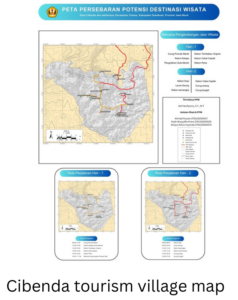
The village of Cibenda is endowed with natural beauty, including plantations, agriculture, culture, and biodiversity. Several types of potential can be developed into tourist attractions in Cibenda Village, namely Geological sites (Curug Awang, Curug Tengah, and Curug Puncakmanik), Natural sites (watermelon, coffee, bitter melon, and chilli plantations), Intangible sites (Leuwi Goong), Cultural sites (Pencak Silat), and Socio-economic sites (Red sugar processing).
The results of these observations are visualized through a map showing the distribution of tourism potential in Cibenda Village to guide and facilitate both residents and visitors in enjoying the beauty of Cibenda.
https://ftgeologi.unpad.ac.id/the-beauty-of-cibenda-village-sukabumi-geotourism-village-development/
Unpad Tourism Fest 2023
The Sustainable Tourism Masters Program of Padjadjaran University held the “Unpad Tourism Fest 2023” at the Iwa Koesoemasoemantri Unpad Campus, Jalan Dipati Ukur No. 35 Bandung, Saturday (6/24/2023). Carrying the theme “Embracing Culture, Enhancing Sustainability”, the Unpad Tourism Fest 2023 held three series of activities, namely the Gateball Competition between campuses throughout Greater Bandung, the Nusantara Culinary Festival, and a talk show entitled “Introducing Provincial Local Wisdom as a Sustainable Tourism Attraction”. Meanwhile, in the Unpad Postgraduate School building, a talk show was held involving four speakers, namely Benny Bachtiar, M.Si (Head of the West Java Tourism and Culture Office), Chevy Ferdian (Chairman of the Indonesian Tourism Actors Association), Drs. Arief Syaifuddin, S.H., M.Par., (Head of the Bandung City Culture and Tourism Office), and Dr. Evi Novianti, S.Sos., M.Si. (Head of Sustainable Tourism Masters Program, Unpad). The talk show went well and was attended by around 70 participants from various campuses and backgrounds.
Policy review of Rector Regulation of Universitas Padjadjaran Number 26 of 2022 Concerning Management of Canteen Within Universitas Padjadjaran
Point
Article 12. I Every canteen uses the selection of product raw materials, supporting tools, and production processes that comply with halal standards.
Evaluation
This policy have been referenced and executed by canteen management to use raw material and supporting tools with halal standards
Recommendation
It is expected to renew this policy or make new policy with more details about sustainable farmed food and food from aquatic policy
Related link
https://sdgs.unpad.ac.id/wp-content/uploads/2024/11/Policy-review-of-Ethical-sourcing-policy.pdf
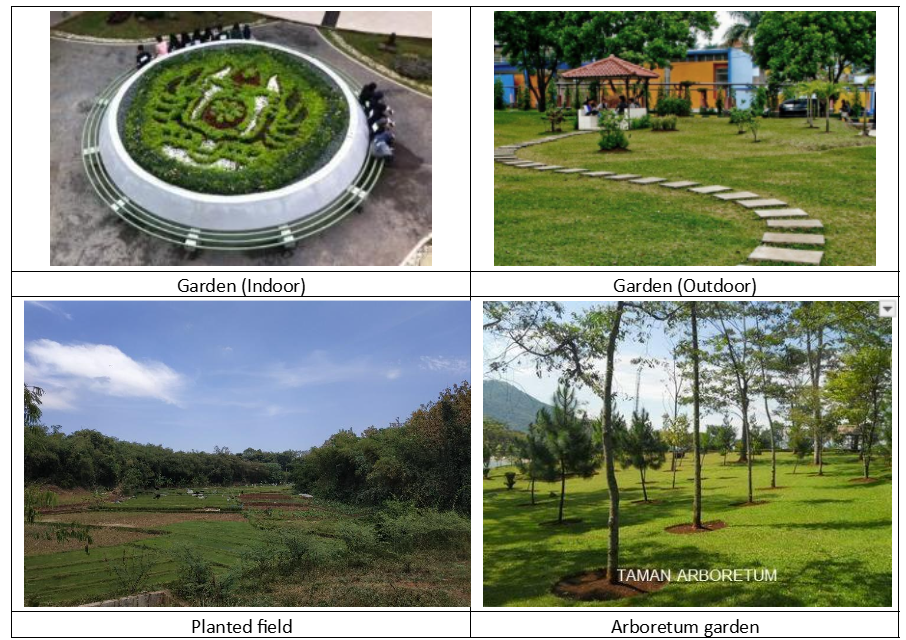
Universitas Padjadjaran has regulations that focus on land management practices, sustainable agriculture, ecosystem restoration, and any strategies outlined for maintaining environmental balance. Article 5 explains the conservation efforts carried out by Universitas Padjadjaran. Conservation of biological and non-biological natural resources in the Unpad environment is carried out by:
a. Protection of life support systems;
b. Preserving the diversity of plant and animal species and their ecosystems;
c. Sustainable use of biological and non-biological natural resources;
d. Optimal, integrated and sustainable management of energy resources, as well as efficient use of energy in all sectors;
e. The tri dharma activities of higher education are wise and sustainable as well as pay attention to the sustainability of biological and non-biological resources.
Universitas Padjadjaran has a policy to identify, monitor, and protect species listed in the International Union for Conservation of Nature (IUCN) Red List, as well as those on national conservation lists, particularly in areas impacted by the university’s operations. This policy is reflected in the rector’s regulation on biological and non-biological resources, which categorizes species into protected and unprotected groups.
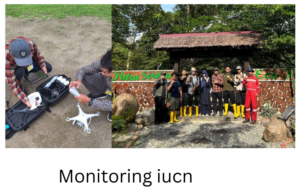
Inventory of Flora and Fauna Species is an effort to determine the condition and status of populations in more detail as well as their distribution areas which is carried out inside and outside their habitats and at conservation institutions. Identification of Flora and Fauna Species is an effort to identify the type, general condition, population status, and place of life that is carried out in their habitat.
Universitas Padjadjaran has a policy regarding monitoring of The International Union for Conservation of Nature which is stated in the rector’s regulation regarding biological and non-biological resources. Types of plants and animals are determined based on groups; a. Protected plants and animals; b. Unprotected plants and animals. (2) The types of protected plants and animals as referred to in paragraph (1) letter a are as determined by the Government through applicable Regulations and Legislation.
https://drive.google.com/file/d/1MjF-KFR5xcdAOGe5ixmwAuFttC8xy2fK/view?usp=sharing
Monitoring and evaluating local ecosystems.
The Sekolah Pascasarjana (SPs) at Universitas Padjadjaran (UNPAD) is strengthening its commitment to environmental stewardship through the implementation of a comprehensive Biodiversity Management Plan (BMP) under the PUI PT CESS initiative. This new policy focuses on the identification, monitoring, and protection of species listed in the International Union for Conservation of Nature (IUCN) Red List, as well as national conservation species within areas impacted by faculty operations.
The BMP is a proactive measure to ensure that biodiversity considerations are integral to all planning and development activities at UNPAD Graduate School. The plan involves detailed assessments to identify critical species and habitats, continuous monitoring to track their status, and protective measures to mitigate the impact of campus operations on these species. By incorporating biodiversity considerations into new building projects and other developments, SPs UNPAD demonstrates its commitment to preserving local ecosystems and supporting conservation efforts. UNPAD Graduate School is committed to continuously enhancing its biodiversity management practices. Future efforts will include expanding the BMP to cover additional species and habitats, increasing community engagement in conservation activities, and exploring innovative approaches to integrating biodiversity into all aspects of campus life.
Universitas Padjadjaran integrates local biodiversity into its planning and development processes, including new construction projects. By integrating biodiversity assessments and protective measures into new projects, such as building constructions, the university actively supports the conservation of local ecosystems and species.
Master plan for the development of PSDKU Pangandaran, Universitas Padjadjaran
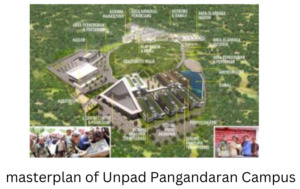
The master plan for Unpad’s Pangandaran campus is divided into three main zones. The first zone, located in the western part of the area, is designated for academic purposes. This zone has a smaller area, making its development compact and efficient. The second zone, in the eastern part, is an academic support zone with a larger area to accommodate both academic needs and serve as a tourism attraction. The central zone, which contains a cave site, serves as the main orientation point of the campus. This area is also integrated into green spaces and recreational areas, with a man-made lake incorporated as a landscaping feature in lower-lying areas
Development Phases
Phase 1 2017-2022 — Multipurpose room, BAK, BUK, MKD Leadership, Rectorate and Dean’s Room, Management and Secretariat Room, Language Lab, Computer Lab, Student dormitory two buildings (4 towers) with a capacity of 900 students, Student Center, Joint Clinic and Canteen, Lecturer Flat, Mosque, Joint Laboratory, Library, ME Building, Academic building with a capacity of 16 classes with a capacity of 2896 students, LecturerLecturer needs 200 people.
Phase 2 2023-2027—Sports facilities (Football Field, Basketball Court, Tennis Court), Open Space, Language Lab, Computer Lab, Student dormitory become four buildings (8 towers) with a capacity of 1400 students, Lecturer Flat, Auditorium with a capacity of 1500, Academic Center Building, STP, Academic building becomes 32 classes, a capacity of 5638 students, Lecturer Lecturerand needs 311 people.
Phase 3 2028-2031 — Open space, Commercial Support, Language Lab, Computer Lab, Dormitory becomes six buildings (12 towers) with a capacity of 2500 students, Hotel, Academic building becomes a capacity of 56 classes, capacity of 10,000 students, need for 552 lecturers.
Universitas Padjadjaran has implemented policies aimed at reducing the impact of alien species on its campus. This initiative is part of the university’s broader commitment to environmental sustainability and biodiversity conservation.
Prevention and control of invasive alien species are the responsibility and obligation of the academic community, as well as the education staff related to the procurement of invasive alien species at UNPAD. The invasive species referred to in this Rector Regulation are native and non-native species which colonize a habitat massively, which can cause ecological, economic, and social losses, especially at UNPAD. Control of invasive species is carried out by Risk analysis and Application of invasive risk status.
(1) Control of invasive species is carried out by: a. Risk analysis; and b. Application of invasive risk status. (2) Stages of invasive species risk analysis include: a. Hazard identification; b. Risk assessment; and c. Risk management. (3) Application of invasive risk status as referred to in paragraph (1) point b which has been determined as invasive species, then Eradication is carried out on the entry of the species. (4) The application of invasive risk status to prevent its spread is carried out through the following methods: a. Eradication; b. Extermination; c. Prevention of the spread through population control. (5) The preventive measures in paragraph (4) are carried out to prevent the spread of alien invasive species at UNPAD.
Universitas Padjadjaran collaborates with local communities to maintain shared land ecosystems, promoting sustainable land management practices and environmental stewardship. Through various community engagement initiatives, the university works closely with residents to protect and preserve local ecosystems, particularly in areas impacted by campus operations.
INSUAH project, Collaboration Universitas Padjadjaran with Bandung Government
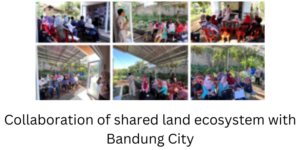
The INSUAH project in Bandung focuses on reviving urban agriculture as a key part of sustainable city planning, promoting it as both a cultural heritage and an ecological solution for urban challenges. This initiative includes the Bandung Living Lab, where various urban agriculture models are tested, fostering collaboration between local communities, universities, and other stakeholders to explore how traditional agricultural knowledge can contribute to sustainable urban development
Universitas Padjadjaran (Unpad) is actively involved in this project through researchers such as Oekan S. Abdoellah and Gemilang Lara Utama, who contribute their expertise to the initiative. The university’s participation in the project links directly to its ongoing commitment to urban sustainability and biodiversity conservation, aligning with Unpad’s broader goals in environmental stewardship and sustainable land use. This connection emphasizes Unpad’s role in integrating local biodiversity and ecological practices into innovative urban solutions, enhancing both local food security and environmental sustainability in Bandung.
https://pasca.unpad.ac.id/insuah-research-activities-on-urban-agriculture-heritage/
Faculty of Fisheries and Marine Sciences Unpad Plants 1,000 Mangrove Seedlings on Karang Tirta Beach
In an effort to support the restoration of coastal ecosystems through blue carbon coastal actions, BEM Kema Faculty of Fisheries and Marine Sciences, Universitas Padjadjaran held a social activity entitled “Coastal Action” in Tanjung Cemara Karang Tirta, Pangandaran Regency, on November 18, 2023. Coastal Action is a project that includes planting mangrove seedlings and cleaning the beach. This activity aims to restore the benefits of the mangrove ecosystem and protect the coastal area of Pangandaran Regency from marine debris.
This social action involved 170 FPIK Unpad students, farmer groups, Tanjung Cemara Karang Tirta managers, representatives of the Forestry Service Region VII, and the Environment and Sanitation Service (DLHK) of Pangandaran Regency. In the Coastal Action project, the team succeeded in planting 1,000 mangrove seedlings, consisting of 600 Rhizopora mucronata seedlings and 400 Burguiera gymnorrhiza seedlings. In addition, in the Coastal Clean Up activity, the team succeeded in collecting 428.49 kg of inorganic waste from the sea.
https://www.unpad.ac.id/2023/12/bem-fpik-unpad-tanam-1-000-bibit-mangrove-di-pantai-karang-tirta/
Celebrating Bandung City anniversary with tree planting
We celebrated the Ceremonial Anniversary of Bandung City with the Sukajadi Local Government by planting trees. We also had the pleasure of meeting new friends from the Masagi Cibogo Community. This collaboration with the local community underscores our commitment to maintaining shared land ecosystems. By working together, we aim to enhance biodiversity and promote sustainable land management practices.
Our efforts align with the Sustainable Development Goals (SDGs), particularly SDG 15 (Life on Land), which focuses on conserving and restoring terrestrial ecosystems. Through tree planting and other conservation activities, we contribute to the preservation and sustainable use of our natural resources. At Sekolah Pasca Sarjana, we believe that community involvement is key to achieving sustainable development. By fostering strong partnerships with local communities, we continue to promote environmental stewardship and resilience, ensuring a greener future for Bandung City.
Policy review of Rector Regulation of Universitas Padjadjaran Number 26 of 2021 Concerning Conservation of Biological and Non-Biological Resources at Universitas Padjadjaran
Point
Article 10. Unpad as a university that implements the principles of preservation and conservation of biological and non-biological resources
Evaluation
Monitoring mechanisms and enforcement measures for terrestrial ecosystem conservation are underdeveloped
Recommendation
Mandate regular monitoring of ecosystem health through environmental indicators such as vegetation cover, soil quality, and biodiversity indices
Related link
Policy review of Rector Regulation of Universitas Padjadjaran Number 26 of 2021 Concerning Conservation of Biological and Non-Biological Resources at Universitas Padjadjaran
Point
Article 5 & 6. Preservation of the diversity of flora and fauna species and their ecosystem. Flora and fauna species are determined on the bases of the protected floras and faunas and unprotected floras and faunas.
Evaluation
It lacks specificity regarding the ecosystems being protected as part of terrestrial conservation efforts.
Recommendation
Implement a system for the regular collection, updating, and sharing of monitoring data, aligned with the latest IUCN updates and guidelines.
Related link
https://sdgs.unpad.ac.id/wp-content/uploads/2024/11/Policy-review-of-Monitoring-IUCN-and-other-conservation-species.pdf
Policy review of Rector Regulation of Universitas Padjadjaran Number 27 of 2021 Concerning Control of Invasive Alien Species
Point
Article 6.
1. Control of invasive species is carried out by: (a) risk analysis, (b) application of invasive risk status.
2. Stages of invasive species risk analysis include: (a) hazard identification, (b) risk assessment, (c) risk management
Evaluation
The existing policy is current and fit for alien species impact reduction purpose at campus
Recommendation
This policy is expected to be continuously implemented on campus
Related link
https://sdgs.unpad.ac.id/wp-content/uploads/2024/11/Policy-review-of-Alien-species-impact-reduction.pdf
Universitas Padjadjaran has developed a comprehensive water discharge guidelines and standards to ensure sustainable water use on campus. This includes the efficient use of clean water, conservation of water resources in catchment areas, protection of water spring and groundwater areas, and the creation of water retention systems such as infiltration wells and rainwater harvesting.
Water Conservation at Eco-Friendly Campus Policy
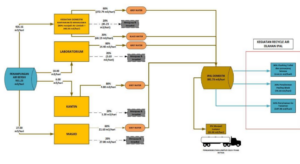
Eco-Friendly Campus is the manifestation of a safe, comfortable, and orderly campus environment for conducting educational activities; and carrying out security and safety at work that can protect residents and workers who are working at Unpad as well as the community around the campus environment; and conserving water and energy resources, so that they can support a dynamic, sustainable campus life atmosphere by meeting the green campus criteria. Water use includes: planning, controlling, and using groundwater resources through technology management and behavior change, restoring and maintaining sources of deep ground water, surface ground water, and surface water with the principle of water conservation so as to ensure their availability for continuous teaching and learning activities.
Conservation and management of water resources are unrestricted and can be reduced or increased according to the typology and needs of the campus by:
- Performing efficient use of clean water by using technology and changing behavior;
- Conserving water resources in water catchment areas and the campus environment through technology and vegetative multi programs as well as changes in land/soil use patterns;
- Protection and maintenance of water spring areas and water spring buffer areas within the campus environment and management of groundwater resource utilization;
- Building and maintaining water retention areas within the campus, constructing infiltration wells, and manufacturing of biopores and rainwater harvesting systems;
- Applying the zero-runoff principle to the development of infrastructure and buildings in the campus environment by optimizing infiltration wells and rainwater harvesting ponds;
- Building new water reservoirs and maintaining Check Dam (Leuwi Padjadjaran 1), Fishery Reservoir Pond (Leuwi Padjadjaran 2), and Ciparanje Retention Basin (Leuwi Padjadjaran 3);
- Using water from waste treatment with the principles of reuse and recycle to reduce the uses of clean water for firefighting, watering plants, and other activities;
Drainage water for irrigation in the rice fields
The Unpad pond collects and stores drainage water for irrigation in the rice fields, planting areas, and experimental gardens on Unpad’s Jatinangor Campus. A pump in the basin distributes water exclusively for irrigation in the rice fields located east of the Unpad campus.
Utilization of Water from Surface Runoff Harvesting System for Irrigation and Fisheries
In addition to collecting rainwater from building rooftops, it is also possible to utilize surface runoff from land surfaces as a source of irrigation water during times of drought or water scarcity.
https://drive.google.com/file/d/1CfLLqs4auMR-j_3ONOSnc_qw2cENqqp5/view?usp=sharing
https://drive.google.com/file/d/1uM5AtvvsbRb4RaJY6onhtnzU5S0BKkDk/view?usp=sharing
Universitas Padjadjaran has a policy on reducing plastic waste, specifically focusing on the prohibition of single-use plastics on campus. The university has enacted Rector Regulation number 10 of 2022 to address this issue. The policy requires all work units within Unpad to support, monitor, and facilitate the prohibition of single-use plastics, ensuring active participation from the university community.
Reducing single-use plastic is critical to protecting the environment and human health. Plastic thrown away carelessly can pollute land and waters, endanger wildlife, and increase the amount of difficult waste to decompose. By reducing single-use plastics, we can slow the impact of climate change, save natural resources, and encourage the use of alternative, more environmentally friendly materials. Public education and awareness regarding the importance of reducing plastic also play a role in creating better sustainable habits.
Unpad had Rector Regulation number 10 of 2022 Concerning the prohibition of the use of single use plastic
(1) Each work unit is responsible for supporting, maintaining, monitoring, and coordinating to realize the active participation of Unpad people in the implementation of the prohibition of the use of single-use plastics.
(2) Each work unit is obliged to facilitate the implementation of the prohibition of the use of single-use plastics at Unpad.
(3) Each of Unpad people is obliged to comply with the prohibition of the use of
single-use plastics at Unpad.
(4) Each Unpad guest is directed and notified to be able to support the implementation of the prohibition of the use of single-use plastics when visiting Unpad.
Universitas Padjadjaran has a policy regarding the management of hazardous waste, particularly in laboratory settings. The university has established regulations, including those outlined in Rector Decree Number 1056 of 2024, which set guidelines for the storage, labeling, transportation, and processing of hazardous materials. These regulations aim to protect human health and the environment by ensuring proper disposal of hazardous waste, such as through neutralization, sterilization, and incineration. Furthermore, specific laboratories, like the Food Microbiology Laboratory, have their own Standard Operating Procedures (SOPs) for handling waste safely and responsibly.
Hazardous material waste management regulations on campus are significant in protecting human health and the environment. Fluid waste that is not managed correctly can pollute soil and water sources, negatively impacting the ecosystem. Additionally, proper management reduces the risk of contamination, maintains laboratory safety, and ensures compliance with environmental regulations. By having clear regulations, campuses can more effectively contribute to sustainability and environmental protection.
sdgs.unpad.ac.id/wp-content/uploads/2023/10/Policy-waste-disposal-hazardous-materials.pdf
Universitas Padjadjaran has regulations regarding the management of hazardous materials. One of them is the Regulations on the Central Laboratory. This regulation explains the procedures for managing hazardous and toxic waste in central laboratories, including;
- Storage
Storage is a temporary activity for B3 waste until the amount is sufficiently transported or processed. This is done with considerations of economic efficiency.
- Labeling
Containers/jerry cans must be clearly labelled and marked, describing the contents of the B3 waste. Chemical elements should be written in full in percentage format. If the composition of a chemical found is unknown, it will be labelled “hazardous or unidentified chemical.”
- Transportation
B3 waste is transported to storage, processing/IPAL/final disposal facilities if not handled on-site.
- Processing
B3 waste processing is an activity that reduces and eliminates hazardous and toxic properties. This activity must be carried out by everyone who produces B3 waste. If the B3 waste producer cannot carry out the processing himself, the processing of the B3 waste is handed over to the B3 waste processor/3rd party.
Waste processing techniques in the central laboratory consist of neutralization, sterilization, distillation, precipitation, stabilization/solidification/sedimentation, and incineration.
https://drive.google.com/file/d/1QWlX0t5kxQHnhUjdej_CY5wdJRJz_DLQ/view?usp=drive_link
Not only regulations at the University level and the Central Laboratory, but laboratories owned by the Faculty also have regulations. An example is the Standard Operational Procedure (S.O.P) in the Food Microbiology Laboratory. This regulation explains the Handling and Disposal of Media Waste. NON-PATHOGEN liquid medical waste: 1) Liquid waste is disposed of in a particular sink for washing equipment; 2) Before disposal, glassware containing waste is sprayed with 70% alcohol; 3) Some liquid medium waste or test tubes contain NaCl and samples contain solids, so the solids must be thrown into a plastic bag (must not be thrown in the sink); 4) Researchers are required to clean the sink after disposing of waste and spray their hands with 70% alcohol and wash their hands with antiseptic soap.
https://drive.google.com/file/d/1muDvpbTKpoLUkzA2QbEBonjKbhbBw4jv/view
Policy review of Rector Regulation of Universitas Padjadjaran Number 10 of 2022 Concerning Amendment to Rector Regulation of Universitas Padjadjaran Number 33 of 2021 Concerning The Prohibition of The Use of Single-Use Plastics at Universitas Padjadjaran
Point
Article 5, The implementation of restrictions on the use of single-use plastics. Implementation of meetings, socialization, workshops, Focus Group Discussions (FGD), training, seminars, and/or similar activities at Unpad by limiting drinking water packaging made of single-use plastics, single-use plastic bags, plastic-based food wrappers, plastic-based eating and drinking utensils, and plastic-based backdrops and banners.
Evaluation
The existing policy is current and fit for policy for minimisation of plastic waste
Recommendation
This policy is expected to be continuously implemented on emphasizing reducing including disposable items.
Related link
https://sdgs.unpad.ac.id/wp-content/uploads/2024/11/Policy-review-of-Policy-for-minimisation-of-plastic.pdf
Policy review of Rector Decree of Universitas Padjadjaran Number 1056/UN6.RKT/Kep/HK/2023 Concerning Policies for Hazardous Waste Management at Universitas Padjadjaran
Point
Realization of the management of garbage and waste containing hazardous and toxic materials at Universitas Padjadjaran. Encouraging the establishment of a hygienic, environmentally friendly and sustainable waste sanitation management system, as well as the provision of infrastructure at Universitas Padjadjaran
Evaluation
The decree establishes clear guidelines for the identification, handling, storage, and disposal of hazardous waste, ensuring compliance with national and international standards.
Recommendation
The regulation can be added to points of regular audits and assessments to monitor compliance and effectiveness, allowing for continuous improvement
Related link
https://sdgs.unpad.ac.id/wp-content/uploads/2024/11/Policy-review-of-Policy-waste-disposal.pdf