

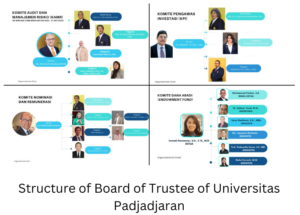
The University has elected representation on the highest governing body from students (both undergraduate and graduate), faculty, and staff (non-faculty employees). In December 2020, The Indonesian Minister of Education and Culture (Mendikbud) Nadiem Anwar Makarim officially appointed members of the Board of Trustees or MWA of Universitas Padjadjaran for the 2020-2025 period. Overall, Unpad Board of Trustees members consist of elements of the community, academic senate, and education staff, as well as ex-officio members consisting of the Minister of Education and Culture, West Java Governor, Chancellor, Chair of the Academic Senate, Chair of the Alumni Association, and Head of the Unpad Kema Student Executive Board.
The names of the Unpad Board of Trustees members include:
- Indonesian Minister of Education and Culture Nadiem Anwar Makarim (Ex-Officio);
- West Java Governor Ridwan Kamil (Ex-Officio);
- Unpad Chancellor Prof. Dr. Rina Indiastuti (Ex-Officio);
- Chairman of the Academic Senate Prof. Dr. Ganjar Kurnia (Ex-Officio);
- Prof. Arief Anshory Yusuf, PhD (Academic Senate);
- Prof. Dr. Arry Bainus (Academic Senate);
- Prof. Dr. Edy Sunardi (Academic Senate);
- Prof. Dr. Dany Hilmanto (Academic Senate);
- Prof. Dr. Roni Kastaman (Academic Senate);
- Prof. Dr. Tb. Zulriska Iskandar (Academic Senate);
- Dr. Arief Yahya (community);
- Drs. Nadjib Riphat Kesoema (community);
- Drs. Kemal Azis Stamboel, M.S.M. (public);
- Dr. Hadiyanto (community);
- Chairperson of Ika Unpad (alumni element);
- Edward Henry, M.M., (element of education staff); and
- Head of BEM Kema Unpad (student element).
Related Links:
There is a Board of Trustees-Student Representatives and a Board of Trustees-Student Representatives. In 2023, the Board of Trustees for Student Representatives will be Fissilmi Kaffah, a student from the Faculty of Communication Sciences class of 2019.
Additional Resource:
Universitas Padjadjaran actively supports the student union, recognizing it as a key part of university life. The union serves multiple functions, including providing students with a platform to voice opinions and contribute to governance decisions, offering support through academic guidance, mental health resources, and advocacy for student rights, and organizing social, cultural, and recreational activities that foster a sense of community and belonging on campus.
Student Organizations at Universitas Padjadjaran
Universitas Padjadjaran has various student organizations that function to support students’ self-development outside of academics. The Student’s Union was formed for various purposes such as providing governance input, support for students, and organizing social activities. Universitas Padjadjaran has more than 30 student unions.
Union Providing Governance Input
Student Executive Board and Student Representative Body exist at the University level, Faculty level, or as Student Associations at the study program level.
- BEM Kema (Student Executive Body): BEM Kema is an executive body that represents student voices. They organize activities, advocacy, and develop policies related to student interests.
- DPM (Student Representative Body): DPM is a legislative body that monitors and evaluates BEM’s performance and represents student decision-making aspirations.
- Student Association (HIMA): HIMA is formed at the department level to facilitate student activities in academic and non-academic fields and strengthen relationships between students and lecturers.
At the university level, every year, BEM Kema carries out “One Day with the Chancellor,” which aims to provide hope, criticism, and suggestions to university leaders.
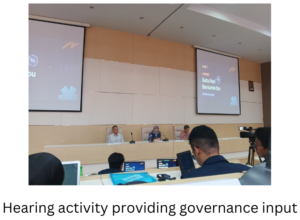
In 2023, at the Faculty level, one example of governance input initiated by the student’s union was in the Faculty of Economics and Business after conducting a Dialogue Assessment with the Dean. This Dialogue with Deans – Term 2 will address the hottest issues within the FEB environment. Therefore, this union invites Kema FEB to attend the discussion at the Dialogue with Deans – Term 2 so that all aspirations can be conveyed directly.
Union Providing Support for Students
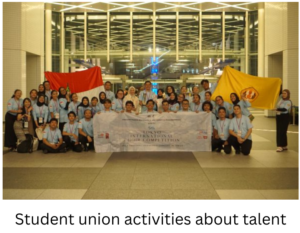
UKM (Student Activity Unit): Unpad has various UKMs covering areas of interest and talent, such as arts, sports, and research. UKM provides opportunities for students to develop their skills and hobbies.
Student Organizations (Ormawa): Various organizations related to specific study programs aim to increase solidarity and cooperation between students in one discipline. Some unions support students in academic and non-academic fields, such as:
- Unpad Kempo Unit
- Unpad Karate Unit
- Unpad Taekwondo Unit
- Unpad Student Chess Unit
- Unpad Bridge Unit
- Unpad Table Tennis Unit
Additionally, some organizations such as the Student Choir, Student Protocol Corps, Spectrum Photography Unit, Literary Arts Center, and Theater and Film support students in the arts.
Union Providing Social Activities
Student Community: Apart from official institutions, Unpad also has various student communities that focus on social, environmental, cultural, and innovation activities.
Search and Rescue (SAR) Unpad: An example of a student community with a social activities program is SAR Unpad, which engages in search and rescue operations and disaster preparedness.
- SAR Operations: SAR operations involve efforts to search for, help, and save human lives or essential items that are lost or feared to be lost, especially during disasters.
- Disaster Preparedness and Response: SAR Unit’s activities to improve welfare and assist during disasters through SAR Alert and response efforts.
Another social organization is the Unpad Indonesian Red Cross Voluntary Corps (KSR PMI Unpad), an activity unit focusing on social and humanitarian work, oriented towards the Indonesian Red Cross. KSR PMI Unpad plays a strategic role as part of PMI’s human resources and the youth who will continue PMI’s mission of service in the community.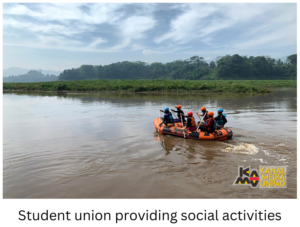
Universitas Padjadjaran has written policies (Rules) and procedures to identify local stakeholders external to the university and engage with them. There is the Rector Rule of Universitas Padjadjaran Number 7 in 2020 about Cooperation at Unpad. Based on the Rule, Cooperation is an agreement between Universities, Industries, and other stakeholders, both national and international. This kind of cooperation can be academic and non-academic.
From Article 4, Universitas Padjadjaran cooperation is carried out with the following principles: legal certainty, profit, benefit, transparency, accountability, good faith, responsibility, sustainability, and equality. Cooperation partners can be established with various parties, including local government and stakeholders.
Related Link:
Canteen Tenant from Local Stakeholders
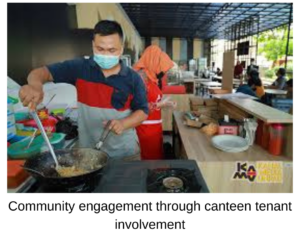
Universitas Padjadjaran engages with the local community, one of which is recruiting canteen tenants. Canteen tenants managed by the community on campus are usually the result of collaboration between the campus and the local community. This form of cooperation can take the form of renting space or facilities on campus intended for local communities to open canteen or food stall businesses. This collaboration will open up opportunities for people around campus to earn income through the canteen business.
Application Requirements for Canteen Management Permit:
- The applicant can be either an Individual or cooperative.
- The applicant has the status as an Indonesian Citizen (WNI).
- The applicant has integrity and a good personality.
- The applicant is domiciled in West Java.
Required Documents for Canteen Management Permit:
- Photocopy of West Java ID Card (KTP)
- Legalized photocopy of family card
- 2 (two) passport photographs measuring 4 cm x 6 cm
- Police Record Certificate (SKCK)
- Statement letter of the ability to comply with Unpad regulations
Related Link:
The Board of Trustees of Universitas Padjadjaran includes members from various sectors of society, such as local residents, local government, and civil society representatives. This composition ensures that local stakeholders have a meaningful mechanism for participating in the university’s decision-making processes. Their involvement helps align the university’s policies and strategies with community needs and fosters stronger collaboration between the institution and its surrounding environment.
Board of Trustee of Universitas Padjadjaran
The Board of Trustees from elements of society has a vital role in higher education governance, especially in state universities in Indonesia. Board of Trustee is the highest normative body, which functions as supervisor, policy maker and highest advisor regarding university management.
The community’s Board of Trustees members are critical for various reasons.
Community representation: They present an external perspective so that decisions at the university not only focus on internal interests but also consider the needs and views of society in general.
Balance in supervision: Community elements play a role in maintaining balance in university governance by monitoring the implementation of policies and ensuring that the university operates with good transparency and accountability.
Collaboration opportunities: Members of society usually have extensive networks that can open up opportunities for universities to collaborate with external parties such as industry, government, and other institutions in research, education, and community service.
Related Link:
Directorate of Research and Community Service
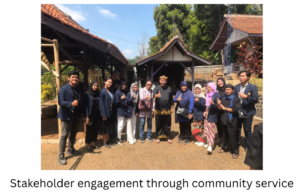
Community Service (PKM) is a sequence of education and research tied to the tridharma of higher education. Philosophically, PKM is a concrete manifestation of the application of knowledge (axiology), which is cyclical or feedback, so that “if it is implemented well, correctly, systematically and consistently (according to the road map and strategic plan)”, then The results will not only empower and make society independent and strengthen the nation’s competitiveness but will further develop (construct) and strengthen education and research.
Practically, PKM is general, meaning that it can be applied and implemented in various spaces and communities (both in urban areas, on the outskirts of urban areas and in rural areas, both within the country and abroad) and can be implemented independently or through collaboration with various parties. Related (partners or stakeholders), and can be implemented by lecturers and students.
Related Link:
Universitas Padjadjaran has principle and commitment on corruption and bribery. We launched an integrity zone at the university level and the Faculty and Directorate. At Universitas Padjadjaran, the implementation of anti-corruption education has been included in the campus curriculum. In addition, there is an Anti-Corruption Clinic and a Center for Legal and Constitutional Studies, which are important in building an anti-corruption ecosystem at Universitas Padjadjaran.
Gratification Control Policy and Bureaucratic Reform
In terms of policy, there are Gratification Control and Bureaucratic Reform policies. In this regulation, Gratification Prevention and Gratification Handling are explained. Every employee aware of the occurrence of gratification must disclose incidents of gratification experienced and known to the assignor and direct superior.
In gratification handling, a gratification control unit is tasked with providing consultations to stakeholders regarding gratification control within Universitas Padjadjaran. This unit also coordinates, consults, and corresponds with the Corruption Eradication Commission to implement the Gratification control system within Universitas Padjadjaran.
To improve the implementation of Good University Governance that is free from corruption, collusion, and nepotism, to create a healthy environment that has positive and conducive behavior, and to control the occurrence of gratification, it is necessary to prevent and control the occurrence of gratification within Universitas Padjadjaran. To support the implementation of prevention and control of the occurrence of gratification, a guideline for controlling gratification is needed, including that each Lecturer and Education Personnel makes a State Official Wealth Report (LHKPN) and State Civil Apparatus Wealth Report (LHKASN) within the University of Padjadjaran which is reported to the Corruption Eradication Commission.
Related Link:
Bureaucratic Reform at Universitas Padjadjaran
Bureaucratic reform within Universitas Padjadjaran is essentially an effort to carry out fundamental reform and changes to the administration system at Universitas Padjadjaran towards Good University Governance.
The action plans for realizing bureaucratic reform at Universitas Padjadjaran include gratification control, formation of an internal control unit, establishment of a Whistleblowing System, handling of conflicts of interest, and establishment of an Integrity Zone.
Universitas Padjadjaran Internal Control System is an integral process of actions and activities carried out continuously by leaders and all employees to provide adequate confidence in achieving organizational goals through effective and efficient activities, reliability of financial reporting, asset security, and compliance.
Unpad Whistleblowing System (WBS) or Alleged Violation Reporting System is a mechanism for reporting actions that are suspected of violating the Code of Ethics and Conduct and/or internal regulations and/or laws and regulations committed by Unpad Denizens.
Related Link:
Implementation of the Integrity Zone in All Faculties
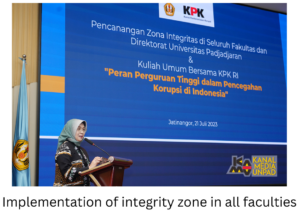
Universitas Padjadjaran launched the construction of Integrity Zones in all Faculties and Directorates, which was carried out by the Chancellor of Universitas Padjadjaran and Representatives of the Corruption Eradication Commission at Bale Sawala, Unpad Rectorate Building on Friday, 21 July 2023. The Chancellor signed the Integrity Pact with 17 Deans and 9 Directors at Universitas Padjadjaran on this occasion.
According to the Acting Director General of Higher Education, Research and Technology, Prof. Ir. Nizam, M.Sc., DIC, PhD, IPU, ASEAN. Eng. said that Universitas Padjadjaran is different from other campuses. Usually, an integrity zone is declared for one faculty or department only, but Universitas Padjadjaran has declared an Integrity Zone for all Faculties and Directorates.
Related Links:
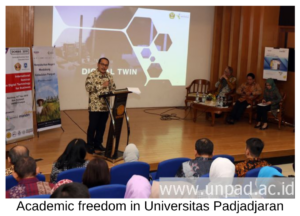
Unpad has a policy on supporting academic freedom (freedom to choose areas of research and to speak and teach publicity about the size of this research). This policy is stated in the Academic Senate Rule of Universitas Padjadjaran number 1 in 2023 about academic freedom, academic pulpit freedom, and scientific autonomy.
Freedom is the freedom of the academic community as part of academics, both as individuals and collectively, to develop and disseminate knowledge through research, creation, teaching, and writing activities responsibly. Freedom of the academic pulpit is the authority possessed by professors and lecturers who have scientific control to state openly and responsibly about everything related to the clump of knowledge, branch of knowledge, or field under study.
Academic freedom as referred to in Article 2 point d consists of the right to maintain and advance science, technology, art, and culture through research, teaching, and dissemination of other knowledge in accordance with personal aspirations based on scientific principles; and freedom to express thought and opinions in academic environments and forums.
Related Link:
Details on Academic Freedom and Scientific Autonomy
Academic freedom is the freedom of academics as part of the educational community, both as individuals and collectively, to explore, develop, and disseminate knowledge through responsible research, creation, and writing activities.
As referred to in paragraph (1), scientific autonomy is the independence and freedom of the academic community.
Academic freedom is carried out to explore, apply, develop, and disseminate science, technology, arts, and sports through educational activities, research, and community service in a quality and responsible manner.
Related Link:
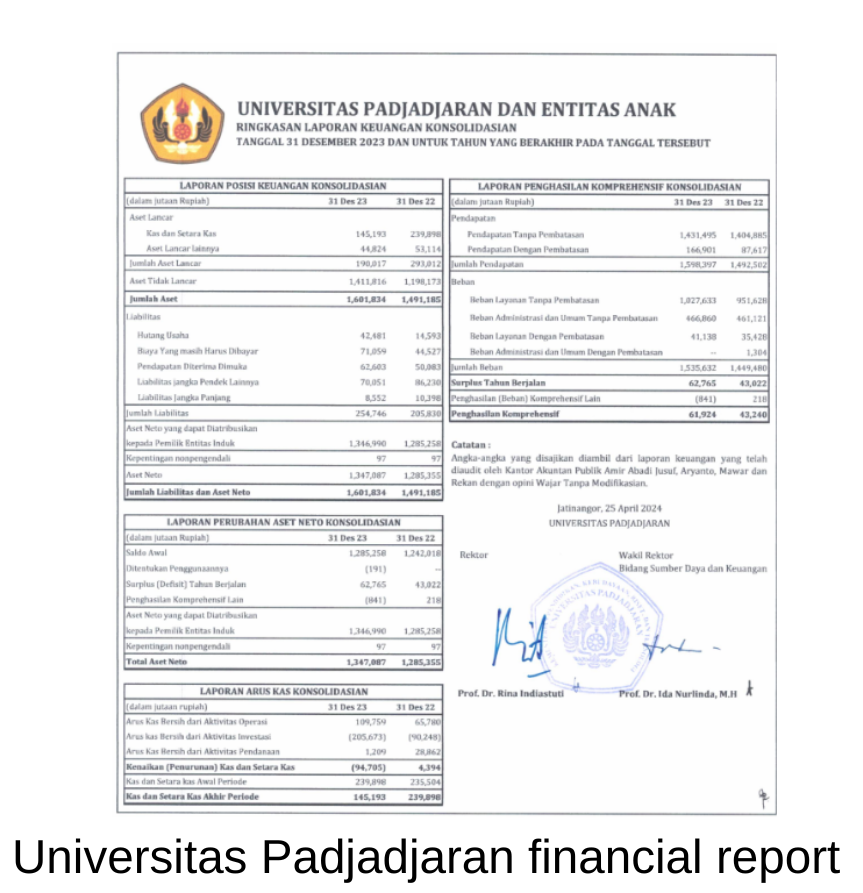
Universitas Padjadjaran, as a Legal Entity State University (PTNBH), publishs 2 (two) types of Financial Reports, namely Financial Reports based on government accounting standards (Financial Reports-SAP) and Financial Reports based on financial accounting standards (Consolidated Financial Reports-SAK).
SAP-Financial Report
The SAP-Financial Report is prepared concerning Government Regulation Number 71 of 2010 concerning Government Accounting Standards and the rules of sound financial management in Government.
The SAP-Financial Report presents financial reports on funds sourced from the State Revenue and Expenditure Budget as expenditure on civil servant salaries, Professor Honorary Allowances, Lecturer Certification Allowances, Lecturer Study Task Allowances and Food Allowances for Civil Servant employees.
The SAP-Financial Report consists of:
- Budget Realization Report
- Balance Sheet
- Operational Report
- Statement of Changes in Equity
- Notes to Financial Reports
Consolidated Financial Report-SAK
The Consolidated Financial Report-SAK is prepared by IFRS-based Financial Accounting Standards concerning the Decree of the Minister of Research, Technology and Higher Education Number 379/M/KPT/2018 concerning Accounting Policy for State Universities, Legal Entities within the Ministry of Research, Technology and Higher Education, and Regulations University Trustee Council Number 3 of 2020 concerning Universitas Padjadjaran Accounting Guidelines.
Consolidated Financial Statements-SAK presents the university’s financial reports, which have been consolidated with the financial reports of subsidiaries. Consolidated Financial Statements-SAK consists of:
- Financial Position Report
- Comprehensive Income Report
- Net Asset Change Report
- Cash Flow Statement
- Notes to Financial Reports
Financial reports are submitted periodically to meet the financial information needs of stakeholders such as the Board of Trustees of Universitas Padjadjaran, the Ministry of Education, Culture, Research and Technology, the Ministry of Finance of the Republic of Indonesia, the Financial Audit Agency of the Republic of Indonesia, and various other parties.
Related Link:
Policy review of Rector Regulation of Universitas Padjadjaran Number 7 of 2020 Concerning Cooperation at Universitas Padjadjaran
Point
Article 5, The types of Non-academic cooperation, as referred to in paragraph (1) include: a. Asset Utilization cooperation; b. Equity Participation cooperation; c. Business cooperation; d. Fundraising cooperation; e. Cooperation for services and royalties of the use of intellectual property rights; f. Cooperation in resource development; and/or g. Other cooperation as determined by the Rector.
Evaluation
By specifying the types of cooperation, the text clarifies the involvement of a wide range of relevant actors.
Recommendation
This policy is expected to be continuously implemented on campus in every campus cooperation.
Policy Review
Point: Article 2. d consists of the right to maintain and advance science, technology, art, and culture through research, teaching, and dissemination of other knowledge in accordance with personal aspirations based on scientific principles; and freedom to express thought and opinions in academic environments and forums.
Evaluation:
The existing policy is current and fit for academic freedom policy at campus
Recommendation
This policy is expected to be continuously implemented on campus for both lecturers and students.
Related link
https://sdgs.unpad.ac.id/wp-content/uploads/2024/11/Policy-review-of-Academic-freedom-policy.pdf
Universitas Padjadjaran provides expert advice to local, regional, and national governments through various channels, including policy guidance, participation in committees, and the provision of evidence-based research. The university’s faculty and researchers actively contribute to shaping policies by offering specialized knowledge in areas such as environmental sustainability, public health, disaster management, and education. Through these collaborations, Unpad helps inform government decision-making and support the development of effective strategies to address societal challenges.
Universitas Padjadjaran actively provide expert to government for local, regional, and national government.
1. National government such as The People’s Representative Council of the Republic of Indonesia
2. Regional government: Universitas Padjadjaran has Injabar that has a number of innovation to solve West Java Province problem.
3. Local government such Sumedang and Bandung City
Unpad Library and Information Science Lecturers’ Involvement in Commission X Hearing
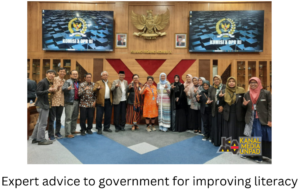
Several lecturers from the Library and Information Science Study Program, Faculty of Communication Sciences, gave presentations at the Public Hearing Meeting (RDPU) with the Commission’s Working Committee for Improving Literacy and Library Staff. This hearing meeting discussed several main issues as discussion topics, namely opportunities and challenges for literacy and library staff in Indonesia, support from universities for increasing literacy, a map of the needs and absorption capacity of Library Science Study Program graduates, as well as input and policy recommendations for increasing literacy and library staff. On this occasion, lecturers from the Library and Information Science Study Program, Faculty of Communication Sciences, Universitas Padjadjaran conveyed several inputs. They suggested that the government, as the entity responsible for literacy and library affairs, could optimize the implementation of existing policies to increase literacy and library staff resources, especially librarians.
Furthermore, it is hoped that there will be adjustments to the technical regulations contained in Law 43 of 2007 regarding library personnel. They consider that this profession has strategic duties, functions, and roles in increasing public literacy, apart from the profession of teachers and lecturers (educators).
Related Link:
Unpad Library and Information Science Lecturers’ Input in Commission X Hearing
Collaboration with the Bandung City Regional Finance and Asset Agency
The Faculty of Mathematics and Natural Sciences, Universitas Padjadjaran (FMIPA Unpad), is collaborating with the Regional Finance and Assets Agency on self-managing thematic maps of land rental objects belonging to the Bandung City government. This collaboration focuses on studying, researching, and developing an information system to improve land and building rental licensing services for the Bandung City Government by creating a GIS (Geographic Information System) based system. With the realization of a mapping application for textual and spatial data (thematic maps) of leased land assets owned/controlled by the Bandung City Government, which is integrated with the rental database, it is hoped that services to the community will improve, and the data needed to overcome planning and development problems can be accessed quickly online. In this collaboration, Ratna, S.Sos., MM (Commitment Making Officer for the Bandung City Regional Financial and Asset Agency) and Prof. Dr. Desi Harneti Putri Huspa, M.Si (Deputy Dean II FMIPA Unpad) are acting as coordinators.
Related Link:
Collaboration Agreement between FMIPA Unpad and Bandung City Regional Finance and Asset Agency
Universitas Padjadjaran conducted various activities focusing on education and approaches to policy and lawmakers. This activity includes discussions and seminars involving academics, policymakers, and legal practitioners to discuss important issues such as public policy, developments in arbitration law, and press freedom in the digital era. The main aim of this activity is to encourage constructive dialogue and produce policy recommendations relevant to political and legal developments in Indonesia.
Education Collaboration with the Library of the House of Representatives of the Republic of Indonesia
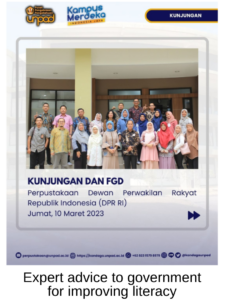
The Universitas Padjadjaran Knowledge Management Center received a visit from the Library of the House of Representatives of the Republic of Indonesia (DPR RI) in the context of planning the development of the DPR RI library by opening a communication network to higher education libraries, starting with the Central Library of Universitas Padjadjaran. It is hoped that this visit and Focus Group Discussion will provide mutual benefits in developing the library as a knowledge center by discussing the following:
- Collaboration to strengthen institutional repositories
- The connection between theories and academic activities with the government will strengthen related studies and research that support parliament
- Human resource development through internships, knowledge sharing, workshops, seminars both as presenters and participants, and joint content creation through various media to record and disseminate written sources and tacit knowledge supporting parliament
Related Link:
Political Education Collaboration with Pangandaran Regency General Election Supervisory Agency
The Unpad FISIP Political Science Department collaborated with Bawaslu Pangandaran Regency to organize Political Education and Establishment of a Participatory Supervision Women’s Smart Voter Network (Japedas) for Elections with Integrity. Present as speakers were Mrs. Nuryamah (Bawaslu West Java), Mrs. Firmawati (DEEP Pangandaran), Mr. Gaga Abdilah Syihab (Bawaslu Pangandaran), and Mr. Ade Ajat (Bawaslu Pangandaran). The Pangandaran Bawaslu collaboration with the Unpad Social Sciences Study Program held Political Education and the Formation of a Women’s Smart Voter Network (Japedas) to oversee the 2024 Election with integrity. This initiative also introduced Participatory Monitoring Ambassadors from Beginner Voter Elements led by the Prevention Division of Bawaslu West Java Province, represented by Hj. Nuryamah at the Krisna Beach Hotel Pangandaran. Sixty women, including members of the MSME Community, Fishermen’s Wives, PKK Cadres, and PKH Cadres, attended the political education activity. Resource persons included members of West Java Bawaslu, Hj. Nuryamah, Pangandaran Bawaslu Member Gaga Abdilah Syihab, and DEEP Monitor Firmawati, M.Hum. During this event, high school students, novice voters, and local students were inaugurated as Participatory Supervisory Ambassadors, who will act as participatory supervisory partners of Bawaslu Pangandaran. This ambassadorial program is an innovation by Bawaslu Pangandaran, with selection assistance from IPol Undergraduate Study Program students currently doing MBKM internships at Bawaslu Pangandaran.
Related Links:
Universitas Padjadjaran undertakes policy-focused research in collaboration with government departments to address key societal challenges and inform evidence-based decision-making. These research initiatives often involve partnerships with local, regional, and national government agencies, focusing on areas such as public health, environmental sustainability, disaster management, and economic development. Through these collaborations, Unpad contributes valuable data, insights, and recommendations that support the development and implementation of effective policies, ensuring that they are grounded in academic research and aligned with the needs of the community and broader societal goals.
Study of West Bandung Regency SDGs Achievement, Problems, and Challenges
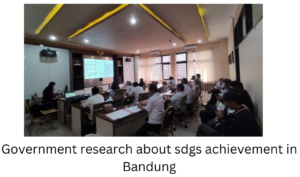
In supporting the achievement of the SDGs, provincial and district/city governments have the responsibility to align targets and programs with the central government. Monitoring and evaluation of the SDGs Regional Action Plan implementation is carried out every six months or at any time if necessary, supported by data and information from the Regency/City government. Therefore, it is essential to study projections to achieve SDG indicators. For the last few years, including 2023, West Bandung Regency has collaborated with the SDGs Center of Universitas Padjadjaran to prepare the Sustainable Development Goals Achievement document.
Indirectly, the West Bandung Regency SDGs achievement projection study can actively support SDGs achievement at the Provincial and National levels in 2030. Specifically, this study aims to facilitate the preparation of reports on projections for the achievement of SDG indicators, measure SDG achievement with business-as-usual (BAU), and socialize the projected results of SDG achievement in West Bandung Regency.
There are 66 indicators projected according to data availability. SDGs that are not projected in this study include SDGs 12, 13, 14, and 15. The data used in this study comes from various sources, including:
- Central Statistics Agency (BPS)
- Ministry of Manpower’s Data and Information Center
- Research and Development Agency
- Health Profile of the Ministry of Health
- Ministry of Finance
- West Java Province Basic Health Research
- National Social Security Council
- Indonesian Disaster Information Data
- Ministry of Communication and Information
The results are in the form of projections of SDGs achievement with indicator values determined based on:
- SCOR A (if the projection results reach/almost reach 97.5% of the SDGs target)
- SCOR B (if the projection results approach the SDGs target by at least 90%)
- SCOR C (if the projection is more than 75% towards SDGs target)
- SCOR D (if the projected results reach 50% of the SDGs target)
- SCOR E (if the indicator is still quite far from achievement or below 50% of the SDGs target)
Several indicators received grades C, D, and E, indicating the need for special attention from the West Bandung Regency government and involved parties to improve their achievements. It is important to remember that improving the performance of these indicators cannot be achieved simply by relying on usual work patterns; additional efforts, innovation, and cross-sector collaboration are needed.
Considering the limited resources available, the West Bandung Regency government needs to carry out selection or set priorities to achieve these indicators. Priority indicators can focus on areas like:
- Poverty and stunting reduction
- Proportion of women giving birth in health facilities and assisted by health workers
- Ownership of birth certificates
- Households with access to adequate drinking water and sanitation
- Junior high school completion rates
- Adequate and affordable housing
- SD NER based on gender and quintiles
- Residents affected by crime or violence
Related Link:
Universitas Padjadjaran actively participates in various research collaborations with government entities at different levels—central, provincial, and district/city governments.
- Central Government: Unpad’s research focus aligns with national development goals, especially in achieving the Sustainable Development Goals (SDGs). The university contributes to multiple research initiatives that inform policy-making, particularly in sectors like governance, public health, and education.
- Provincial Government: Unpad has established key collaborations in West Java, including partnerships with the Badan Pusat Statistik (BPS) to enhance the use of statistical data for research and policy-making. The Pojok Statistik facility at Unpad, launched in collaboration with BPS, allows academics and students to access government data and contribute to evidence-based policymaking across West Java.
- Local Governments: Unpad also works closely with district and city governments in Sumedang and other areas. Their research supports local governance, including rural development and public administration improvements. The university’s role is significant in translating academic research into actionable policies at the local level, especially in areas like regional planning and community development.
These collaborations reflect Unpad’s commitment to advancing research that is practical and impactful, contributing directly to governance and policy improvements across Indonesia.
Related Link:
Universitas Padjadjaran provides a neutral platform for various political stakeholders to engage in open and frank discussions about key challenges. Through the Center for Political and Democratic Studies, Unpad facilitates debates on political, social, and public policy issues, promoting diverse perspectives from academics, politicians, community organizations, and media. The university also hosts events that focus on topics such as national political dynamics, globalization, and governance, encouraging critical thinking and collaboration.
Various Discussions by the Center for Political and Democratic Studies
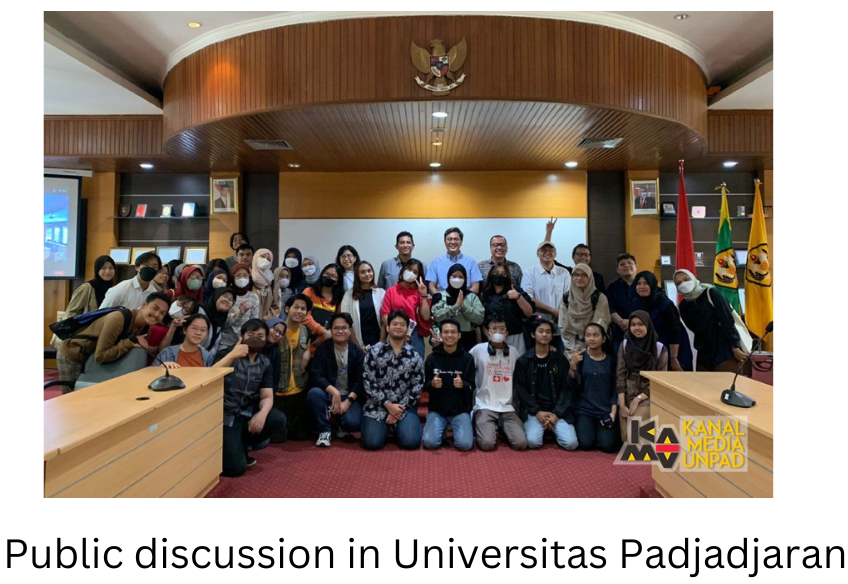
The Center for Political and Democratic Studies acts as a neutral and open forum for discussing various political, social, and public policy issues. As one of Indonesia’s leading political education centers, Unpad Political Science is committed to encouraging openness in the exchange of ideas among students, academics, and political practitioners. The center promotes diverse perspectives and critical thinking without bias towards specific interests, involving participants from various backgrounds—academics, politicians, community organizations, and media—ensuring a range of viewpoints in discussions.
The Center for Politics and Democracy spearheads various pivotal activities, emphasizing the core dynamics of political research, governance, and citizenship through seminars, discussions, and conferences.
Discussions at Unpad Political Science focus on political theories and highlight issues, such as national political dynamics, globalization, and government policies that affect people’s lives. This platform is an essential space for students to develop critical thinking skills, dialogue, and evaluate political issues objectively. Apart from that, Unpad Political Science encourages collaboration between scientific disciplines to enrich understanding of complex political phenomena.
Related Link:
Various Discussion Activities
- Foreign and Domestic Policy Direction (2024 Vice Presidential Candidate Spokesperson)
- Webinar Talkshow: Youth, Politics, and Social Media in the 2024 Election
- Seminar: Comparative Politics – Dynamics of Village Politics in East Java and West Java
Apart from the Faculty of Social and Political Sciences, which is active in carrying out discussion programs related to current issues. Other faculties regularly hold discussions, such as Communication Sciences.
Public Discussion: Inviting Cawe-Cawe Residents to Public Issues Towards 2024
The Faculty of Communication Sciences, Universitas Padjadjaran, held a Webinar Discussion activity on July 11 2023. This discussion was presented by Detta Rahman, Researcher at the Center for Communication, Media and Culture Studies, Fikom Unpad) and other speakers. Several policy recommendations from the webinar discussion were reviewed to increase opportunities for public participation, but these could have been more optimal.
Furthermore, he also explained that this discussion was based on the government and parliament opening participation channels that were administrative in nature and not yet substantial. Detta recommends that public issues and community participation be a priority.
Public participation can be increased through the active involvement of the community in the political decision-making process. In addition, the public needs to participate in public discussions regarding relevant political issues. In the end, Detta touched on his research, which contained complete public policy recommendations regarding the conditions of participation and the lack of optimal civil space from the Communication, Media and Culture Study Center of Fikom Unpad.
Related Link:
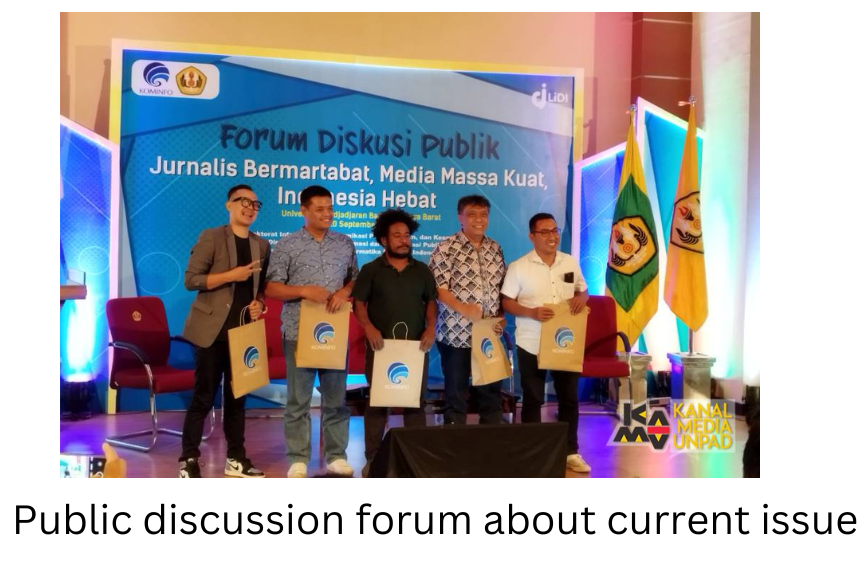
Public Discussion Forum: “Journalists with Dignity, Strong Mass Media, Indonesia is Great”
The Ministry of Communication and Information, in collaboration with the Journalism study program, Faculty of Communication Sciences, Universitas Padjadjaran, held a Public Discussion Forum entitled “Dignified journalists, strong mass media, great Indonesia” in a hybrid manner from the Postgraduate Auditorium. This activity invited several journalists from Papua and was attended by Fikom Unpad Journalism students. This event was attended by the Deputy Dean for Resources and Organization of Fikom Unpad, Dr Jenny Ratna Seminar, Dra., M.Si.
The series of Public Discussion Forums held on the Unpad Campus featured four speakers: the Dean of the Faculty of Communication Sciences, Universitas Padjadjaran, Dr. Dadang Rahmat Hidayat, S.Sos., S.H., M.Sc.; Editor in Chief of Mind of the People Satrya Graha Laksana; Journalist for LKBN ANTARA West Papua Bureau Fransiskus Salu Weking; and Tabura Post Kamasan Fainsenem Daily Morning Journalist.
Related Link:
Public Discussion: Press Freedom in the Digital Era
A public discussion held by the Center for Communication, Media and Culture Studies at Universitas Padjadjaran highlighted the challenges of press freedom in the digital era, focusing on the case of a YouTuber’s lawsuit against Kompas TV regarding the use of audiovisual material. Head of the Study Center, Kunto Adi Wibowo, PhD, emphasized that platforms like YouTube do not differentiate between journalism products and regular content, which impacts information curation and potential censorship. The strong role of influencers in disseminating information, which is often greater than that of mainstream media, was also discussed. However, influencers should be responsible for the funds they receive, especially from the government. Controversy regarding press freedom is revealed when unfavourable information is more susceptible to being questioned, while positive content is not challenged. AJI Indonesia emphasizes the importance of protecting freedom of expression and copyright, but regulations need to be improved so as not to limit this freedom
Related Link:
The relevance of PLP law – Has the application of PLP law been appropriate for all psychological scientists and practitioners?”
Faculty of Psychology Universitas Padjadjaran held an open discussion entitled “Psikologi Kopi Darat: The relevance of PLP law – Has the application of PLP law been appropriate for all psychological scientists and practitioners?”. This event aims to discuss various confusions and questions that arise among psychology scientists and practitioners regarding the newly implemented Psychology Service Practice Act (PLP Act).
This discussion presented two main speakers namely the Dean of the Faculty of Psychology Unpad, Prof Zahrotur Rusyda Hinduan, MOP., Ph.D. This event was organized by the strategic studies department of BEM Fapsi Unpad in collaboration with the Strategic Studies Department of BEM Faculty of Psychology, fully supported by the Indonesian Psychology students throughout Indonesia, ILMPI supports this activity to strengthen the role of students in national development, especially in the field of psychology. In the discussion, various questions regarding the implementation of PLP law were openly discussed, including its impact on the practice of psychological services in Indonesia. The event also highlighted the importance of fairness and transparency in the implementation of the PLP law, which is in line with Sustainable Development Goals (SDGs) point number 16. This point emphasizes the importance of building strong, fair, and transparent institutions, and providing access to justice for all.
Related Link:
Public Lecture: Arbitration in Indonesia
The Faculty of Law, Universitas Padjadjaran held a public lecture with the theme “The Supreme Court’s Views on the Development of Arbitration in Indonesia”, with the speaker being the Chair of the Indonesian Supreme Court Development Chamber, Prof. Dr. H. Takdir Rahmadi. In his presentation, Prof. Takdir emphasizes the importance of arbitration as an alternative dispute resolution faster and more precise than court. Even though Indonesia has regulations regarding arbitration, challenges such as low compliance with arbitration awards still exist. This event is also part of FH Unpad’s collaboration with the Association of Indonesian Arbitration Academics and Practitioners, which includes launching the logo and establishing the association’s organizational structure. This public lecture also supports the Arbitration Law and Alternative Dispute Resolution courses at the Unpad Faculty of Law.
Related Links: