

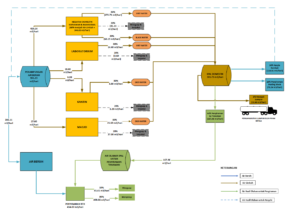
Taking responsibility for implementing water consumption tracking throughout the campus environment is the goal of monitoring and using water optimally in the form of supporting sustainable conservation. By improving water management, UNPAD positively affects the work environment in the long term. Savings and initiatives to use water wisely are always campaigned and become part of everyday life.
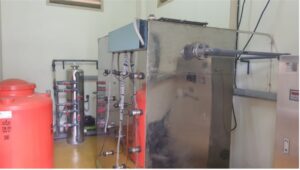
Implementing an efficient and environmentally friendly wastewater treatment system ensures that wastewater from campus activities can be utilized and processed without negatively affecting the environment. UNPAD’s main concerns are protecting and improving sustainability practices.
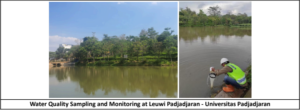
Maintaining sustainable environmental sustainability is a real action in improving and protecting water quality. Making all operational activities and campus facilities meet strict environmental regulations or standards. Implementation of proactive policies and practices in preventing water system pollution has been carried out by UNPAD for a long time so that the identification and overcoming of potential sources of pollution can be minimized.
- Preventing Water System Pollution
- Wastewater Encompasses All Liquid Waste
- Water Pollution Control in The Campus Area
- Ecoriparian Owned by Universitas Padjadjaran
- Strengthens Water Management and Conservation through Sustainability Guidelines
- Enhances Water Quality Management with New Contamination Prevention Protocols
- Center for Environment and Sustainability Science
- UNPAD Makes Biodegradable Plastic from Shrimp Shell Waste
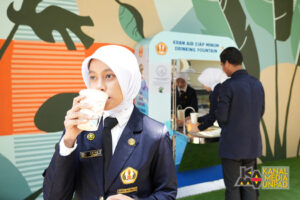
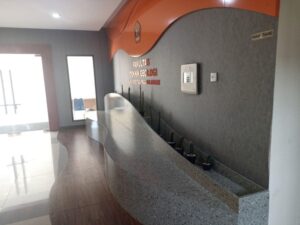
Providing access to free drinking water in various strategic locations on campus to support the academic community’s welfare and health and ensure easy access to clean drinking water to encourage a healthy lifestyle and reduce the use of single-use plastic in daily activities. This initiative ensures affordable access to clean water, supporting adequate hydration for all UNPAD residents.
- Unpad Introduces Jalatista Free Drinking Water Facility for the Campus Community
- Ready-to-drink Water Faucet to “Cikahuripan”
- Takes a Green Step Forward: Providing Free Drinking Water to Promote Sustainability
Free Drinking Water Source for Padjadjaran University Residents
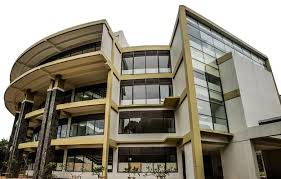
Implementing water-friendly building standards throughout campus facilities. This initiative ensures that all planned buildings can implement water efficiency, such as using water-saving energy, accommodate rainwater, and process water for reuse. This will minimize negative impacts on water resources and support the local environmental ecosystem around the campus.
Practices on water-saving plants to support awareness of water conservation. Practices such as using cactus plants and the like still produce a positive environment but use minimal water. This greening strategy is very efficient in saving water.
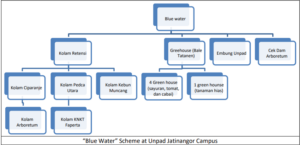
UNPAD has long implemented the policy of reusing water used on campus. This efficiency aims for resources and environmental sustainability by optimizing water utilization through a recycling system for secondary use, such as watering plants and the like. In addition, UNPAD also recycles water and minimizes water waste.
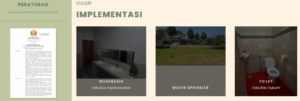
Measuring water reuse on campus is the main focus of Unpad in making water use more efficient by monitoring and evaluating the effectiveness of existing ones, such as water recycling on campus, to ensure that the reuse of water that has been used can run optimally. This is done for the sake of water conservation on campus.
Policy review of Regulation of the Academic Senate of Universitas Padjadjaran Number 22 OF 2021Concerning Management of eco-Friendly Campus of Universitas Padjadjaran
Point:
- Article 3
j. Prohibition and reduction of the use of single-use plastics in the form of drinking water packaging made of single-use plastics, single-use plastic bags, plastic-based food wrappers, plastic-based eating and drinking utensils and
backdrops, and plastic-based banners in the context of the principles of reduce, reuse, recycle, and reject;
(11) Conservation and management of water resources are unrestricted and can be reduced or increased according to the typology and needs of the campus by:
g. Using water from waste treatment with the principles of reuse and recycling to reduce the uses of clean water for fire fighting, watering plants, and other activities; - Article 4 – The Management of the Eco- Friendly Campus Program of Unpad refers to the following Green Campus benchmarks:
f. Water treatment, recycling, and storage;
Evaluation:
Padjadjaran University enforces the reuse of water used in the campus environment. The water used is reused to water plants, saving water with the water reuse method.
Recommendation:
Maintaining the implementation of water reuse in the campus area. Providing innovation methods for water reuse such as irrigation, cleaning and flushing toilets, gardening, farming, and others.
Related Link: