
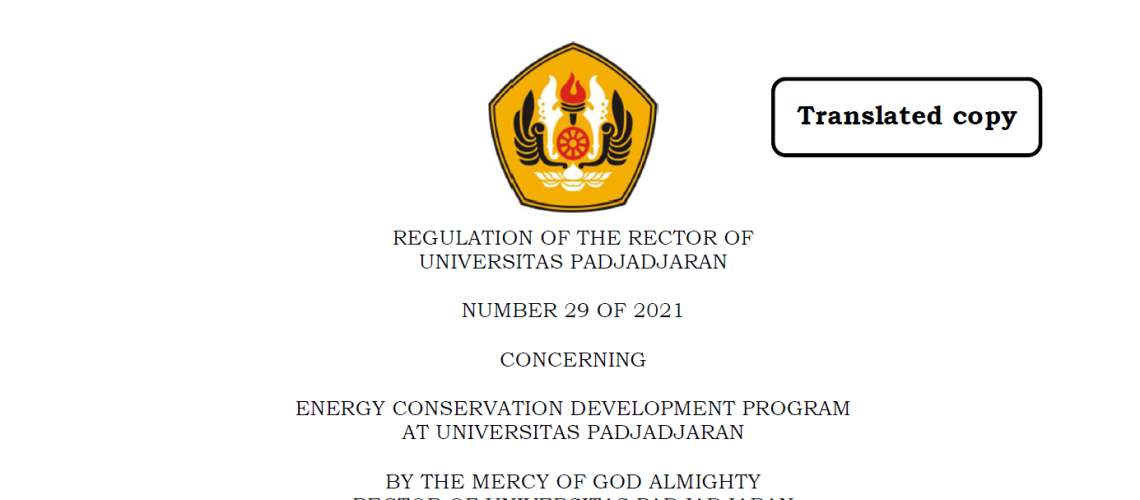
Universitas Padjadjaran has established a formal Energy Efficiency Plan through the Rector Regulation on the Energy Conservation Development Program. The foundation of this plan is outlined in Article 2, which sets sustainability, participation, and precaution as principles guiding all energy-related initiatives. These principles shape a structured effort to reduce energy consumption across the university. Further, Article 3 defines clear objectives, including minimizing environmental impact, ensuring ecosystem preservation, and contributing to the reduction of greenhouse gases.
The scope of the plan is detailed in Article 4, which mandates activities covering planning, implementation, maintenance, monitoring, and evaluation. This framework is operationalized in Articles 7 and 12, wherein the university is responsible for developing policies, strategies, and conservation programs while conducting systematic energy management. This includes setting annual and five-year conservation targets, preparing conservation programs that quantify energy needs, and implementing these plans progressively. The plan is supported by periodic energy audits, as required by Article 12 paragraph (3e), with all findings used to guide improvements and corrective actions.
To ensure long-term reduction in energy consumption, the regulation also integrates technology-based efficiency measures. Article 10 requires energy-related planning to prioritize energy-efficient technologies and appropriate infrastructure. Meanwhile, Article 11 encourages the utilization of renewable energy sources available around the campus, such as solar, wind, water, and biomass. Through this comprehensive regulatory framework, Unpad demonstrates a strong, measurable, and accountable commitment to energy conservation, fully aligned with national sustainability efforts and the targets of SDG 7 and SDG 13.