
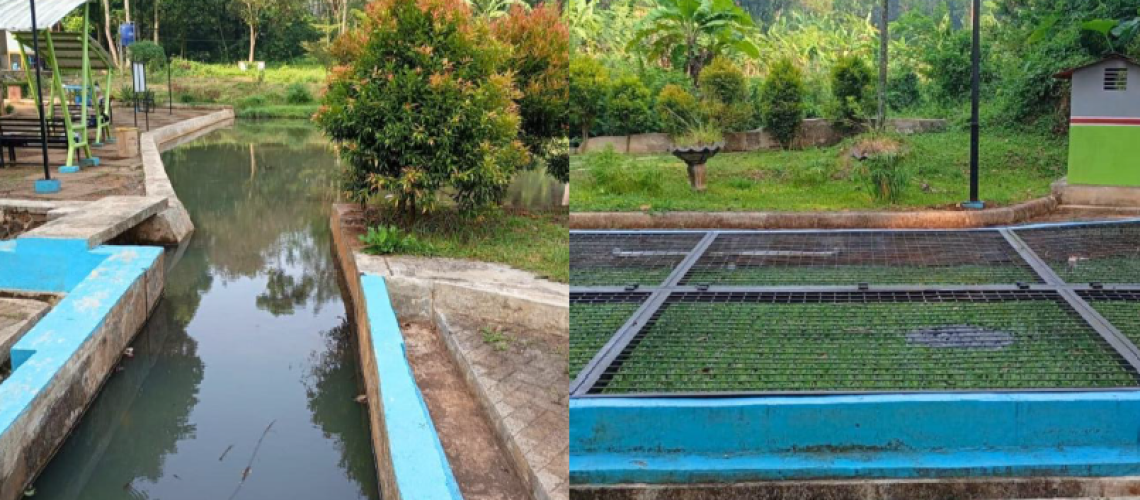
Water discharge refers to the controlled release of wastewater from campus activities into the environment after appropriate treatment to ensure compliance with environmental quality standards. At Universitas Padjadjaran (Unpad), water discharge management is an integral part of sustainable campus operations, designed to minimize pollution, conserve resources, and support circular water use.
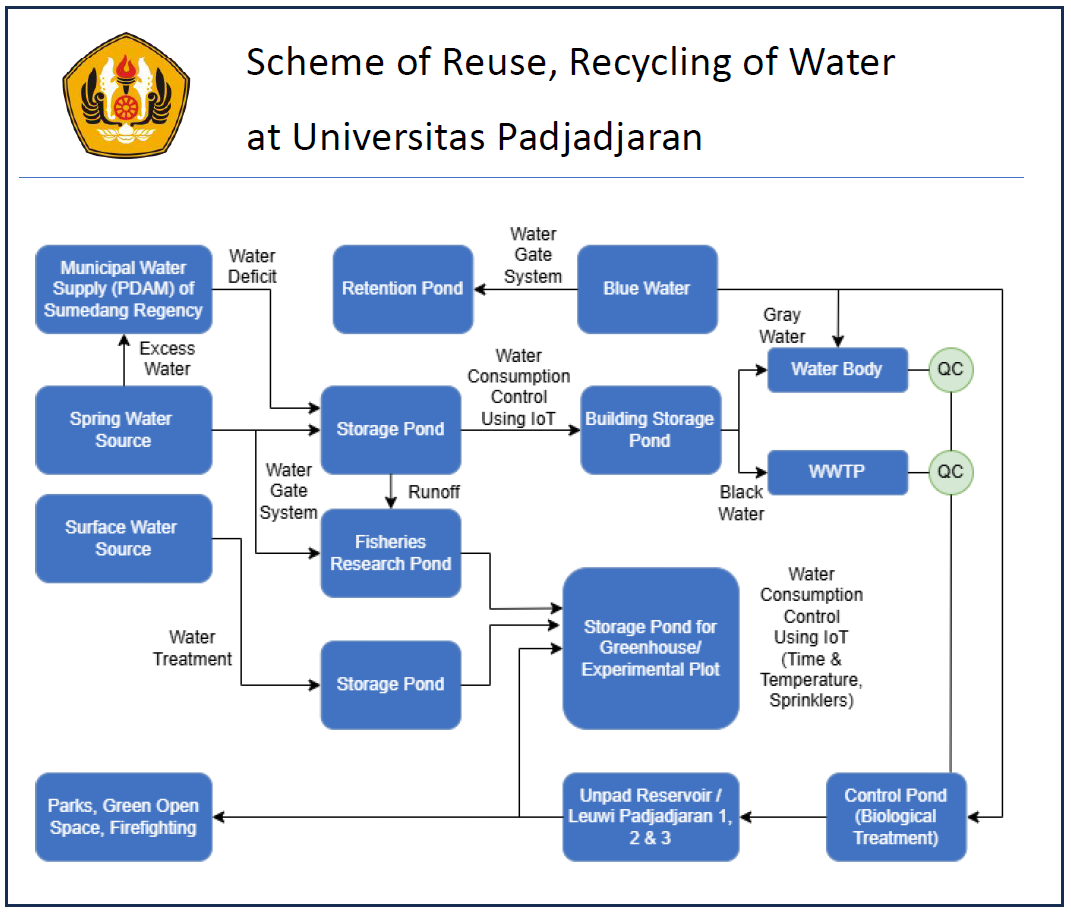
Unpad implements an integrated Re-Use and Re-Cycling Water System that manages water from various sources, including PDAM supply, springs, and surface water. Wastewater generated from academic buildings and residential areas is classified into gray water and black water. Both are processed through the Wastewater Treatment Plant (IPAL) using biological and physical treatment methods before reuse or safe release into the environment. Treated water is reused for irrigation, fishery research ponds, campus reservoirs, and green open spaces, reducing the volume of discharged wastewater. The system is equipped with IoT-based monitoring to control water consumption, flow, and temperature in real time.
To ensure environmental protection, Unpad’s water discharge strictly complies with the following environmental standards:
Biological Oxygen Demand (BOD) and Chemical Oxygen Demand (COD) within permissible limits.
pH levels maintained within the safe range (6–9).
Absence or minimal presence of heavy metals and hazardous substances.
Compliance with Indonesian government regulations on wastewater quality before discharge.
In supporting these standards, Unpad refers to several key institutional and regulatory documents, including:
“Dokumen Pengelolaan Limbah Cair, Limbah Domestik, dan Limbah B3” (2022) issued by Kantor PK3L Unpad, which provides technical procedures for wastewater management, treatment, and safe discharge in accordance with national environmental standards.
SOP 005/SF UNPAD/2020 titled “Standard Operational Procedures for the Management of Syringe Waste, Biological and Infectious Liquid Waste, Bromide Ethidium Waste of Universitas Padjadjaran”, which regulates laboratory and hazardous liquid waste handling to prevent contamination of aquatic environments and ensure occupational safety.
Rector Regulation Number 22 Of 2021 about Management of Eco-Friendly Campus, which integrates wastewater and hazardous waste management into Unpad’s sustainable campus framework.
The Unpad pond collects and stores drainage water for irrigation in the rice fields, planting areas, and experimental gardens on Unpad’s Jatinangor Campus. A pump in the basin distributes water exclusively for irrigation in the rice fields located east of the Unpad campus. In addition to collecting rainwater from building rooftops, it is also possible to utilize surface runoff from land surfaces as a source of irrigation water during times of drought or water scarcity.
https://drive.google.com/file/d/1CfLLqs4auMR-j_3ONOSnc_qw2cENqqp5/view?usp=sharing
https://drive.google.com/file/d/1uM5AtvvsbRb4RaJY6onhtnzU5S0BKkDk/view?usp=sharing