
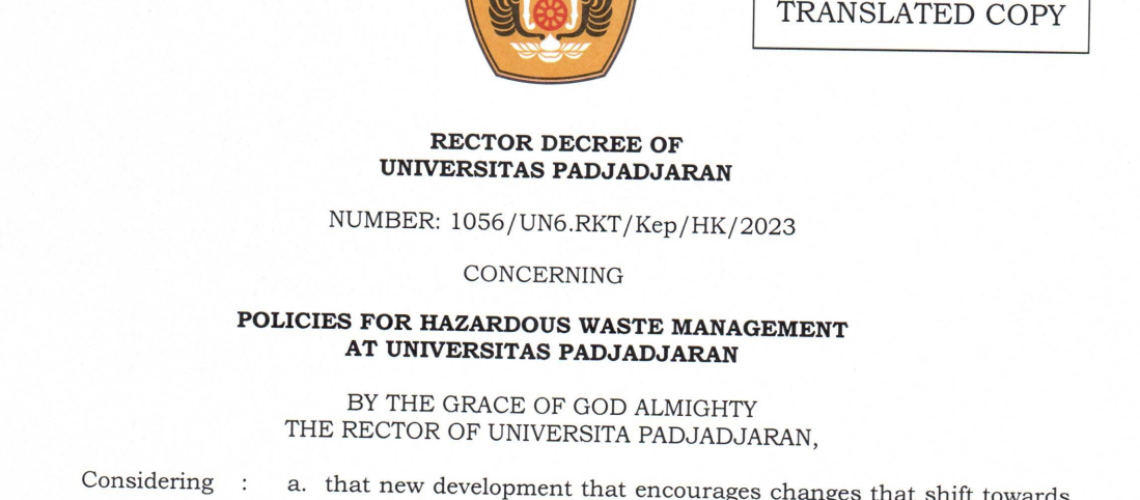
Universitas Padjadjaran has a policy regarding the management of hazardous waste, particularly in laboratory settings. The university has established regulations, including those outlined in Rector Decree Number 1056 of 2024, which set guidelines for the storage, labeling, transportation, and processing of hazardous materials. These regulations aim to protect human health and the environment by ensuring proper disposal of hazardous waste, such as through neutralization, sterilization, and incineration. Furthermore, specific laboratories, like the Food Microbiology Laboratory, have their own Standard Operating Procedures (SOPs) for handling waste safely and responsibly.
Hazardous material waste management regulations on campus are significant in protecting human health and the environment. Fluid waste that is not managed correctly can pollute soil and water sources, negatively impacting the ecosystem. Additionally, proper management reduces the risk of contamination, maintains laboratory safety, and ensures compliance with environmental regulations. By having clear regulations, campuses can more effectively contribute to sustainability and environmental protection.
sdgs.unpad.ac.id/wp-content/uploads/2023/10/Policy-waste-disposal-hazardous-materials.pdf
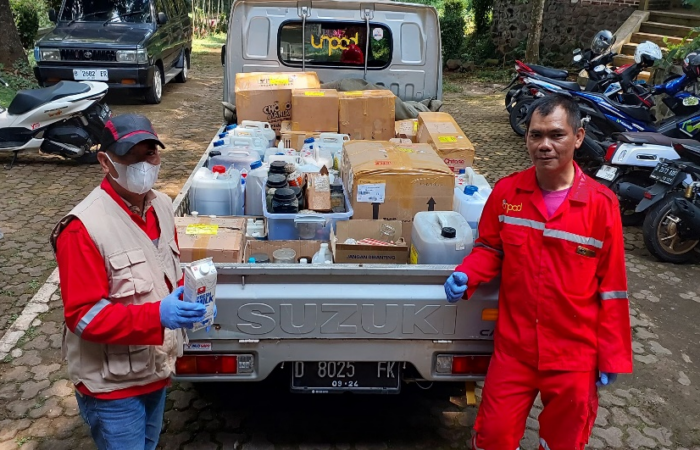
Universitas Padjadjaran has regulations regarding the management of hazardous materials. One of them is the Regulations on the Central Laboratory. This regulation explains the procedures for managing hazardous and toxic waste in central laboratories, including;
Storage
Storage is a temporary activity for B3 waste until the amount is sufficiently transported or processed. This is done with considerations of economic efficiency.
Labeling
Containers/jerry cans must be clearly labelled and marked, describing the contents of the B3 waste. Chemical elements should be written in full in percentage format. If the composition of a chemical found is unknown, it will be labelled “hazardous or unidentified chemical.”
Transportation
B3 waste is transported to storage, processing/IPAL/final disposal facilities if not handled on-site.
Processing
B3 waste processing is an activity that reduces and eliminates hazardous and toxic properties. This activity must be carried out by everyone who produces B3 waste. If the B3 waste producer cannot carry out the processing himself, the processing of the B3 waste is handed over to the B3 waste processor/3rd party.
Waste processing techniques in the central laboratory consist of neutralization, sterilization, distillation, precipitation, stabilization/solidification/sedimentation, and incineration.
https://drive.google.com/file/d/1QWlX0t5kxQHnhUjdej_CY5wdJRJz_DLQ/view?usp=drive_link
Not only regulations at the University level and the Central Laboratory, but laboratories owned by the Faculty also have regulations. An example is the Standard Operational Procedure (S.O.P) in the Food Microbiology Laboratory. This regulation explains the Handling and Disposal of Media Waste. NON-PATHOGEN liquid medical waste: 1) Liquid waste is disposed of in a particular sink for washing equipment; 2) Before disposal, glassware containing waste is sprayed with 70% alcohol; 3) Some liquid medium waste or test tubes contain NaCl and samples contain solids, so the solids must be thrown into a plastic bag (must not be thrown in the sink); 4) Researchers are required to clean the sink after disposing of waste and spray their hands with 70% alcohol and wash their hands with antiseptic soap.
https://drive.google.com/file/d/1muDvpbTKpoLUkzA2QbEBonjKbhbBw4jv/view