
Universitas Padjadjaran (Unpad) has implemented a comprehensive waste management policy emphasizing waste reduction, recycling, and responsible landfill disposal. Guided by Rector Regulation No. 12 of 2022 on Waste Management and Eco-Friendly Campus policies, Unpad actively monitors the volume of waste generated, focusing on reducing landfill contributions while maximizing recycling and resource recovery. The policy integrates systematic procedures from waste segregation and processing to community engagement and aligns with national sustainability standards.
Unpad’s waste management approach includes waste banks, recycling programs, and public awareness campaigns, fostering a culture of environmental responsibility across the campus community. The university collaborates with the local government and waste management enterprises to ensure effective landfill reduction through structured handling, categorized processing, and waste-to-resource initiatives.
Waste Handling Activities (Article 5 Point b)
Unpad’s waste handling and disposal activities follow an integrated process that includes:
Selection: Grouping and separating waste according to its type, quantity, and characteristics.
Gathering: Collecting and transferring waste from its source to temporary collection or integrated processing sites.
Transportation: Moving waste from collection points to Unpad’s Waste Processing or Final Processing Site.
Processing: Altering waste characteristics, composition, or volume through treatment methods.
Public Awareness: Disseminating warnings and educational campaigns to prevent littering.
Waste Bank Creation: Establishing waste banks in partnership with regional governments or waste management companies to support recycling and resource circulation.
Source: Rector Regulation No. 12 of 2022 on Waste Management
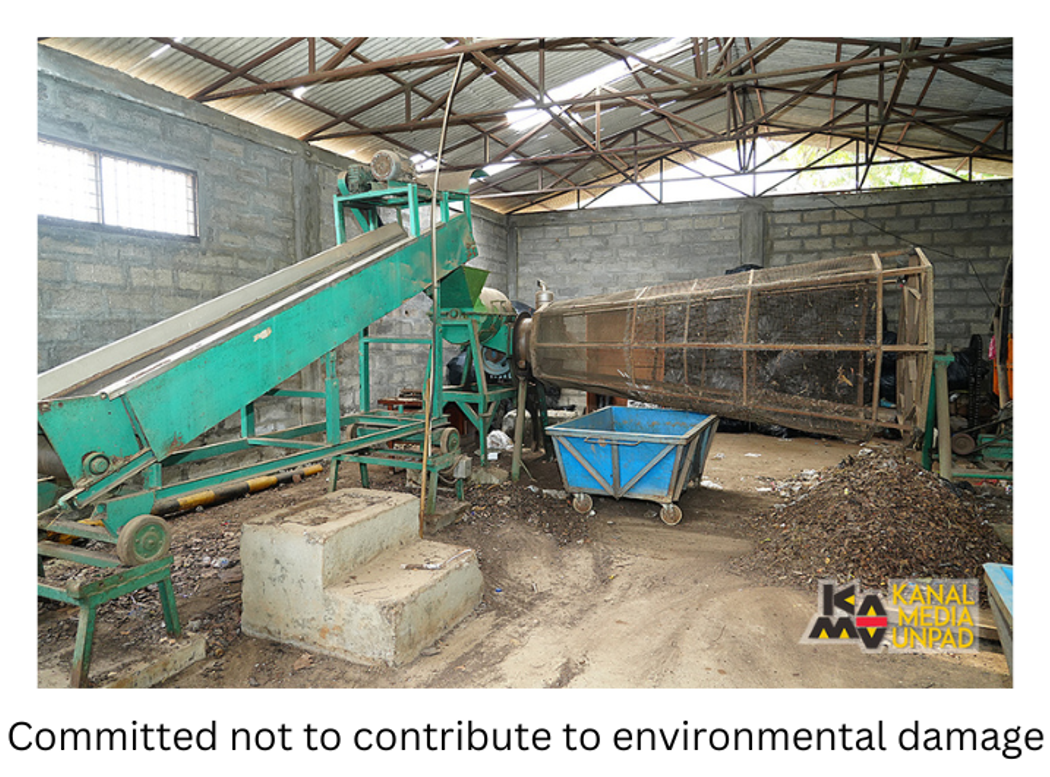
At the TPS3R Unpad facility, organic waste undergoes both aerobic and anaerobic processing:
In the aerobic process, litter is decomposed through open fermentation.
In the anaerobic process, organic waste is further treated with the bokashi system, adding nutrients to accelerate decomposition and reduce waste volume.
Through these structured policies and processing systems, Universitas Padjadjaran effectively measures, manages, and minimizes waste sent to landfills, while increasing recycling and reuse rates.