
Admission Policy
Universitas Padjadjaran has Rector Regulation Number 12 of 2024 concerning Guidelines for Admission of New Students of Universitas Padjadjaran. There are principles for accepting new students, namely fair, accountable, flexible, efficient, transparent, and prohibition of conflicts of interest, as stated on the website for admission of new students of Universitas Padjadjaran https://smup.unpad.ac.id/visi-dan-misi-smup/ . Fairness means providing open opportunities without distinguishing between ethnicity, religion, race, and inter-group, with affirmation for economically disadvantaged community groups. Article 20 explains that Universitas Padjadjaran accepts special needs (disabled) selection. Participants come from high schools with special needs or participants with a special needs certificate from a hospital or related institution. Article 19 explains the allocation of new student admissions specifically for biological children from families who are the first to continue their studies (first-generation students). In Article 17, Universitas Padjadjaran provides special allocations for people living in outermost, foremost, and disadvantaged areas (3T) and poor areas.
Universitas Padjadjaran opens wide for people who want to continue their studies on campus by opening mechanisms for exam paths, academic achievements, and talent interests/non-academic achievements for prospective students. In paying tuition fees for students with low economic ability, they can apply for study fee assistance according to the established mechanism. Student UKT fees must be fair according to the parent’s ability.
- To increase access and learning opportunities in higher education for high school graduates or equivalent, Universitas Padjadjaran has an affirmative policy that accepts new students to provide more significant opportunities for minorities to access higher education. There are five community groups as follows:
- People living in 3T areas (geographically remote and economically marginalized areas)
- Residents from regencies/cities in West Java and Banten
- Prospective students who come from schools that are underrepresented in Unpad and schools whose graduates have outstanding achievements in Unpad
- Biological Children of Unpad Lecturers and Education Personnel
- Participants were from families whose family members had never continued their studies in higher education.
- https://jdih.unpad.ac.id/dokumen/peraturan-rektor-universitas-padjadjaran-nomor-12-tahun-2024-tentang-mahasiswa-baru-program-sarjana-dan-sarjana-terapan-jalur-seleksi-mandiri/
- https://sdgs.unpad.ac.id/wp-content/uploads/2024/10/Rectors-Decision_Affirmation-of-New-Student-Acceptance-at-Padjadjaran-University.pdf
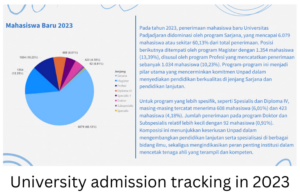
Universitas Padjadjaran is committed to promoting diversity and inclusion within its academic community. The university actively measures and tracks applications and admissions from underrepresented groups, including those based on socioeconomic status, ethnicity, gender, and geographic location. By systematically collecting and analyzing data on these groups, Unpad can identify trends, assess the effectiveness of outreach initiatives, and develop strategies to further increase access to higher education for historically marginalized populations.
The bias towards underrepresented groups on campus is an effort to ensure that all students, regardless of their background, have equal access to education, resources, and opportunities. This group can include students from various races, ethnicities, genders, disabilities, economic statuses, and others.
Data collection on underrepresented groups by Universitas Padjadjaran is even carried out in the New Student Admissions process. Prospective students are asked to fill out a form that includes the presence or absence of disabilities. With the data collection, Universitas Padjadjaran provides technical assistance during the selection process to prospective students who need it.
https://drive.google.com/file/d/1vmN4XzQJo3pV5Ycn3ysQRsNSUSZxVZqe/view
Measuring data regarding underrepresented groups is critical to provide information that everyone has the right to a fair opportunity to develop without discrimination. In addition, this data collection is a form of support to reduce discrimination and create a more friendly and inclusive campus environment. Universitas Padjadjaran provides access to university track applications for underprivileged and underrepresented groups, such as low-income students, women, and disabled students. As stated in the following link:
Universitas Padjadjaran takes planned and strategic actions to recruit students, staff, and faculty from underrepresented groups. This includes targeted outreach programs aimed at encouraging applicants from diverse socioeconomic, cultural, and geographical backgrounds to apply to the university. Unpad ensures equal opportunities in the admissions process by providing scholarships, financial aid, and support services to reduce barriers to access. The university also fosters an inclusive recruitment environment for faculty and staff, actively seeking to diversify its workforce through dedicated recruitment channels and promoting policies that encourage diversity, equity, and inclusion. These efforts are designed to create a more representative and inclusive academic community at Unpad.
The policy of non-discriminatory campus recruitment is essential in creating an inclusive and fair academic environment. Universitas Padjadjaran organizes a program to recruit students/staff/lecturers from underprivileged groups to be accepted as new Unpad students, both from the 3T regions (the frontier, outermost, and disadvantaged regions) and needy families (holders of Smart Indonesia Card-College). This is stated in the Regulation of the Chancellor of Universitas Padjadjaran Number 12 of 2024 concerning New Students.(https://jdih.unpad.ac.id/dokumen/peraturan-rektor-universitas-padjadjaran-nomor-12-tahun-2024-tentang-mahasiswa-baru-program-sarjana-dan-sarjana-terapan-jalur-seleksi-mandiri/) This Regulation states that admission is carried out with the principles of fairness, accountability, flexibility, efficiency, transparency, and prohibition of conflicts of interest. In addition, there are regulations on affirmative acceptance of New Students targeting five community groups as stated in the Chancellor’s Decree concerning Affirmative Acceptance of New Students as follows: namely https://sdgs.unpad.ac.id/wp-content/uploads/2024/10/Rectors-Decision_Affirmation-of-New-Student-Acceptance-at-Padjadjaran-University.pdf
People living in 3T (geographically remote and economically marginalized areas)
Residents from regencies/cities in West Java and Banten
Prospective students from schools that are underrepresented at Unpad and/or schools whose graduates have excellent achievements at Unpad
Children of Unpad Lecturers and Education Personnel
Participants from families whose family members have never continued their studies at a university
The student recruitment plan that prioritizes underrepresented groups is proven by Unpad’s socialization to the general public, both online, student visits to campus, and socialization activities to the regions. Even in 2023, Padjadjaran University conducted socialization in Timor Leste which took place at the Indonesian Cultural Center (PBI)-Indonesian Embassy in Dili City, Timor Leste, 24-26 October 2023.
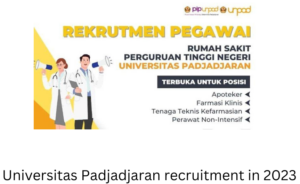
In 2023, Padjadjaran University will conduct recruitment for both Lecturer and Staff positions at Padjadjaran University Hospital. https://www.tribunnews.com/nasional/2023/10/02/lowongan-kerja-rumah-sakit-unpad-buka-4-posisi-simak-syarat-dan-jadwal-seleksinya
In every staff recruitment, Padjadjaran University has Rector Regulation Number 27 of 2022 concerning the Management of Non-Civil Servant Education Personnel within Padjadjaran University. All Indonesian citizens are open to applying for jobs according to the formation and meet the required formation requirements. Recruitment of Prospective Education Personnel is carried out transparently and through objective assessments based on competency, qualifications, needs and other requirements needed in the position.
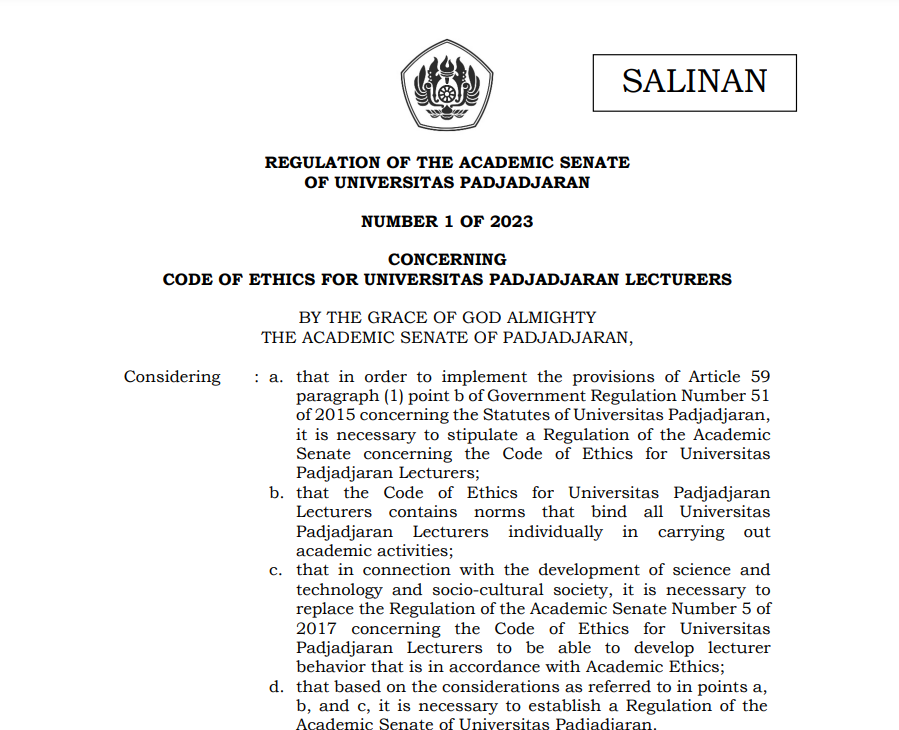
Universitas Padjadjaran is concerned with anti-discrimination policies on campus, as stated in the Lecturer and Student Code of Ethics Regulations. Lecturers’ and students’ ethics are based on the following fundamental values: Law-abiding, integrity, dignity and respect, openness, academic freedom, and autonomy in science. Law-abiding characteristics of attitudes and behaviour that comply with applicable laws and regulations to create a just life in Indonesian society. Integrity consists of values in behaviour that uphold honesty, justice, trust, and responsibility. Dignity and respect consist of values in being committed to treating everyone with respect and humanely and by adhering to the norms of decency, propriety, or appropriateness; maintaining the good name and dignity of oneself and Unpad; and maintaining respect and tolerance for differences and diversity by Pancasila. Openness consists of Conscience and being willing to listen and seriously consider other people’s opinions. Academic freedom includes the right to maintain and advance science, technology, art, and culture through research, teaching, and dissemination of other knowledge by personal aspirations based on scientific principles and the freedom to express thoughts and opinions in academic environments and forums.
Universitas Padjadjaran also has Regulation about Inclusive campus. This regulation ensures all admission and graduate activities of entire society of academicians of Universitas Padjadjaran, both women, underprivileged groups, people with disabilities, from the disadvantaged, frontier, and outermost regions, from developing countries, as well as ethnicities, races, religions, cultures, and other minority groups.
https://sdgs.unpad.ac.id/wp-content/uploads/2024/11/Circular-Letter-Number-295-Concerning-Inclusive-and-Antidiscrimination-Campus-Within-Universitas-Padjadjaran.pdf
In addition, attention to the rights and needs of persons with disabilities is an integral part of the anti-discrimination principle. In this context, an inclusive approach to disability is an effort to ensure that individuals with disabilities have equal rights in various aspects of life, including education, employment, and access to public services. Anti-discrimination refers to equal treatment, regardless of physical or mental differences, by various national and international regulations that promote equality for persons with disabilities. Efforts such as accessibility, exceptional support, and anti-discrimination policies in the workplace or education are concrete examples of disability-friendly efforts to support social inclusion.
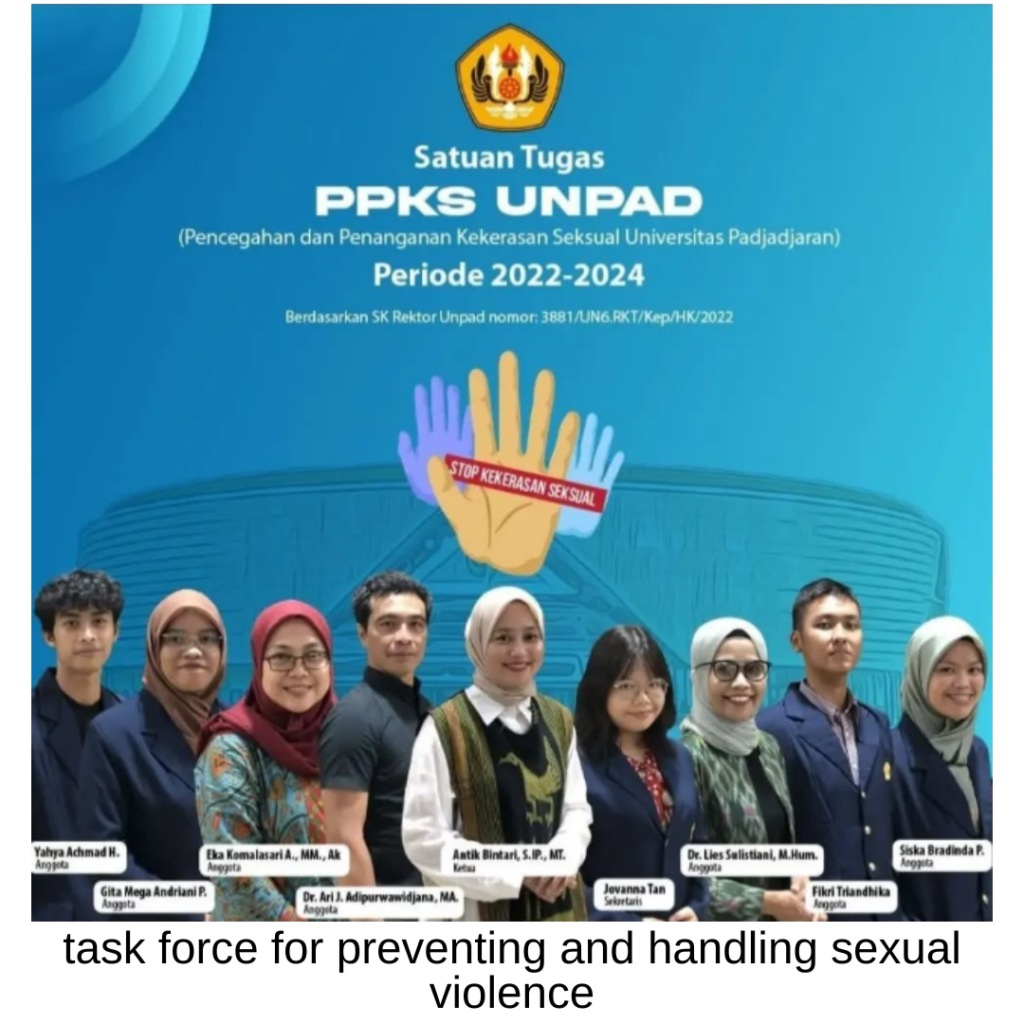
Universitas Padjadjaran has a dedicated office responsible for promoting diversity, equity, inclusion, and human rights on campus. This office is tasked with advising the administration and governing body on policies, programs, and training related to these issues. The Gender and Child Research Center provides a “Safe Space” facility for victims and survivors of sexual violence. This facility is expected to be a place for victims and survivors to get security and protection from the trap of violence they experience, in addition to having a Gender and Child Research Center and also a Safe Space Facility. Padjadjaran University also has a Task Force for preventing and Handling Sexual Violence. This Task Force routinely provides assistance and investigations into Reports of Sexual Violence on Campus and submits reports periodically.
Gender and Children Research Center Information
https://www.instagram.com/pusrisgaunpad/
Information about PPKS Unpad
https://www.instagram.com/ppksunpad/
In addition to the issue of Gender and Sexual Violence, Universitas Padjadjaran also has an Ethics Committee and a Disability Task Force. The task of this Task Force is to conduct various publications and campaigns about disability-friendly campuses, provide consultations on disability assistance practices in faculties and other work units at Unpad, including through a disability-friendly website, provide consultations for Lecturers and Education Personnel in supporting students with disabilities, conduct periodic evaluations of special service programs implemented and continuously improve services.
https://english.fib.unpad.ac.id/ruang-aman-a-safe-space-for-survivors/
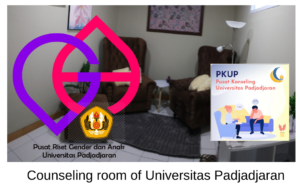
Universitas Padjadjaran has a concern for supporting underrepresented groups, which aims to handle students who have problems, especially those of a non-academic nature, carried out by counsellor lecturers who are members of the Faculty/Study Program Guidance and Counseling Team or can be referred to the University Guidance and Counseling Team. The University level has a Center for Character Strengthening and Counseling (P2K2). P2K2 was established to help students optimize their potential in facing academic and social environments and physical and mental health issues through a character-strengthening and counselling scheme that is preventive-interventive, curative, and promotive. P2K2 generally has two main activities: encouraging the strengthening of the character of Unpad students or JATIDIRI Unpad and providing free psychological services for the Universitas Padjadjaran community, including students, lecturers, and staff.
Information of P2K2 : https://www.instagram.com/p2k2.unpad/
Each faculty at Padjadjaran University has unique guidance and counselling programs, such as the Hello Bu Dean Program from the Faculty of Cultural Sciences, FPIK Care, and other faculty programs.
- The Faculty of Cultural Sciences Unpad has a program called “Hello Bu Dekan.” https://fib.unpad.ac.id/en/halo-bu-dekan-sexual-violence-complaint-service-initiated-by-fib-unpad/
- The Faculty of Fisheries and Marine Sciences has a FPIK care center programhttps://fpik.unpad.ac.id/fpik-care-centre-mengoptimalkan-dukungan-untuk-mahasiswa-melalui-program-advokasi-dan-pendampingan/
- The Faculty of Psychology has an academic advisor program https://psikologi.unpad.ac.id/en/talk-show-closer-to-and-the-existence-of-academic-advisors-as-actual-efforts-of-faculty-of-psychology-unpad-in-supporting-mental-health/
- Faculty of Nursinghttps://fkep.unpad.ac.id/bimbingan-dan-konseling/
- Faculty of Geological Engineering https://drive.google.com/file/d/1PM3BYxX_R1lipIh-7iinGKNzsSQNNc60/view
- PSDKU Unpad Pangandaran https://psdkupangandaran.unpad.ac.id/psdku-unpad-tingkatkan-kesadaran-pencegahan-dan-pencegahan-kekerasan-seksual/
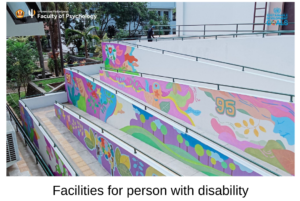
Universitas Padjadjaran has taken various steps to support students with disabilities through inclusive facilities and programs. Unpad strives to ensure that campus facilities are accessible and friendly to students with disabilities.
Inclusive facilities provided at Unpad include:
- Accessibility Ramps and Paths: Many buildings at Unpad are equipped with ramps to facilitate access for wheelchair users.
- Accessibility Lifts: Several lecture buildings are equipped with lifts that can be accessed by students who use wheelchairs or have limited mobility.
- Special Toilets for the Disabled: Unpad provides toilets designed for wheelchair users in several buildings.
Learn more about Unpad’s disability-friendly initiatives:
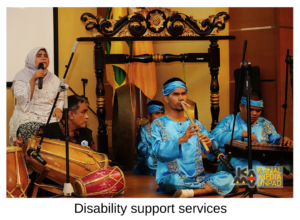
Universitas Padjadjaran focuses on disability support services. Not only in the form of policies that regulate inclusive practices, but students with disabilities also have the right to access qualified and equal education services across all types, pathways, and levels of education.
Related Documents:
- Policy on Services for Students with Disabilities
- Disability Task Force Policy for Padjadjaran University Students
Disability Task Force at Universitas Padjadjaran: Universitas Padjadjaran has a service unit run by the Disability Task Force. This unit conducts various publications and campaigns about disability-friendly campuses, provides consultations on assisting people with disabilities across faculties, and performs periodic evaluations to improve services continuously.
Efforts to Support Disability Services:
- Website for Disability-Friendly Information: The www.unpad.ac.id website offers several accessibility modes:
- Epilepsy Safe Mode: Designed for users with photosensitive epilepsy, minimizing exposure to flashes of light and certain visual patterns.
- Blindness Mode: Enables users with blindness or low vision to navigate, read, and access content via screen readers with alternative text and audio descriptions.
- Other Accessibility Modes: Includes settings for visually impaired users, cognitive disabilities, ADHD, and more.
- Award for Disability-Friendly Public Information Services: In 2023, Padjadjaran University received recognition for disability-friendly public information services, awarded by the Central Information Commission at the Lumiere Hotel Ballroom, Jakarta, on September 14, 2023.
Additional Resources and News:
- Recognition for Disability-Friendly Public Information Services
- EmpowerID Program for Inclusive Education
- Encouraging Optimism Among Disabled Students
- Strengthening Inclusivity with Hearing Impaired Friends
- Affirmation Scholarships for Students with Disabilities
- Padjadjaran Medical Care Strengthens Inclusivity
Guidance and Counseling for Students with Disabilities
Universitas Padjadjaran provides access schemes for people with disabilities, ensuring that they have equal opportunities to succeed in their academic and professional endeavors. These schemes include targeted support such as mentorship programs specifically designed to address the unique needs of students, staff, and faculty with disabilities.
Students with disabilities face unique challenges in their academic and social lives on campus. Therefore, guidance and counseling are essential to overcome these obstacles and reach their full potential.
Unpad strives to provide inclusive support for students with disabilities through general counselling, career guidance services, and various forms of psychological and academic support. Unpad has support programs that help students with disabilities face educational and social challenges, for example, through the student service centre or counselling centre. This inclusive approach can include counselling that focuses on the specific needs of students with disabilities and adaptation of the learning environment to be more supportive.
Learn more about Unpad’s guidance and counseling services:
Students with Disabilities at Unpad have the rights to get assistance, translation, and provision of facilities at Unpad that are easily accessible at public service places at no additional cost. Unpad has a policy in the form of Chancellor’s Regulation Number 23 of 2021 concerning Services for Students with Disabilities on Campus. The service principles for students with disabilities include respect for dignity, individual autonomy, non-discrimination, full participation, human and humanitarian diversity, equal opportunities, equality, accessibility, inclusion, special treatment and more protection. Services for students with disabilities aim to realize full and equal respect, promotion, security and fulfillment of human rights, as well as fundamental freedoms of students with disabilities.
For more details, please refer to the policy document:
Universitas Padjadjaran has an anti-harassment policy that applies to the entire institution and its operations. This policy is designed to create a safe and respectful environment for all members of the university community, including students, faculty, staff, and visitors. The anti-harassment policy on campus is a set of rules and procedures designed to prevent, address, and resolve acts of harassment in higher education environments. This policy aims to create a safe, inclusive, and supportive academic environment for all academicians, including students, lecturers, staff, and campus visitors.
At Universitas Padjadjaran, there is Rector Regulation Number 16 of 2020 concerning the Prevention and Handling of Sexual Harassment. This regulation serves as a reference for the University’s Sexual Violence Prevention and Handling Task Force (PPKS) in carrying out its programs.
In this regulation, prevention of sexual harassment at Unpad is implemented through:
- Disseminating anti-sexual harassment programs and policies, both conventionally and by utilizing information technology.
- Conducting studies involving various disciplines.
- Organizing safe and comfortable campus facilities and infrastructure.
- Increasing the awareness of Unpad.
In addition to the handling efforts that the PPKS Task Force can carry out, this regulation also explains the mechanism for reporting and complaining about sexual harassment. Protection for victims and witnesses is also included in this regulation.
For more details, please refer to the full policy document:
Policy review of Regulation of The Academic Senate of Universitas Padjadjaran Number 1 of 2023 Concerning Code of Ethics for Universitas Padjadjaran Lecturers
Point
Article 4.b. Justice which is the attitude of impartiality, adhering to the truth, not being arbitrary, not being discriminatory, and avoiding conflicts of interest that could harm Unpad and/or Unpad denizens
Evaluation
The existing policy is current and fit for anti-discrimination purpose at campus
Recommendation
This policy is expected to be continuously implemented on campus in every campus activities.
Related link
https://sdgs.unpad.ac.id/wp-content/uploads/2024/11/Policy-review-of-Anti-Discrimination-Policy.pdf
Policy review of Rector Regulation of Universitas Padjadjaran Number 16 of 2020 Concerning Prevention and Handling of Sexual Harassment at Universitas Padjadjaran
Point
Article 3. The objectives of the prevention and handling of sexual harassment including maintain the standard of values and human dignity at Unpad, as well as protecting all Unpad denizens from all forms of sexual harassment.
Evaluation
The existing policy is current and fit for handling of sexual harassment in Campus
Recommendation
The Policy is expected to outline more proactive steps like education, training, and sensitization workshops
Related link
https://sdgs.unpad.ac.id/wp-content/uploads/2024/11/Policy-Review-of-Anti-harrasment-policy.pdf