
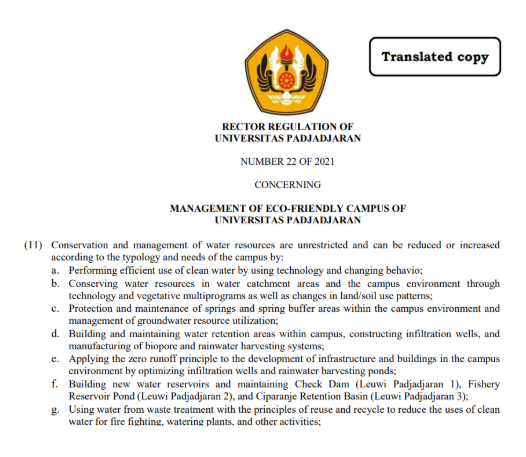
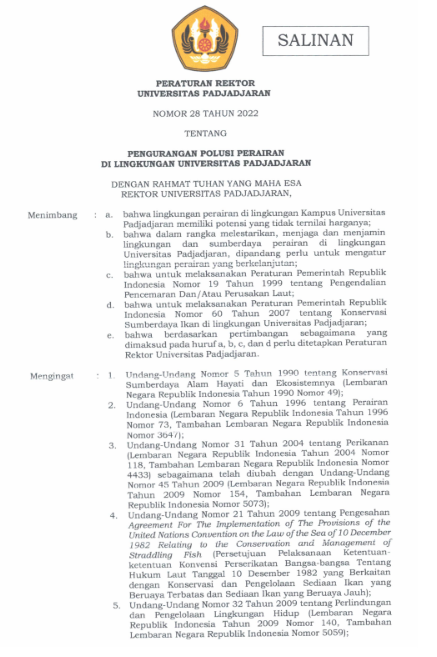
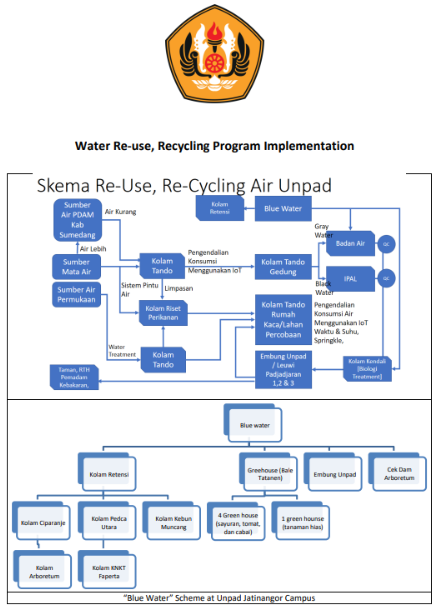
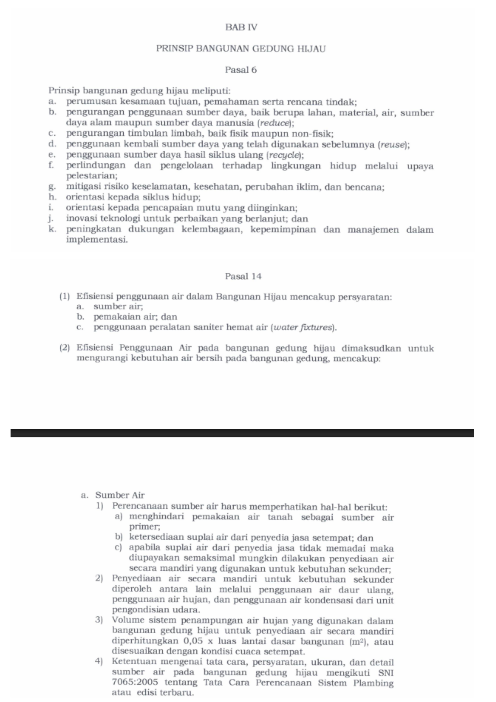
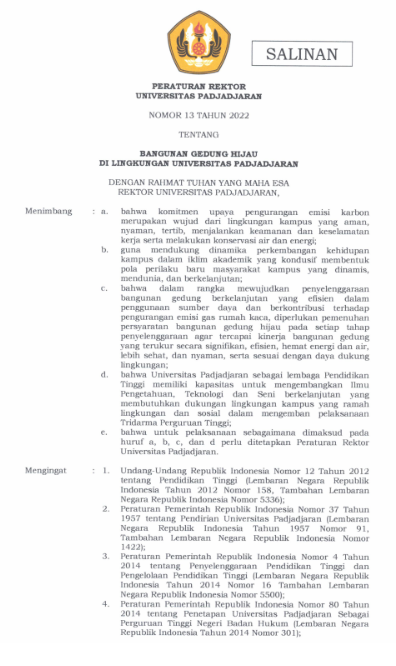
Water Reuse Policy at Universitas Padjadjaran demonstrates the university’s commitment to efficient and sustainable water management. Unpad has implemented a policy to maximize water reuse across its campuses by recycling treated wastewater for non-potable purposes such as irrigation, cleaning, and cooling systems. This initiative reduces freshwater consumption and minimizes environmental impact, promoting responsible use of natural resources.
Rainwater Harvesting for Campus Water Conservation
Universitas Padjadjaran has established a rainwater harvesting system as part of its water conservation and sustainability strategy. Collected rainwater is stored in reservoirs and reused for non-consumptive purposes such as landscape irrigation, cleaning facilities, and toilet flushing. Several new campus buildings are equipped with integrated rainwater channels that connect directly to water storage systems, effectively reducing dependence on groundwater and minimizing the university’s environmental footprint.
In addition to its operational benefits, the system serves as an educational and research tool for students and faculty in environmental engineering, biology, and geography. It provides opportunities for applied learning on sustainable water systems and strengthens Unpad’s role as a living laboratory for climate-adaptive campus design. This initiative demonstrates the integration of policy, infrastructure, and education in achieving long-term water sustainability.
Eco-Drainage and Infiltration Wells to Maintain Groundwater Sustainability
To complement its water reuse policy, Universitas Padjadjaran has implemented eco-drainage systems and infiltration wells to enhance groundwater recharge and minimize surface runoff. These systems allow rainwater to naturally infiltrate the soil, helping maintain hydrological balance and prevent the decline of groundwater levels. The eco-drainage design, applied in open areas such as parks, parking lots, and pedestrian paths, utilizes permeable materials to facilitate efficient water absorption and reduce flooding during heavy rainfall.
This initiative reflects a nature-based solution (NBS) approach to sustainable campus water management, integrating ecological design with infrastructure resilience. By reabsorbing rainwater and maintaining local aquifers, Unpad contributes to sustainable water cycles while mitigating climate-related risks. The program demonstrates the university’s commitment to integrated water resource management (IWRM).