
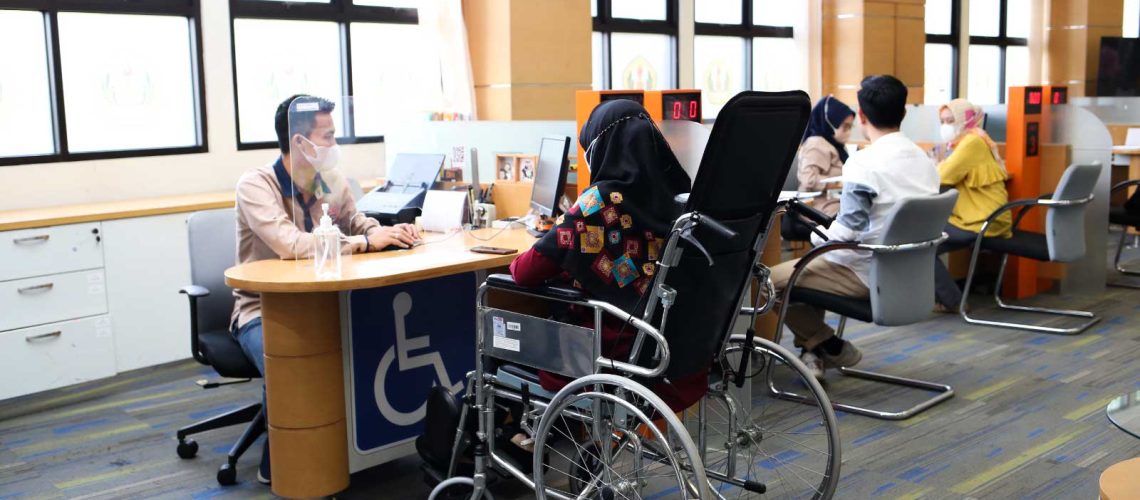
During the 2024–2025 period, Universitas Padjadjaran recorded 74 main buildings encompassing faculties, administrative centers, and supporting units. Among these, the number of buildings equipped with disability-friendly facilities showed consistent progress, increasing from 65 buildings (88%) in 2024 to 68 buildings (91.89%) in 2025. This advancement demonstrates the university’s strong dedication to creating an inclusive, equitable, and accessible campus environment.
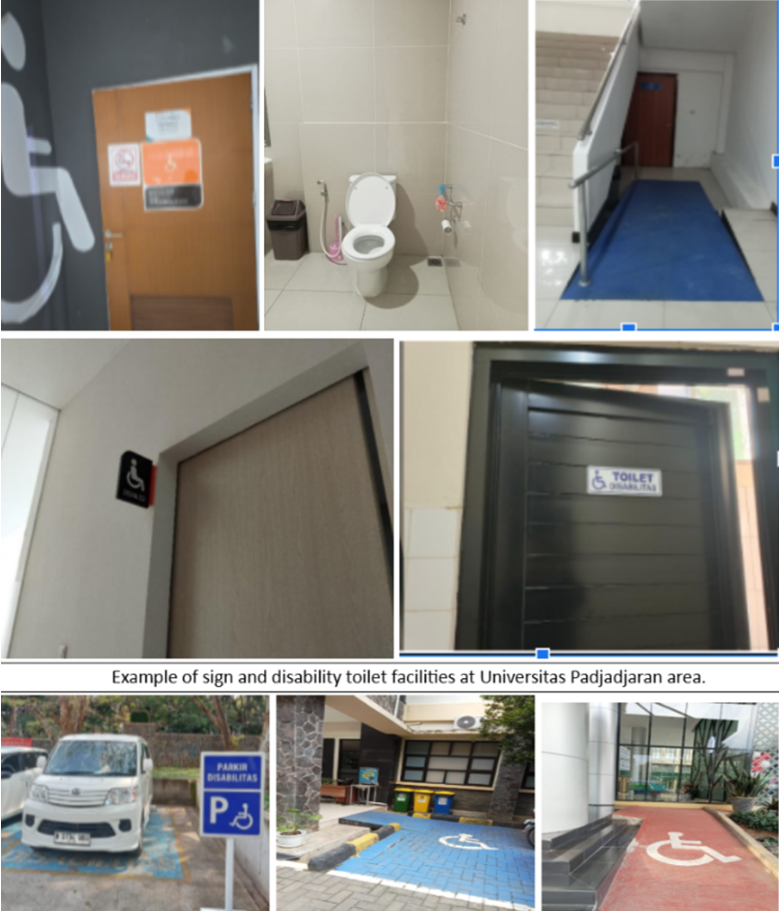
These improvements were driven by key institutional policies, including Rector’s Regulation of Universitas Padjadjaran No. 23 of 2021 on Services for Students with Disabilities, the establishment of the Disability Service Center (Unit Layanan Disabilitas/ULD) in 2024, and Rector’s Regulation of Universitas Padjadjaran No. 7 of 2025, which broadened ULD’s role to support the university’s Tridharma pillars, education, research, and community service.
This continuous progress aligns with national accessibility standards set out in the Ministry of Public Works and Housing Regulation (Peraturan Menteri PUPR) No. 14/PRT/M/2017 concerning building accessibility, as well as with global frameworks such as the United Nations Sustainable Development Goals (SDGs) specifically SDG 4 (Quality Education), SDG 10 (Reduced Inequalities), and SDG 11 (Sustainable Cities and Communities). Together, these frameworks reinforce Unpad’s commitment to ensuring that all members of the academic community, including students, faculty, staff, and visitors, can engage fully, equally, and safely in every aspect of university life.
To eliminate physical and environmental barriers, Unpad has developed and improved various disability-friendly facilities across its campuses, including:
- Ramps and sloped pathways at the main building entrances ensure smooth access for individuals using wheelchairs. By 2025, over 70% of these ramps met the recommended slope ratio (1:12) for safe and convenient mobility.
- Elevators equipped with Braille buttons and voice guidance systems in 12 multi-story academic and administrative buildings, allowing independent navigation for visually impaired users.
- Accessible toilets with a minimum turning radius of 1.5 meters and safety handrails are now available in 68% of buildings, representing a significant increase from 2024.
- Designated parking spaces for persons with disabilities, expanded from 40 slots in 2024 to 56 slots in 2025, strategically located near main entrances to minimize travel distance and enhance convenience.
These facilities are strategically designed and located to ensure accessibility within both main academic buildings and supporting infrastructure, including the Rectorate Building, faculty and dean offices, lecture halls, and laboratories. The accessibility features are not limited to academic areas. Still, they are also integrated into supporting facilities such as student dormitories, activity centres, and sports complexes, allowing students and staff with disabilities to fully participate in academic, residential, and extracurricular activities. Pathways, ramps, and accessible restrooms have been incorporated into campus design in accordance with universal design principles, ensuring safety, mobility, and independence for all users. This integrated approach reflects Universitas Padjadjaran’s ongoing efforts to create an inclusive, barrier-free learning environment that upholds equality, dignity, and the well-being of every member of the academic community.
Document of Accessibility Campus
Layanan Penyandang Disabilitas (Berkebutuhan Khusus) di Universitas Padjadjaran