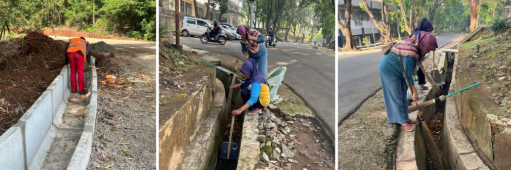
Water-Conscious Building Standards at Universitas Padjadjaran demonstrate the university’s dedication to sustainable infrastructure and resource efficiency. Unpad applies environmentally friendly building standards designed to minimize water use through the installation of low-flow fixtures, efficient plumbing systems, and rainwater harvesting technologies. New campus buildings and renovations are planned with water-saving designs that reduce consumption without compromising functionality.
Water-Saving Campaigns Across Faculties
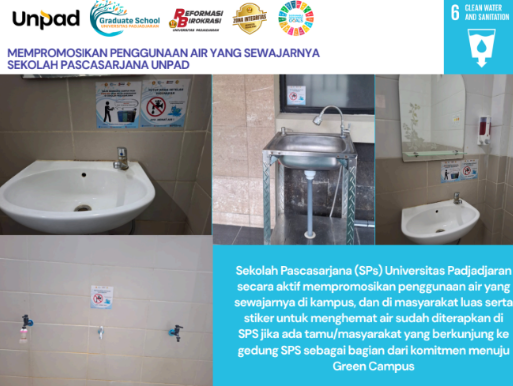
Universitas Padjadjaran consistently promotes water conservation campaigns across all faculties to raise awareness of sustainable water use among students, faculty, and staff. Each building displays educational posters, stickers, and slogans in strategic locations such as restrooms, sinks, and hallways, reminding the campus community to use water responsibly. The campaign is further strengthened through student-led initiatives under the Green Campus Awareness Movement, which instills environmental responsibility and sustainable habits in daily campus life.
Through these educational and behavioral approaches, Unpad encourages sustainable water-use behavior and integrates water efficiency principles into campus management. This initiative forms part of the university’s broader water efficiency management system, reducing consumption and preventing waste.
Installation of Motion-Sensor Faucets in Campus Facilities
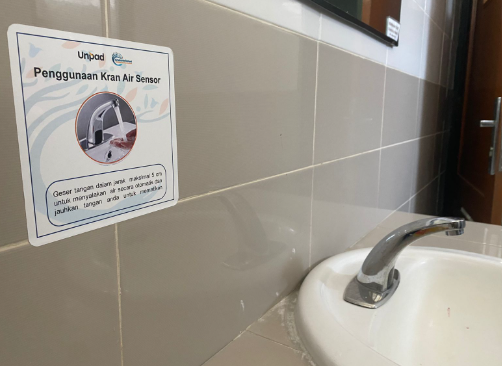
To enhance water efficiency, Universitas Padjadjaran has installed motion-sensor faucets in public facilities such as restrooms, laboratories, and campus cafeterias. These smart devices ensure that water flows only when needed and automatically stops when not in use, resulting in significant water savings and reduced operational costs. The use of sensor-based technology also supports energy efficiency by minimizing the amount of water pumped and processed.
Beyond conservation, this innovation also promotes hygiene and public health by reducing surface contact and lowering the risk of germ transmission. The integration of motion-sensor technology reflects Unpad’s commitment to sustainable infrastructure and intelligent facility management.
Rainwater Harvesting Systems and Green Open Spaces on Campus
Universitas Padjadjaran has implemented rainwater harvesting systems in several campus buildings to optimize water use and strengthen local water resilience. Collected rainwater is used for non-consumptive purposes such as irrigation, cleaning, and green area maintenance. The campus is also designed with extensive green open spaces that function as natural infiltration zones, allowing rainwater to seep back into the soil and supporting the local groundwater balance while preventing flooding.
This initiative represents a strong integration of sustainable architecture and ecological water management, creating a healthy and environmentally conscious learning environment. The combination of green infrastructure and rainwater systems reinforces Unpad’s role as a green campus committed to sustainable resource management.