
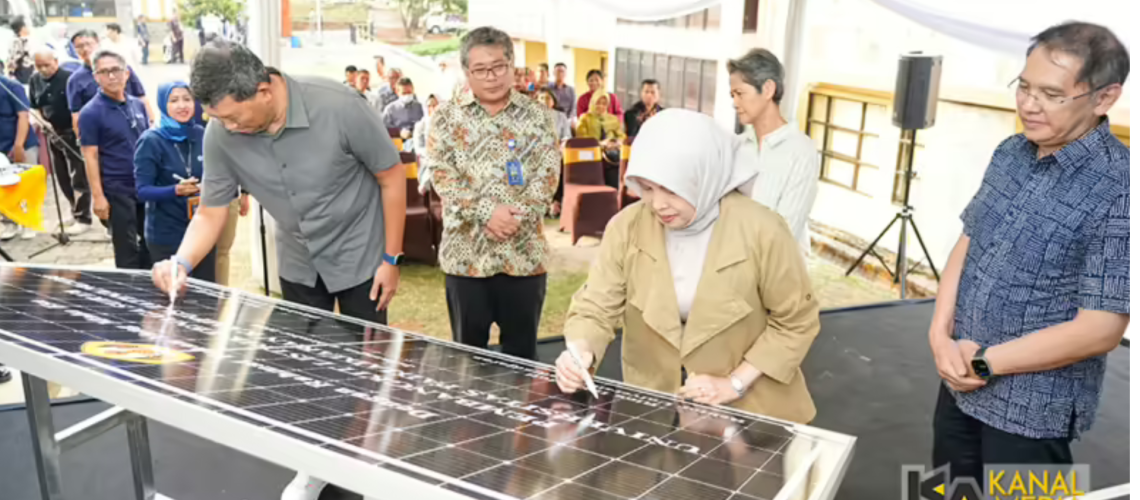
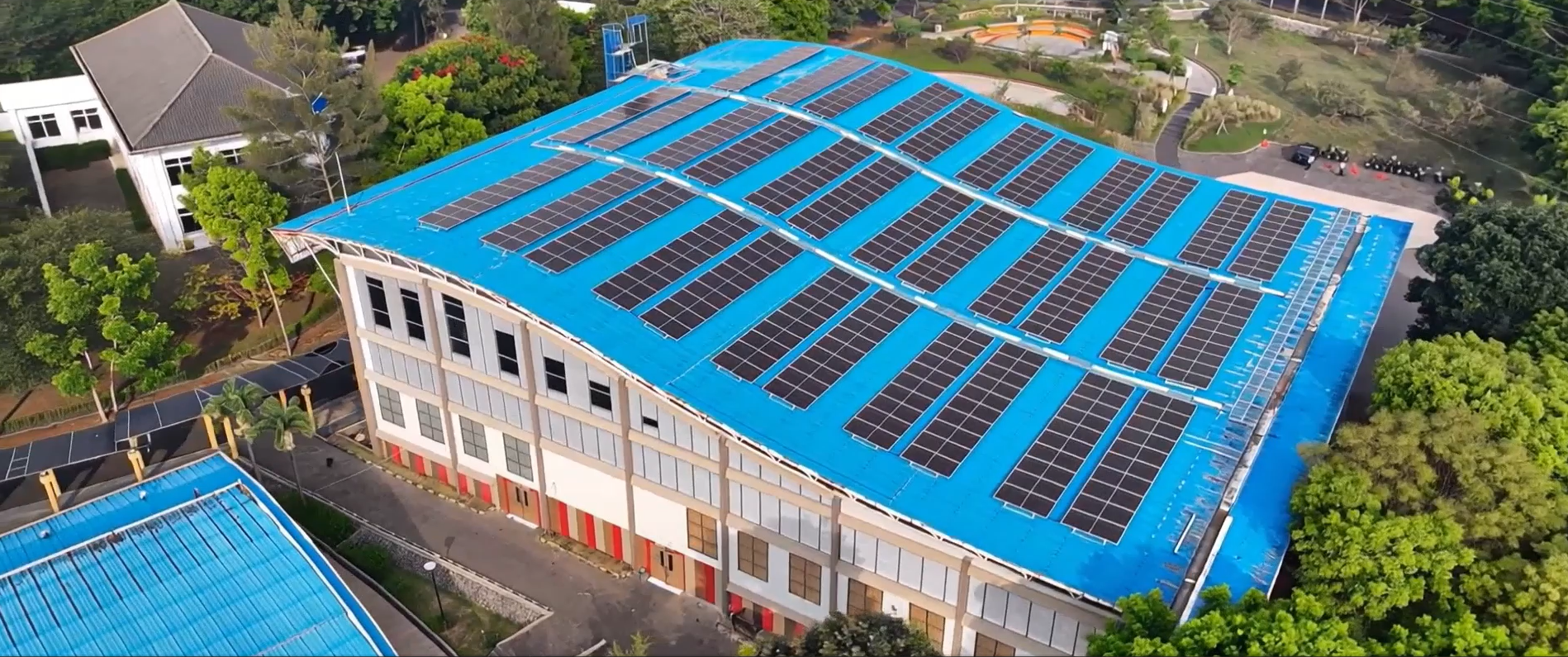
Universitas Padjadjaran has formally committed to a full transition toward renewable energy across all of its campuses, establishing this mandate within Rector’s Regulation No. 13/2022 on Green Buildings and demonstrating it through tangible infrastructure upgrades. This commitment is evident in the university’s expanding solar power portfolio, with photovoltaic systems already operating at the Rectorate, Bale Santika, and the Faculty of Geological Engineering. Unpad currently operates 267 kWp of solar capacity and is preparing an additional 330 kWp installation to further reduce reliance on fossil-powered electricity. Beyond solar energy, the university actively develops alternative renewable sources through biogas digesters for organic-waste conversion, nano-hydro generators for micro-scale power production, and wind-energy research led by multidisciplinary teams.
The transition is also supported at the policy and research level through the SDGs Center’s Energy Transition Consortium, developed in partnership with the Danish Government. This initiative strengthens Unpad’s capacity for evidence-based policy development, supports national-level energy transition planning, and integrates academic research with local government and industry adoption pathways. Through curriculum enrichment, public seminars, interdisciplinary research, and stakeholder collaboration, the consortium ensures that Unpad’s renewable-energy transition is not only technical but also institutional and community-driven.
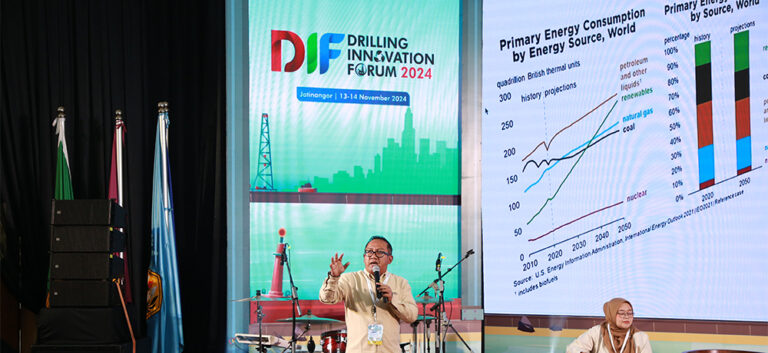
Unpad also amplifies its clean-energy agenda through extensive outreach and public education initiatives. In 2024, the Faculty of Communication Studies partnered with Pertamina New and Renewable Energy (Pertamina NRE) to deliver a public seminar on communication strategies for renewable energy development. The program, which included lectures, workshops, curriculum development, and collaborative campaigns, was designed to strengthen public awareness and improve students’ capacity to promote energy transition narratives. This collaboration reflects Unpad’s commitment not only to advancing clean-energy infrastructure but also to shaping public discourse and empowering communities to support Indonesia’s renewable-energy goals.
Together, these actions affirm Unpad’s leadership in advancing Indonesia’s clean-energy transformation. By combining regulatory commitment, renewable-energy infrastructure, and strong research partnerships, the university positions itself as a national example of how higher education institutions can accelerate decarbonization, reduce environmental impact, and move decisively toward long-term carbon neutrality.