
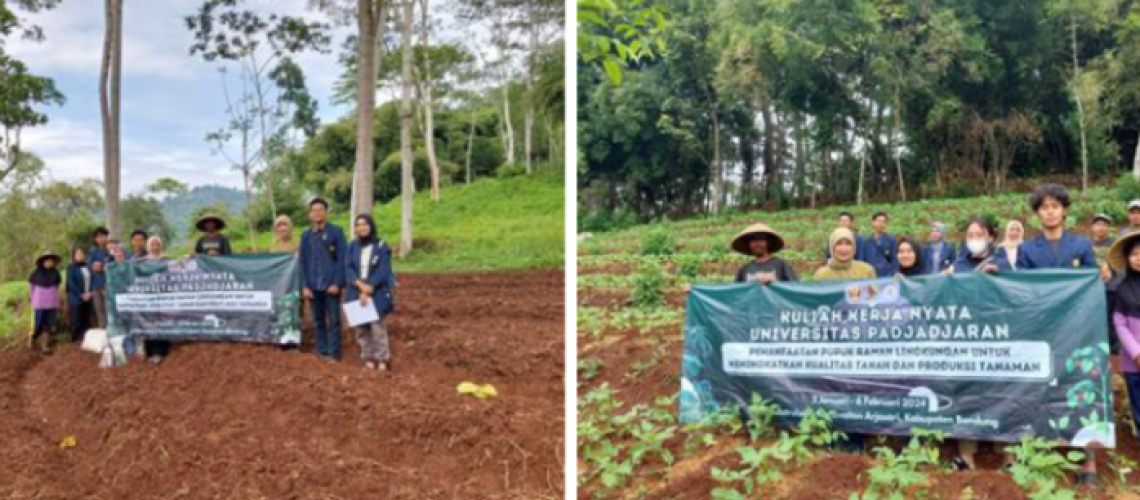
Universitas Padjadjaran has implemented a series of educational and community-based initiatives that bridge academic research with practical agricultural development. Through participatory workshops, field demonstrations, and collaborations with local farmers, these programs introduced innovative approaches such as eco-friendly fertilizers, rice husk biochar, and hydroponic cultivation systems. Conducted across several regions including Bandung Regency, Sumedang, and Jatinangor, the activities provided hands-on learning experiences that encouraged knowledge exchange and improved local farming practices. By combining scientific insights with community participation, Unpad continues to foster agricultural innovation that supports productivity, sustainability, and rural empowerment.
Utilization of Environmentally Friendly Fertilizers
A Community Service and Learning (KKN-PM) group from Universitas Padjadjaran, supervised by Prof. Dr. Ir. Betty Natalie Fitriatin Abdurahman, MP., carried out a program titled “Utilization of Environmentally Friendly Fertilizers to Improve Soil Quality and Crop Production in Patrolsari Village, Arjasari Subdistrict, Bandung Regency.” The activity, conducted from January 5 to February 6, 2024, was implemented in collaboration with the Farmer Group of Hamlet 1, Patrolsari Village through socialization and field demonstrations on the use of eco-friendly fertilizers for bean, corn, and cassava cultivation. This initiative successfully increased farmers’ knowledge and skills in applying biofertilizers, which proved most effective in enhancing soil fertility and crop yields. By combining education and hands-on practice, the program contributed to encouraging sustainable agricultural practices and empowering the local farming community to manage their agricultural land more effectively and responsibly.
Video of community service
Enhancing Farmers’ Capacity in Sweet Potato Seedling and Production in Arjasari Subdistrict, Bandung Regency
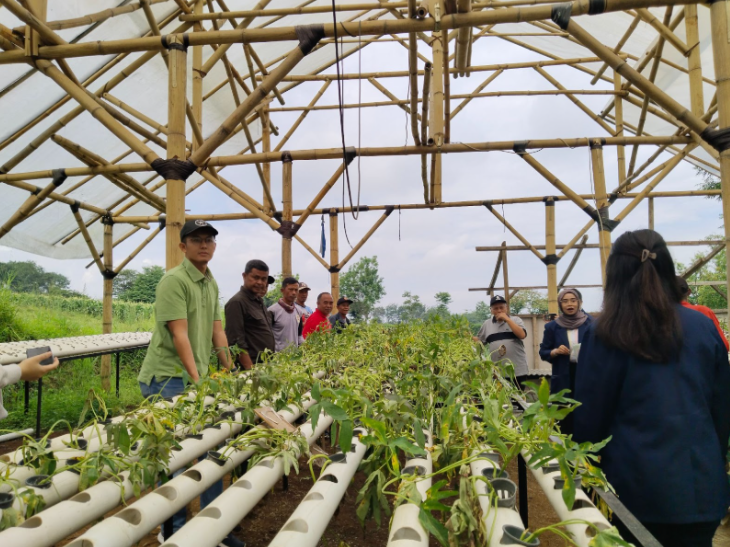 Universitas Padjadjaran has carried out community-based programs that connect academic knowledge with practical farming improvements. Through collaborations with local farmers, these initiatives introduced eco-friendly fertilizers, rice husk biochar, and hydroponic systems to enhance cultivation methods. Implemented in regions such as Bandung, Sumedang, and Jatinangor, the programs promoted knowledge sharing and innovation, strengthening local capacity for sustainable and productive agriculture.
video of community service
Enhancing Local Farming Practices through Soil Knowledge and Community Collaboration in Mekarasih Village
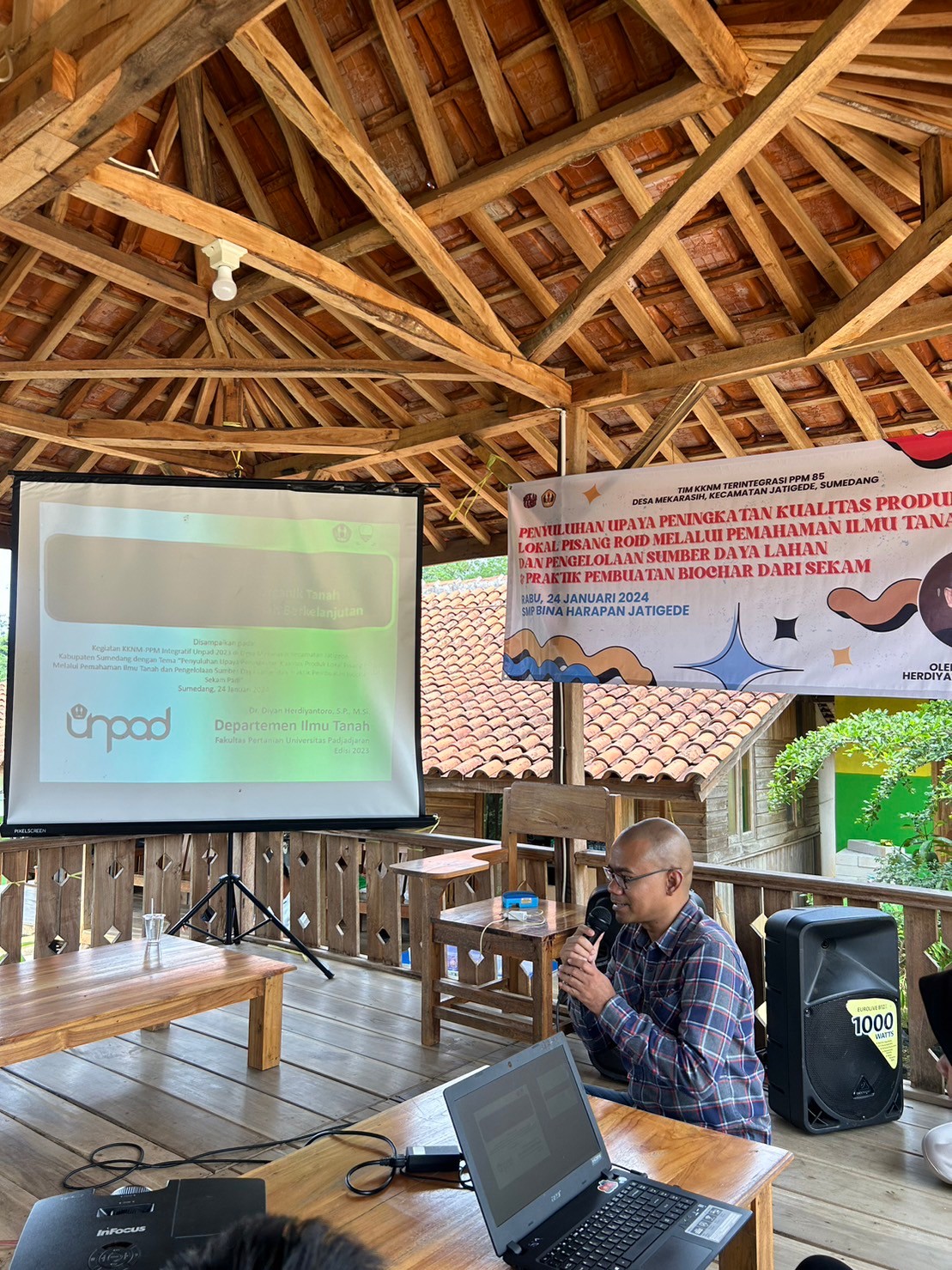
Universitas Padjadjaran’s KKNM 85 team conducted a community-based program in Mekarasih Village that encouraged better understanding and practical application of local land and soil potential to improve the cultivation of Pisang Roid. The initiative introduced the use of rice husk biochar as a natural soil amendment to enhance fertility and maintain soil structure. Through interactive learning and collaboration with local stakeholders, the activity guided residents in optimizing their farming practices while maintaining the long-term health of their land. By integrating scientific insights such as the benefits of biochar, with community experience, the program helped strengthen local capacity to manage agricultural resources more effectively and responsibly, supporting both productivity and environmental balance.
Unpad Students Educate Jatinangor Community on Sustainable Hydroponic Farming
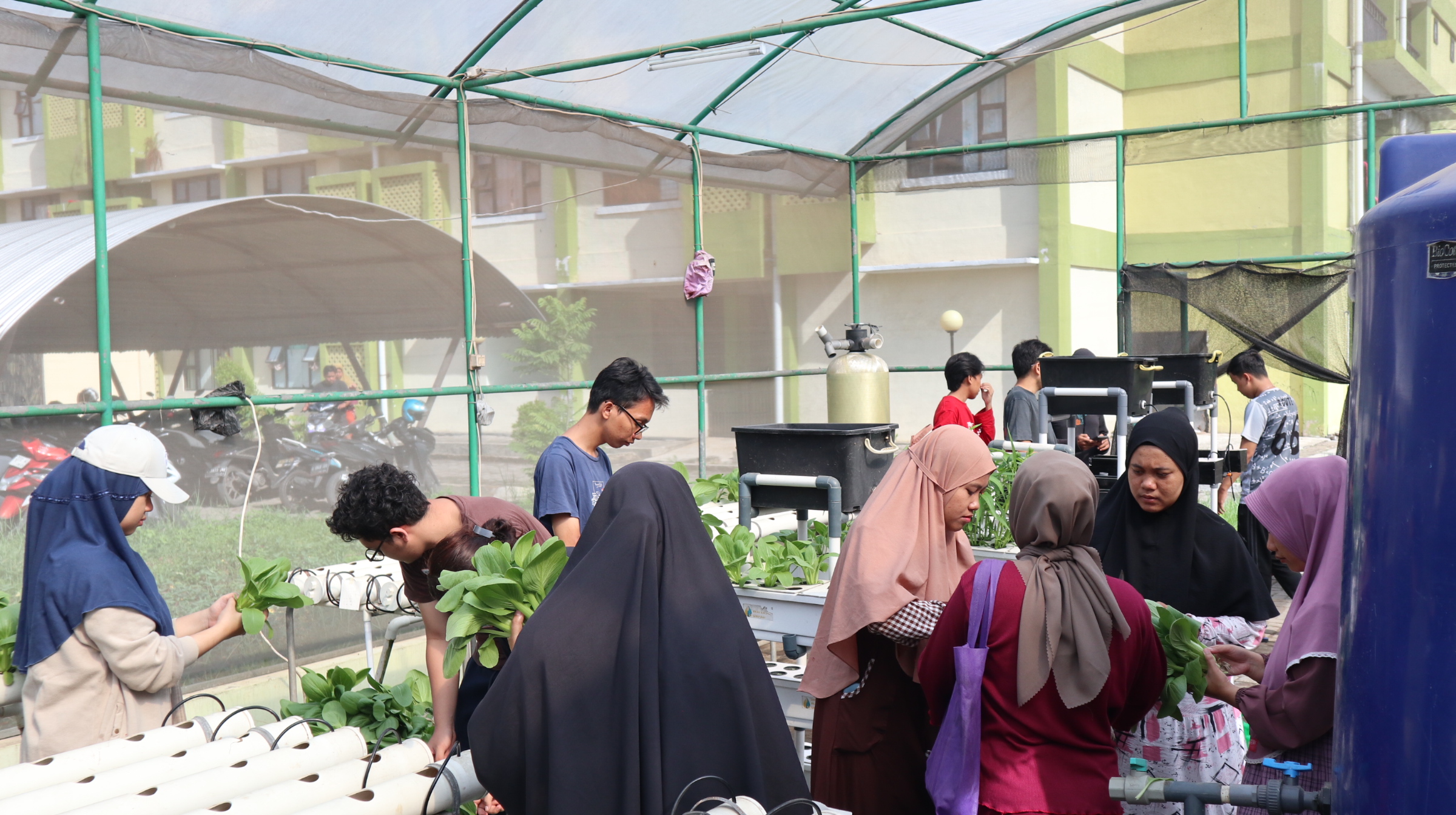
The Universitas Padjadjaran (Unpad) Creativity and Entrepreneurship (OKK) Group 146 Subgroup 2, guided by facilitator Rafan Darodjat, S.S., S.H., M.H., conducted a social and educational outreach program on sustainable agriculture for members of the Jatinangor District Family Welfare Movement (PKK) on November 5, 2024. Held at the Jatinangor District Office, the activity combined lectures on food security with hands-on training in hydroponic vegetable cultivation using the wick system. This method, known for its simplicity and efficiency, enables communities to grow vegetables with minimal equipment and maintenance. The initiative aimed to strengthen local food resilience and promote sustainable land and resource management among the residents of Jatinangor.