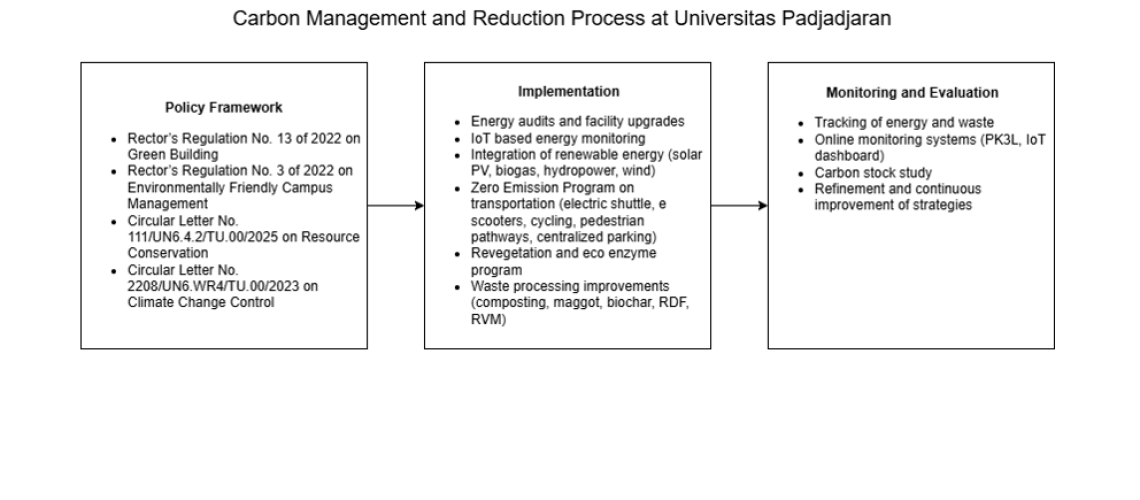
Universitas Padjadjaran has established a clear and integrated process for managing and reducing carbon emissions through a combination of regulatory frameworks, infrastructure upgrades, operational programs, and technology based monitoring.
Policy Framework
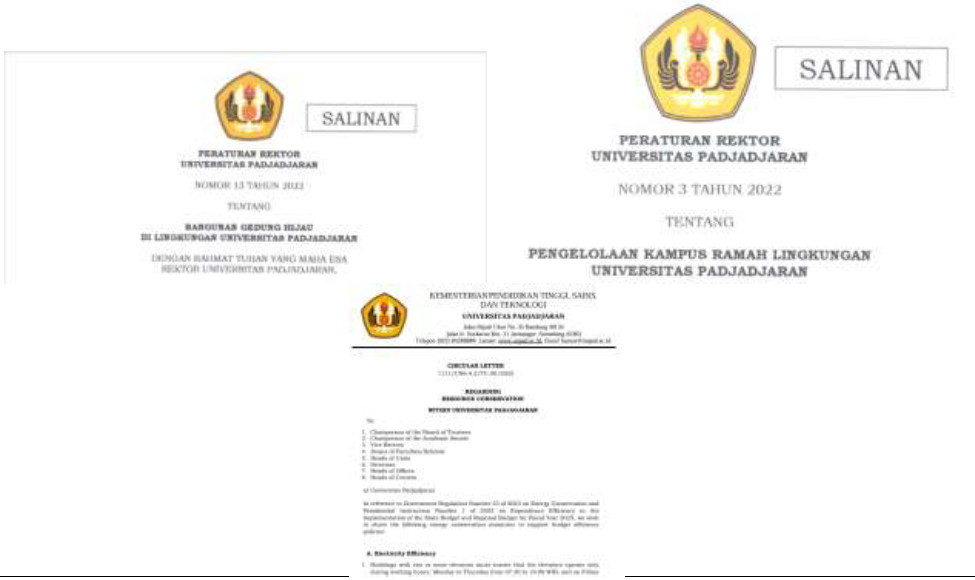
The process begins with the issuance of key institutional policies such as Rector’s Regulation No. 13 of 2022 on Green Buildings, Rector’s Regulation No. 3 of 2022 on Environmentally Friendly Campus Management, and Circular Letter No. 2208/UN6.WR4/TU.00/2023 on Climate Change Control, all of which set out the standards, targets, and long term direction for carbon reduction efforts across all campuses. These policies ensure that every renovation, maintenance activity, and operational plan incorporates principles of energy conservation and carbon mitigation.
Implementation Stage
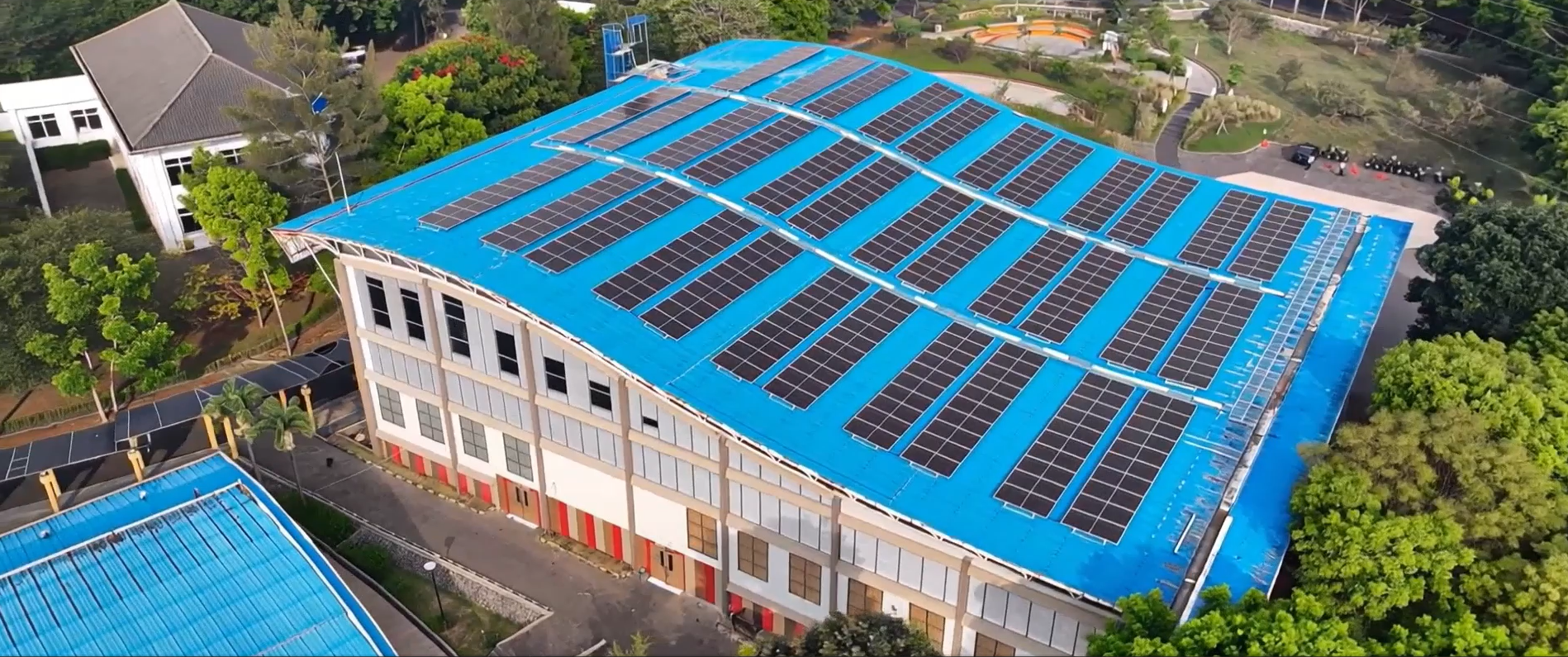
The implementation stage is supported by a series of coordinated programs focused on reducing emissions from buildings, transportation, and waste. Existing facilities are progressively improved through energy audits, the installation of LED lighting, inverter air conditioning units, LCD low power displays, and increased use of natural ventilation and daylighting. Universitas Padjadjaran has also integrated IoT based monitoring systems in selected buildings to track energy consumption in real time and quickly identify inefficiencies. Renewable energy solutions, including solar photovoltaic systems, biogas, hydropower, and wind energy, further strengthen the university’s transition toward lower carbon operations. Transportation emissions are reduced through the Zero Emission Program, which encourages the use of electric shuttles, e scooters, bicycle mobility, pedestrian pathways, and centralized parking. Meanwhile, the Revegatation and Eco Enzyme Program increases natural carbon sequestration by planting new trees and improving ecosystem quality, while extensive waste processing, including composting, maggot based organic waste treatment, biochar production, and reverse vending machines, minimizes methane emissions and advances circular waste practices.

Carbon Reduction Implementation
Monitoring and Evaluation
To ensure the effectiveness of these initiatives, Universitas Padjadjaran implements a systematic monitoring and evaluation process supported by digital platforms and scientific measurements. Energy usage is monitored through IoT dashboards, while hazardous and non hazardous waste is recorded and tracked through the PK3L online system. The university also measures carbon stock through biomass analysis of tree stands, enabling a better understanding of the campus’s carbon sequestration capacity. Wastewater treatment is monitored across six wastewater treatment plant facilities to ensure that water management supports climate mitigation efforts. Insights from these monitoring systems feed into regular evaluations, allowing the university to refine its carbon reduction strategies and continuously strengthen its climate resilience.