
Universitas Padjadjaran offers educational programs focused on freshwater ecosystems, including water irrigation practices and water management/conservation, aimed at local and national communities. These initiatives typically involve providing knowledge on sustainable water use, irrigation techniques, and the importance of water conservation in agricultural and urban contexts.
Installation of Reverse Osmosis water filters in Rancaekek
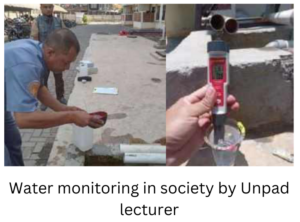
This Community Service Activity (PPM) collaborates with the Independent Campus Competition Program (PKKM) from the Agricultural Engineering Study Program at the Faculty of Agricultural Industrial Technology, involving lecturers who received PPM funds and 14 Thematic KKN students at the Rancaekek Transit Apartment, Bandung Regency. The activity began with a briefing on September 29, 2023.
Based on the results of the ESDM Testing Laboratory test, the water quality at the Rancaekek Transit Apartment is included in the Critical Zone Criteria according to West Java Regional Regulation No. 1 of 2017, with an electrical conductivity (DHL) between 1,500 – 5,000 µS/cm, TDS reaching 932 mg/L, and chloride levels of 151.66 mg/L. This figure exceeds the hydroponic cultivation standards, which require TDS below 100 mg/L and chloride 50-100 mg/L. The only way to reduce high TDS levels is with a Reverse Osmosis membrane. Water filtered with this system is suitable for hydroponics because it can reduce TDS from more than 600 ppm to 10 ppm. Water that has been treated with reverse osmosis supports nutrient absorption by plants and ensures that there are no contaminants that can interfere with cultivation.
Marine ecosystem conservation
The Mangrove Lamun Karang (MALAKA) Community of Padjadjaran University conducted a community outreach focused on marine ecosystem conservation and education, 1-3 July 2023. Collaborating with the Ocean Young Guards of Padjadjaran University, they carried out various initiatives to preserve marine ecosystems. This activity was carried out on Kelapa Dua Island, Seribu Islands, filled with multiple activities such as coral reef transplantation, mangrove planting, educating island children regarding marine conservation and collecting field data on mangrove, seagrass, and coral reef ecosystems.
The main activity carried out was the transplantation of coral reef colonies of eight rock life media and 40 baby corals to areas that had been damaged or degraded. This activity is significant and aims to strive for sustainable actions such as caring for the transplanted coral reefs and improving the local community’s economy. In addition to coral reef transplantation, the team planted mangroves on the islands in the Kelapa Dua Island area. Mangroves are ecosystems that protect the coast from erosion, provide shelter for various marine species, and play a role in carbon absorption. It is hoped that this activity can mitigate climate change and improve the quality of the marine environment around the island.
Universitas Padjadjaran offers various educational programs and outreach initiatives that align with sustainable management of fisheries, aquaculture, and tourism. Through its academic programs, research initiatives, and community outreach efforts, Universitas Padjadjaran plays a key role in promoting the sustainable management of fisheries, aquaculture, and tourism in Indonesia.
Environmentally conscious tourism education (Ciwayang body rafting tourist attraction)
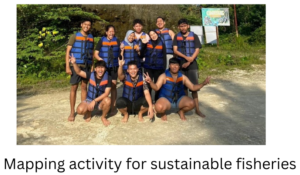
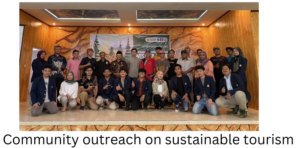
The importance of fostering tourism awareness in the Cimindi Village community, the KKN 88 Padjadjaran University team held a meeting with community leaders in Cimindi Village, Cigugur District, Pangandaran Regency, with the theme “Environmentally Conscious Tourism Education”. The activity was carried out by presenting various groups of people in Cimindi Village, especially the tourism awareness group (Pokdarwis), which was held on Friday, August 4, 2023. Community leaders, youth organizations from various hamlets, and actors in marine nature tourism in Cimindi Village attended this socialization.
The focus of the group theme under the auspices of Atikah Nurhayati and the team is to optimize Cimindi Village as an educational and conservation tourism village in Pangandaran. In addition, this socialization activity is part of student devotion to the Cimindi Village community. Students see that village communities need a sense of belonging and foster tourism awareness. Not to forget, the activity held in the Cimindi Village hall was also attended by the Head of the Tourism Awareness Group (Pokdarwis), the head of BUMDES, bamboo craft souvenir artisans, tofu and tempeh micro business artisans who responded to the development of tourist villages.
Sand Therapy Management in Kejawanan Beach Tourism Village
Universitas Padjadjaran (Unpad) shows its commitment to sustainable fisheries through community service activities of the Faculty of Fisheries and Fisheries Sciences. The Unpad SHERAPY Team researched and managed Sand Therapy tourism in the Kejawanan Beach Tourism Village. Research in 2023 showed that the black sand of Kejawanan Beach contains Fe (iron) with ferromagnetic properties (Fe₃O₄), which helps conduct heat, improve blood circulation, and provide therapeutic benefits. Although sand therapy has economic potential, challenges such as resource exploitation, pollution, accidents, and the spread of disease need to be anticipated through sustainable management. The released policy brief presents recommendations for managing Kejawanan Beach sand therapy.
In order for health therapy to be carried out safely and sustainably, the SHERAPY team recommends in situ practices to prevent exploitation, implementing regulations governing therapy procedures and visitor safety, and applying the Seraphy-ReQuest questionnaire to assess each individual’s therapeutic needs. In addition, empowering local communities as therapists can improve skills and provide economic benefits. The division of therapy zones is also proposed to protect the environment and maximize the management of safe therapeutic tourism at Kejawanan Beach.
https://fpik.unpad.ac.id/policy-brief-pengelolaan-terapi-pasir-di-pantai-kejawanan-yang-aman-dan-berkelanjutan/https://fpik.unpad.ac.id/wp-content/uploads/2023/10/POLICY-BRIEF-SERAPHY.pdf
Universitas Padjadjaran has shown an active role in addressing environmental and sustainability issues to raise awareness about overfishing, illegal, unreported, and unregulated (IUU) fishing, and destructive fishing practices. Universitas Padjadjaran may conduct educational outreach activities such as workshops, public seminars, and community-based programs. These initiatives often include collaborations with governmental agencies, NGOs, or coastal communities.
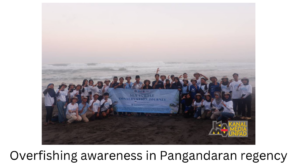
The Fisheries Student Association of the Faculty of Fisheries and Marine Sciences, Padjadjaran University, collaborated with the Ocean Young Guards (OYG) Organization to hold a “Sea Turtle Conservation Journey” activity in the Yayasan Raksa Bintara turtle conservation area, Pantau Batu Hiu, Pangandaran Regency on August 19-20, 2023.
This activity aims to increase awareness among the surrounding community about turtles, one of the protected fauna, because their population is threatened with extinction. The turtle population in the Batu Hiu Beach area has begun to decline due to the disturbance of the turtle habitat by the light from fishermen’s lamps, the large amount of garbage, and the lack of available coastal vegetation, so the turtles have difficulty laying eggs.
The main activity is the release of hatchlings, which aims to support the preservation of turtles and their habitat so that they are maintained and protected from extinction. After this activity is carried out, it is hoped that all parties involved and the surrounding community can care more about the existence of turtles and their environment and become the first step to maintaining the sustainability of the turtle ecosystem in Indonesian waters.
Universitas Padjadjaran actively engages in promoting conservation and sustainable use of aquatic ecosystems through events such as seminars, community outreach programs, and research initiatives. These activities often align with sustainable development goals, emphasizing the importance of preserving marine biodiversity, reducing pollution, and ensuring responsible resource management.
Public lecture on water management
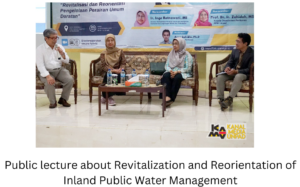
The Fisheries Study Program, Faculty of Fisheries and Marine Sciences, Padjadjaran University, held a public lecture entitled “Revitalization and Reorientation of Inland Public Water Management in the Hall of Building 2 of the Faculty on Wednesday, November 15, 2023. This public lecture presented experts from the Center for Environmental Research and Clean Technology, National Research and Innovation Agency, Prof. Suhendar I. Scahoemar, Director of Inland Water and Mangrove Rehabilitation, Ministry of Environment and Forestry of the Republic of Indonesia. Ir. Inge Retnowati, M.E. and Head of the Fisheries Department, FPIK, Padjadjaran University, Prof. Dr. Ir. Zahidah, M.S. The public lecture activity organized by the Faculty of Fisheries and Marine Sciences (FPIK) Unpad was opened by the Vice Dean, Prof. Dr. Ir. Rita Rostika. Prof. Suhendar discussed research and experience in managing the aquatic environment, introducing the “Satoumi” approach from Japan, which emphasizes the integration of society with the environment. She also proposed developing the “Satokawa” river and lake management concept.
Next, Ir. Inge Retnowati, M.E., explained the importance of managing inland public waters in Indonesia, focusing on saving 15 priority lakes. She warned about the increasing clean water crisis and declining water quality, as well as the negative impacts of lake utilization, which does not pay attention to the sustainability of its ecosystem. Prof. Zahidah emphasized the role of education in preserving inland public waters, reviewing Unpad’s research journey since the 80s. The discussion concluded that inland public water management is essential for future generations, and a national research centre and museum are needed to support sustainability efforts.
https://www.unpad.ac.id/2023/11/fpik-unpad-gelar-kuliah-umum-seputar-pengelolaan-perairan/
International Webinar Professor Discovery to Protect Our Ocean (Padoc)
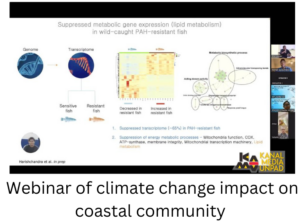
The Department of Marine Affairs, Faculty of Fisheries and Marine Sciences, Padjadjaran University, once again held the Padoc series two international webinars in a hybrid manner at the FPIK Unpad Campus Hall, Jatinangor, on Monday, August 28, 2023. This webinar was titled “Climate Change Impact on Coastal Community and Fish Farm Health”. It was successfully attended by more than 500 participants from students, researchers, practitioners, and lecturers from Indonesia.
Padoc 2023 is an international seminar organized by FPIK Unpad, where leading researchers and professors worldwide gather in the marine field. The chairman of the committee, Buntora Pasaribu, PhD, explained that this event aims to raise awareness of aquatic health and marine biota and find solutions to protect the future of the ocean through education and research. In addition, Padoc also aims to promote the internationalization of FPIK and Unpad and expand cooperation in research and teaching.
Dean of FPIK Unpad, Dr.Sc. Yudi Nurul Ihsan opened the event by emphasizing the importance of protecting the ocean as an investment for future generations, the need for conservation in the utilization of marine resources, and the urgency of the role of marine science in addressing issues such as climate change. The webinar featured speakers from various countries, including Nishad Jayasundara, PhD from Duke University, and Prof. Wang Jianing from the Chinese Academy of Sciences, as well as Prof. Dr Zuzy Anna, M.Sc., who discussed sustainability goals and spatial modelling in the ocean. Vice Dean Mega Laksmini Syamsudin, PhD, emphasized the importance of Padoc in facilitating collaboration between global academics and researchers to address ocean issues. This series of events will be continued with the International Workshop Ocean Sustainability on October 6-7, 2023.
Universitas Padjadjaran is dedicated to food sustainability and follows an ethical sourcing policy for food and supplies with sustainable farmed. This commitment is formalized in a Circular on Sustainable Food Sources, specifically Circular Number 39/UN6.RKT/TU.00/2024, which aims to enhance sustainable food sourcing across the university.. This circular for all academics and education personnel encourages the provision of clean and healthy canteens with various food choices by ensuring that food sources come from organic farming so as not to pollute the environment. Carrying out activities in conservation efforts and sustainable utilisation of marine products ensures that resources are not subject to overfishing, illegal, unreported and unregulated fishing, and destructive fishing practices.
https://sdgs.unpad.ac.id/wp-content/uploads/2024/11/Optimization-of-Sustainable-Food-Sources.pdf
Halal canteen
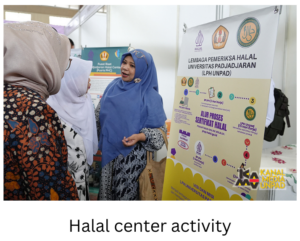
To guarantee quality food for students and the academic community, Unpad developed a halal and Tayib (Thayib) campus canteen. This canteen is located at GOR Santika, Jatinangor Campus, which is the main campus of Unpad. The soft launching of this canteen was held on October 4 2022, in collaboration between the Padjadjaran Halal Center and Bank Indonesia. As many as 34 canteen business actors were also involved in training on how to produce good food, such as choosing halal product raw materials, using supporting equipment, and creating processes that comply with halal standards. This canteen is open to all Unpad residents and operates from 08.00 to 18.00.
3)Policy of canteen management
The principles of canteen management are as follows:
- Maintaining the quality of food and beverage products served in the canteen, as well as providing friendly and efficient service to customers;
- Providing a variety of menu options for a variety of tastes, special dietary needs, and food preferences;
- Complying with applicable food safety standards, including storing, processing, and managing food safely to prevent contamination and disease;
- Providing quality raw materials by ensuring a consistent supply and selecting sustainable raw materials.
In addition to the Regulation on Sustainable Food Sources, Universitas Padjadjaran has Bale Tatanen, which implements sustainable farming on campus. Bale Tatanen Universitas Padjadjaran is one of the initiatives that aims to provide space for students and the general public to learn and discuss various topics, especially those related to culture, environment, and sustainable development. Bale Tatanen is part of Universitas Padjadjaran’s efforts to support education oriented towards local wisdom and social values.
Greenhouse Bale Tatanen, typically used to protect plants from extreme weather conditions, must be adapted to resist unexpected climate changes. One improvement step is to strengthen the building structure, for example, using more durable materials resistant to strong winds and high rainfall. In addition, automatic temperature and humidity regulation technology is also the key to keeping the conditions inside the greenhouse optimal for plant growth, even though the temperature outside experiences extreme fluctuations.
With these improvements and innovations, the Bale Tatanen greenhouse can adapt to climate change, ensuring the sustainability of agriculture and the welfare of the sustainability of agriculture and the welfare of the surrounding community. This adaptation is a technical effort and a strategic step in facing an uncertain future.
Universitas Padjadjaran is actively involved in research and engagement initiatives aimed at maintaining and extending ecosystems and their biodiversity, with a focus on both flora and fauna, especially ecosystems under threat. The initiatives demonstrate Unpad’s dedication to preserving biodiversity and mitigating threats to ecosystems.
Installation of Reverse Osmosis water filters in Rancaekek
This Community Service Activity (PPM) collaborates with the Independent Campus Competition Program (PKKM) from the Agricultural Engineering Study Program at the Faculty of Agricultural Industrial Technology, involving lecturers who received PPM funds and 14 Thematic KKN students at the Rancaekek Transit Apartment, Bandung Regency. The activity began with a briefing on September 29, 2023.
Based on the results of the ESDM Testing Laboratory test, the water quality at the Rancaekek Transit Apartment is included in the Critical Zone Criteria according to West Java Regional Regulation No. 1 of 2017, with an electrical conductivity (DHL) between 1,500 – 5,000 µS/cm, TDS reaching 932 mg/L, and chloride levels of 151.66 mg/L. This figure exceeds the hydroponic cultivation standards, which require TDS below 100 mg/L and chloride 50-100 mg/L. The only way to reduce high TDS levels is with a Reverse Osmosis membrane. Water filtered with this system is suitable for hydroponics because it can reduce TDS from more than 600 ppm to 10 ppm. Water that has been treated with reverse osmosis supports nutrient absorption by plants and ensures that there are no contaminants that can interfere with cultivation.
Restocking 15,000 Fish Seeds in Jatigede Reservoir
The Student Activity Unit “Karamba” from the Faculty of Fisheries and Marine Sciences, Padjadjaran University, held a restocking activity at Jatigede Reservoir, Sumedang, on Sunday, May 7, 2023. This activity involved counselling with regional officials and distributing 15,000 fish seeds in the reservoir. Restocking aims to increase the fish population in the waters to maintain the balance of the ecosystem. The Head of Sukamenak Village, Wawat Suwati, expressed his gratitude for the students’ initiative and hoped that this activity could increase the fish population and the surrounding community’s economy. The distributed film fish seeds resulted from collaboration with the West Java Provincial Marine and Fisheries Service and the Southern Region Marine and Fisheries Service Branch (CDKPWS).
https://www.unpad.ac.id/2023/05/karamba-fpik-unpad-sebar-15-000-benih-ikan-di-waduk-jatigede/
Fish Restocking in Leuwi Padjadjaran Reservoir
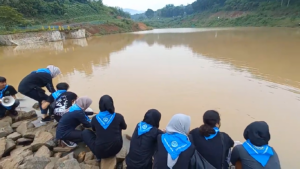
The Himikan Community Service Department of Padjadjaran University (Unpad) has implemented Properi (Sustainable Waters Program) with the theme “Caring for Sustainable Waters”. This activity aims to build public awareness about the importance of preserving the aquatic environment and provide a forum for the community to understand better the importance of maintaining biodiversity in the marine environment. Properi also received support from the West Java Provincial Forestry Service – SPTH Jatinangor in the form of 50 tree seedlings and from the Wanayasa Purwakarta Freshwater Fish Seed Development Center (BPBIAT) in the form of 10,000 Tilapia seeds. This support emphasizes the importance of collaboration between educational institutions, government, and the community in preserving the environment. Tilapia restocking plays a role in maintaining aquatic biodiversity by ensuring that local fish populations remain healthy and diverse, which in turn helps maintain the balance of the marine ecosystem.
Universitas Padjadjaran is committed to supporting technologies and practices in the marine industry that reduce or prevent damage to aquatic ecosystems. One example is Padjadjaran Ocean Data Center (PODC) that contributes a freely accessible online database for marine and climate-related data.
The Padjadjaran ocean Data Center (PODC)
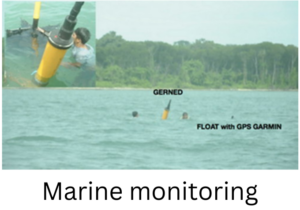
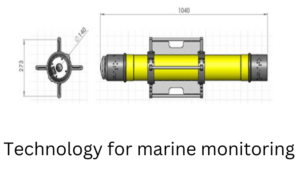
The Padjadjaran Ocean Data Center (PODC) at Universitas Padjadjaran serves as a comprehensive online database for marine and climate-related data. This platform collaborates with various Indonesian marine agencies and welcomes data from both institutional and personal research. PODC plays a crucial role in advancing oceanographic research by providing free access to datasets, which include data collected from various marine instruments such as ARHEA devices, ships, autonomous vehicles, and mooring platforms. The centre aims to support research in areas like ocean-atmosphere interactions, marine geology, and water column circulation.
We are also welcome to individual datasets from personal research or other data-related marine activities by the public. Here in PODC, the marine datasets are made freely available to the public. The datasets cover a wide range of parameters collected mainly from the ARHEA Instruments, but also from other platforms such as ocean-going ships, autonomous vehicles, moorings, and other platforms.
https://podc.fpik.unpad.ac.id/
Development of autonomous multi-sensor ocean monitoring instrument designed for complex archipelagic waters
Universitas Padjadjaran through the Department of Marine Science, Faculty of Fishery and Marine Science, Universitas Padjadjaran, Bandung. collaborated with Marine Science Institute, University of The Philippines; Marine Technology Centre, Institute for Vehicle System & Engineering, Universiti Teknologi Malaysia; Department of System and Naval Mechatronic Engineering, National Cheng Kung University, Taiwan.
The development of low-cost multi-sensor ocean monitoring instruments to measure oceanographic parameters. The aim of this instrument is to fulfil the monitoring specially for archipelagic countries with complex waters, and it allows for both vertical and horizontal measurements. The platform contains removable sensors, rechargeable batteries, satellite system, and microcontroller. Inside the instrument, the probes are primarily to measure acidity level (pH), water temperature, salinity (ppt), conductivity (ms/cm), turbidity (NTU), and depth (m). Furthermore, data is stored in an internal SD card and simultaneously transmitted to a website portal data via satellite after it goes to the surface water. For validation, several tests had been conducted in controlled laboratory conditions and field settings, in which the test results had shown satisfactory results. In the future, the system will be upgraded by adding extra units of antenna, chlorophyll sensor, and a power changer made from thrusters.
Policy review of Rector Regulation of Universitas Padjadjaran Number 26 of 2022 Concerning Management of Canteen Within Universitas Padjadjaran
Point
Article 12. I Every canteen uses the selection of product raw materials, supporting tools, and production processes that comply with halal standards
Evaluation
This policy have been referenced and executed by canteen management to use raw material and supporting tools with halal standards
Recommendation
It is expected to renew this policy or make new policy with more details about sustainable farmed food and food from aquatic policy
Related link
https://sdgs.unpad.ac.id/wp-content/uploads/2024/11/Policy-review-of-Food-from-aquatic-ecosystems.pdf
Universitas Padjadjaran implements water quality standards and guidelines to manage water discharges with the goal of protecting ecosystems, wildlife, and human health. These measures are part of its broader sustainability efforts, including:
- Water Conservation Strategies: Maintaining water sources through retention basins, infiltration wells, and rainwater harvesting systems to control runoff and support groundwater recharge.
- Wastewater Recycling: Treated wastewater is reused for non-potable purposes such as irrigation, firefighting, and maintaining green spaces, reducing environmental discharge impacts.
Water Conservation at Eco-Friendly Campus Policy
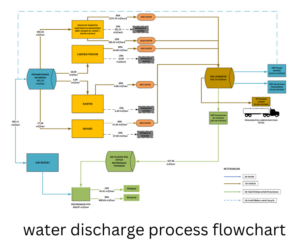
Eco-Friendly Campus is the manifestation of a safe, comfortable, and orderly campus environment for conducting educational activities; and carrying out security and safety at work that can protect residents and workers who are working at Unpad as well as the community around the campus environment; and conserving water and energy resources, so that they can support a dynamic, sustainable campus life atmosphere by meeting the green campus criteria. Water use includes: planning, controlling, and using groundwater resources through technology management and behavior change, restoring and maintaining sources of deep ground water, surface ground water, and surface water with the principle of water conservation so as to ensure their availability for continuous teaching and learning activities.
Conservation and management of water resources are unrestricted and can be reduced or increased according to the typology and needs of the campus by:
- Performing efficient use of clean water by using technology and changing behavior;
- Conserving water resources in water catchment areas and the campus environment through technology and vegetative multi programs as well as changes in land/soil use patterns;
- Protection and maintenance of water spring areas and water spring buffer areas within the campus environment and management of groundwater resource utilization;
- Building and maintaining water retention areas within the campus, constructing infiltration wells, and manufacturing of biopores and rainwater harvesting systems;
- Applying the zero-runoff principle to the development of infrastructure and buildings in the campus environment by optimizing infiltration wells and rainwater harvesting ponds;
- Building new water reservoirs and maintaining Check Dam (Leuwi Padjadjaran 1), Fishery Reservoir Pond (Leuwi Padjadjaran 2), and Ciparanje Retention Basin (Leuwi Padjadjaran 3);
- Using water from waste treatment with the principles of reuse and recycle to reduce the uses of clean water for firefighting, watering plants, and other activities;
Drainage water for irrigation in the rice fields
The Unpad pond collects and stores drainage water for irrigation in the rice fields, planting areas, and experimental gardens on Unpad’s Jatinangor Campus. A pump in the basin distributes water exclusively for irrigation in the rice fields located east of the Unpad campus.
Utilization of Water from Surface Runoff Harvesting System for Irrigation and Fisheries
In addition to collecting rainwater from building rooftops, it is also possible to utilize surface runoff from land surfaces as a source of irrigation water during times of drought or water scarcity.
https://drive.google.com/file/d/1CfLLqs4auMR-j_3ONOSnc_qw2cENqqp5/view?usp=sharing
https://drive.google.com/file/d/1uM5AtvvsbRb4RaJY6onhtnzU5S0BKkDk/view?usp=sharing
Universitas Padjadjaran has implemented an action plan to reduce plastic waste on campus, as part of its commitment to sustainability and environmental protection. Key measures in this plan include:Policy Implementation: Banning or limiting the use of single-use plastics in campus facilities. Encouraging the use of eco-friendly alternatives such as reusable containers and biodegradable materials.
Reducing single-use plastic is critical to protecting the environment and human health. Plastic thrown away carelessly can pollute land and waters, endanger wildlife, and increase the amount of difficult waste to decompose. By reducing single-use plastics, we can slow the impact of climate change, save natural resources, and encourage the use of alternative, more environmentally friendly materials. Public education and awareness regarding the importance of reducing plastic also play a role in creating better sustainable habits.
Unpad had Rector Regulation number 10 of 2022 Concerning the prohibition of the use of single use plastic
(1) Each work unit is responsible for supporting, maintaining, monitoring, and coordinating to realize the active participation of Unpad people in the implementation of the prohibition of the use of single-use plastics.
(2) Each work unit is obliged to facilitate the implementation of the prohibition of the use of single-use plastics at Unpad.
(3) Each of Unpad people is obliged to comply with the prohibition of the use of
single-use plastics at Unpad.
(4) Each Unpad guest is directed and notified to be able to support the implementation of the prohibition of the use of single-use plastics when visiting Unpad.
The policy underscores a proactive approach to preventing and managing water pollution by ensuring compliance with liquid waste quality standards and environmental regulations for all campus activities. It incorporates the use of Internet of Things (IoT) technology for monitoring septic tanks, preventing contamination, and conducting annual water quality assessments across campus to ensure safety standards are met. Additionally, dedicated sewage disposal systems (WWTP) in each faculty are employed to treat and monitor wastewater, with strict adherence to parameters such as pH to guarantee that discharged water is safe for the environment.
1)Policy of marine pollution
In order to realize Unpad as a university that implements the principles of management and utilization of the water environment, the entire Unpad Society of Academicans is required to take an active role in the established three pillars of higher education (tridharma perguruan tinggi) programs related to the management and sustainable utilization of the water environment.
(1) Every person responsible for activities that can cause water pollution at Unpad is obliged to prevent water pollution from occurring.
(2) Every person responsible for activities at Unpad that dispose of waste into waters is obliged to fulfill the requirements regarding liquid waste water quality standards, emission quality standards, and other provisions in accordance with applicable laws and regulations.
(3) Liquid waste and/or solid waste from routine operational activities at Unpad must be managed and disposed of in liquid waste and/or solid waste management facilities in accordance with applicable regulations.
2)Water pollution control in Campus
One of the applications of the Internet of Things at Unpad is controlling the level of septic tank fullness around the campus area. This innovation will signal if the septic tank has reached a certain level of fullness. By getting the latest information, the management and maintenance of septic tanks will be better and not pollute the environment. Unpad conducts water quality monitoring at 9 points on the Unpad Jatinangor campus annually. Water parameters examined are biological, chemical, and physical parameters in total. In addition to being carried out at the outlet points of the wastewater management plant (IPAL) on the Unpad Jatinangor campus, water quality monitoring is also carried out at the Check dam, Unpad Basin, and Sekebitung spring outlet. The water quality measurements at each IPAL show numbers below the predetermined quality standards. In other words, the processed water is safe to be discharged into water bodies.
Water pollution control in Campus
3)Waste Water Management Installation
Every faculty has sewage disposal at Universitas Padjadjaran; we called it “Instalasi Pengelolaan Air Limbah (IPAL)”. Liquid waste from academic activities such as research and mini-research will be delivered to IPAL. In addition, the liquid waste we had is not hazardous and toxic, only non-toxic liquid waste. The quality of the liquid waste in IPAL will be monitored by testing several parameters, one being pH. If the pH follows the environment pH, it will be removed from the IPAL. This IPAL is to prevent water pollution and as a commitment of Unpad that the water released from IPAL is worth using.
Policy review of Reduction of Water Pollution Within Universitas Padjadjaran
Point
Article 8 (2) Every person responsible for activities at Unpad that dispose of waste into waters is obliged to fulfill the requirements regarding liquid waste water quality standards, emission quality standards, and other provisions in accordance with applicable laws and regulations
Evaluation
There is no detailed mechanism for monitoring or assessing water quality or pollution trends over time
Recommendation
Revise to require the designated supervisory unit to conduct monthly water quality monitoring, including sampling and analysis for pollutants
Related link
https://sdgs.unpad.ac.id/wp-content/uploads/2024/11/Policy-review-of-Reducing-marine-pollution.pdf
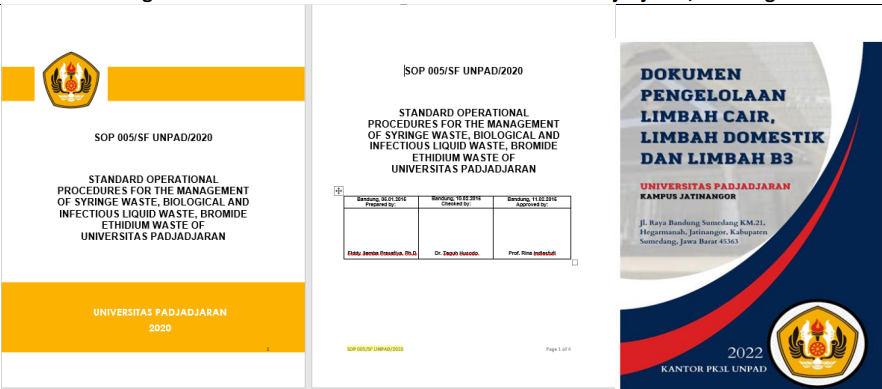
Universitas Padjadjaran has a Standard Operational Procedure (S.O.P) for handling hazardous toxic waste. For example, sorting by separating and storing waste based on group type and character. In terms of storage, hazardous waste is stored for a maximum of 90 days for category A and 360 days for category B waste, while for infectious, pathological and sharps medical waste a maximum of 2×24 hours at a temperature > 0 degrees Celsius and 90 days at a temperature < 0 degrees Celsius.
Standard Operational Procedure (S.O.P) for handling hazardous toxic waste
2)Management of Eco-Friendly at Universitas Padjadjaran
University has a plan to minimise physical, chemical and biological alterations of related aquatic ecosystems. The Management of the Eco-Friendly Campus Program of Unpad refers to the following Green Campus benchmarks Security, Safety, Health, and Comfort at Work
a.Air circulation;
b.Ambien air quality;
c.Arrangement of non-smoking area;
d.Monitoring and greenhouse effect, especially CO2 and CO;
e.Chemical and natural pollutants;
f.Biological pollutants;
g.Physical comfort;
h.Noise measurement;
i.Adequacy of work spaces;
j.Room lighting quality;
k.Use of personal protective equipment when working with high risks;
l.Sanitation system
Water Conservation
a.Water management policy;
b.Regulation and control of water usage;
c.Efficiency of clean/fresh water usage;
d.Efficiency of water distribution with faucets;
e.Water quality;
f.Water treatment, recycling, and storage;
g.Water filtration;
h.Reduction in the manufacture/use of deep wells;
i.Zero runoff and infiltration wells;
j.Conservation and reforestation of water catchment areas;
k.Conservation and maintenance of water sources
Management of Eco-Friendly at Universitas Padjadjaran
2)Workshop of laboratory waste and toxic hazardous waste at Unpad
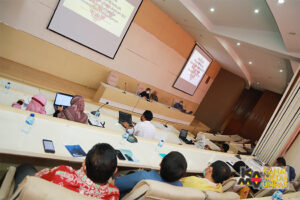
Laboratory waste and toxic, hazardous waste (B3) need to be appropriately managed. Therefore, Padjadjaran University, through the Unpad K3L Center, is holding a dangerous waste management workshop in the Unpad Environment, which will be held on August 25 2022 at Bale Rucita, Unpad Rectorate Building. This activity was attended by laboratory managers, especially waste management personnel. The workshop was attended by 50 participants from representatives of faculties and work units within Unpad.
Workshop of laboratory waste and toxic hazardous waste at Unpad
Universitas Padjadjaran is committed to monitoring the health of aquatic ecosystems through comprehensive research and innovative technologies. One such effort is the research on the Jatigede Reservoir, led by Andi Nurul Khasanah Bestari P. Iskandar, which assesses the ecosystem’s sustainability, focusing on fisheries and human impacts. Water quality samples are regularly collected to evaluate the reservoir’s health and inform sustainable management strategies. Additionally, the Padjadjaran Ocean Data Center (PODC) serves as a key platform for advancing oceanographic research, providing access to marine data collected from various instruments.
Monitoring Jatigede Reservoir
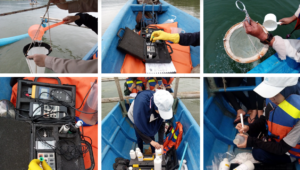
Universitas Padjadjaran is committed to ensuring environmental sustainability through active research and monitoring of surrounding water ecosystems. One such research project is led by Andi Nurul Khasanah Bestari P. Iskandar, S.Pi., M.I.L, a Doctoral student in Environmental Science. Her research, titled Status, Pressure, and Management Models of Ecosystem Services at Jatigede Reservoir from the Perspective of “Provisioning Services” in the Fisheries Sector, focuses on assessing the condition and sustainability of the Jatigede Reservoir’s ecosystem.
As part of this study, water samples from the Jatigede Reservoir are regularly collected and tested in situ to evaluate water quality and ecosystem health. This initiative aims to understand the impacts of human activity on the reservoir’s provisioning services, particularly in the context of fisheries, and to propose sustainable management strategies.
The Padjadjaran Ocean Data Center (PODC)
The Padjadjaran Ocean Data Center (PODC) at Universitas Padjadjaran serves as a comprehensive online database for marine and climate-related data. This platform collaborates with various Indonesian marine agencies and welcomes data from both institutional and personal research. PODC plays a crucial role in advancing oceanographic research by providing free access to datasets, which include data collected from various marine instruments such as ARHEA devices, ships, autonomous vehicles, and mooring platforms. The centre aims to support research in areas like ocean-atmosphere interactions, marine geology, and water column circulation.
We are also welcome to individual datasets from personal research or other data-related marine activities by the public. Here in PODC, the marine datasets are made freely available to the public. The datasets cover a wide range of parameters collected mainly from the ARHEA Instruments, but also from other platforms such as ocean-going ships, autonomous vehicles, moorings, and other platforms.
https://podc.fpik.unpad.ac.id/
https://www.unpad.ac.id/2023/08/parimanta-fpik-unpad-gelar-pelatihan-penyusunan-peta-penelitian/
Development of autonomous multi-sensor ocean monitoring instrument designed for complex archipelagic waters
Universitas Padjadjaran through the Department of Marine Science, Faculty of Fishery and Marine Science, Universitas Padjadjaran, Bandung. collaborated with Marine Science Institute, University of The Philippines; Marine Technology Centre, Institute for Vehicle System & Engineering, Universiti Teknologi Malaysia; Department of System and Naval Mechatronic Engineering, National Cheng Kung University, Taiwan.
The development of low-cost multi-sensor ocean monitoring instruments to measure oceanographic parameters. The aim of this instrument is to fulfil the monitoring specially for archipelagic countries with complex waters, and it allows for both vertical and horizontal measurements. The platform contains removable sensors, rechargeable batteries, satellite system, and microcontroller. Inside the instrument, the probes are primarily to measure acidity level (pH), water temperature, salinity (ppt), conductivity (ms/cm), turbidity (NTU), and depth (m). Furthermore, data is stored in an internal SD card and simultaneously transmitted to a website portal data via satellite after it goes to the surface water. For validation, several tests had been conducted in controlled laboratory conditions and field settings, in which the test results had shown satisfactory results. In the future, the system will be upgraded by adding extra units of antenna, chlorophyll sensor, and a power changer made from thrusters.
Universitas Padjadjaran develops and supports various programs and incentives to encourage and maintain good aquatic stewardship practices. The community service and field lecture organized by the Fisheries Study Program is a prime example, as it engaged students in hands-on learning and practical experiences related to sustainable fishing practices.
Fishing Gear Grant to Pangandaran Fishermen
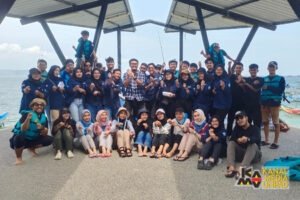
On Saturday, November 4, 2023, students of the Fisheries Study Program, Faculty of Fisheries and Marine Sciences, Padjadjaran University, held a community service activity and a field lecture in Pangandaran Regency. A total of 27 students participated in this activity, which included a visit to the Bojongsalawe Fish Auction Place (TPI) to learn about the facilities, auction process, and other activities at the TPI. In addition, they also went to sea to try out fishing gear. The event began with material on Bycatch, providing practical experience relevant to their lessons in class. As part of community service, students provided a grant of gillnet fishing gear to fishermen in Karangjaladri Village, Parigi District, Pangandaran. This activity was initiated by the Fishing Division of the Unpad Fisheries Student Association, and it included discussions with KUD Minapari Parigi employees regarding the conditions of local fishermen.
Universitas Padjadjaran collaborates with local communities to maintain shared aquatic ecosystems. Through various programs and outreach activities, Unpad engages local communities in environmental conservation efforts. For instance, the Ocean Young Guards (OYG) organized the “Karangsong Mangrove Expedition” to raise awareness about marine pollution, involving local schoolchildren and coastal residents in collecting waste and promoting environmental stewardship.
Ocean Young Guards FPIK Unpad Holds Action to Protect the Sea from Trash at Mutiara Hijau Karangsong Beach
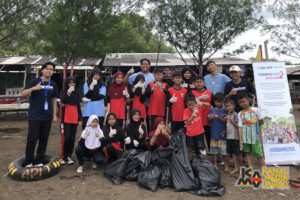
Ocean Young Guards (OYG) from the Faculty of Fisheries and Marine Sciences, Padjadjaran University, held an action to Protect the Sea from Garbage or Jalapah in the “Karangsong Mangrove Expedition” activity at Mutiara Hijau Karangsong Beach, Indramayu, on February 25 2023. The program is part of the “Young Leaders for Climate Batch 2” and was opened at SDN 1 Karangsong and attended by OYG CEO Aidin, who introduced the vision of OYG in protecting the sea with the younger generation. Aidin hopes this activity can build conservation character for children at SDN 1 Karangsong and preserve the beach. Abu, from Teens Go Green Indonesia, said that the Batch 2 Young Leaders for Climate program aims to spread the spirit of love for the environment by involving 15 young leaders, including those in the Karangsong Mangrove Expedition project.
The Jalapah activity involved ten students from SDN 1 Karangsong and five coastal children who collected organic and inorganic waste in 10 large plastic bags. This event ended with a post-test and a meal together, during which the OYG team messaged the participants to continue protecting the environment for the future. Through this activity, OYG hopes to form a young generation that cares about the environment and collaborates with other environmental communities in Indonesia.
Outreach activity on the Electronic Marine and Fisheries Business Actor Card (e-Kusuka) for fishermen
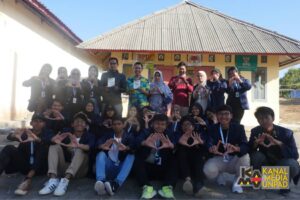
The PPK Ormawa BEM Kema Team at Universitas Padjadjaran held an outreach activity on the Electronic Marine and Fisheries Business Actor Card (e-Kusuka) for fishermen in Karangwangi Village, Cidaun District, Cianjur Regency. This activity was carried out at the Karangwangi Village Hall Office on Friday, August 25 2023. The e-Kusuka Card or Maritime and Fisheries Business Actor Card is the sole identity of the leading maritime and fisheries actors. The main actor in question is every person who manages part or all of marine and fisheries business activities from upstream to downstream, namely fishermen, cultivators, salt farmers, fish processors and fish marketers. This outreach activity was held to socialize the function of the Kusuka program among fishermen in Karangwangi Village through material presentations and discussions. The PPK Ormawa BEM Kema Unpad team also helped village communities make e-Kusuka cards through this activity. This activity collaborates with the West Java Province Maritime and Fisheries Service and the Cianjur Regency Maritime, Fisheries and Livestock Service. A total of 106 fishermen participated in this activity. The fishermen seemed very enthusiastic during a discussion session between Karangwangi Village fishermen and extension workers. After the discussion and question and answer session, the PPK team collected the required document files from village residents for e-Kusuka card registration. “We hope that this activity can bridge fishermen with government agencies regarding access and benefits of Kusuka cards,” said Vini, an Unpad student responsible for outreach activities.
Unpad Takes Part in Cooperation on Marine Governance in Island Countries
Universitas Padjadjaran (Unpad) affirmed its commitment to strengthening the capacity of archipelagic countries through tridharma collaboration with the Bogor Agricultural University (IPB) and the University of Toliara, Madagascar. This collaboration was inaugurated by signing an MoU at the “1st High-Level Meeting Archipelagic and Island States (AIS) Forum” in Denpasar, Bali, on October 10, 2023. The forum, attended by 51 countries, was led by Indonesian Minister of Foreign Affairs Retno Marsudi. The Rector of Unpad stated the importance of protecting the vast ocean, dealing with climate change, and developing the socio-economic capacity of fishing communities sustainably, which aligns with Unpad’s Main Scientific Pattern, “Developing Noble Law and the Environment in National Development.” This collaboration emphasizes the need for regulations that align with environmental sustainability and economic development.
In marine research, Unpad, through the Faculty of Fisheries and Marine Sciences, has developed the Padjadjaran Oceanographic Data Center (PODC) to monitor marine behaviour and dynamics as data support for socio-economic development. PODC focuses on three main aspects: economic valuation of tropical aquatic ecosystems such as mangroves and coral reefs, coral reef transplantation in Pangandaran, and monitoring the marine environment, including acidification and water quality. In addition, Unpad also plays an active role in conservation by planting mangroves and corals and through the SDGs Center, which studies sustainable marine valuation.
Universitas Padjadjaran has implemented a watershed management strategy that takes into account the location-specific diversity of aquatic species, with a focus on water conservation and sustainable resource use. The university has developed a water management program for the Jatinangor campus, which features significant variations in altitude, enabling it to function as a natural water catchment area. To prevent surface runoff and promote water conservation, Unpad has constructed a series of infrastructure, including basins, check dams, retention ponds, infiltration wells, bio drainage areas, rain gardens, and bio pores.
1)Watershed management strategy at Unpad

Based on the drainage conditions in the UNPAD Micro watershed area, a water conservation program is prepared to be implemented gradually. Conservation efforts that have been conducted to prevent the surface runoff flow are constructing a basin, checking dams, retention ponds, infiltration wells, bio drainage areas, rain gardens, rainwater harvesting, and bio pores. In general, the Jatinangor Unpad area has a significant difference in altitude, so it has a slope and has the potential to become a water catchment area. Unpad Campus has regional conditions such as ridges and valleys to become a catchment for rainwater that falls to the surface.
Watershed management strategy at Unpad
2)Water managment strategy
The usage of recycled water at the Unpad Jatinangor Campus includes four activities that have been carried out, which are (1) Utilization of Unpad Basin for irrigation of rice fields and experimental gardens around the campus area; (2) Nano bubble technology to recyle water; (3) Utilization of Water from Arboretum UNPAD Check Dam for Irrigating Gardens and Experimental Gardens; and (4) Jalatista UNPAD. Below is watershed management strategy in Unpad.
The Use of Water Efficient Appliances Water tap toilet flush etc