

Universitas Padjadjaran has actively participated in developing and contributing to Sustainable Development Goals (SDG) policies at the national and regional levels. The involvement typically includes collaboration with government bodies, non-government organizations (NGOs), and other stakeholders. In 2023, Universitas Padjadjaran collaborated with Ministry of National Development Planning of Republic Indonesia, Asian Development Bank, KfW, and the European Union. In addition, Through SDGs Center Universitas Padjadjaran, we conduct SDGs research in supporting Bandung Barat Regency.
The Ministry of National Development Planning/Bappenas Collaborates with the SDGs Center Universitas Padjadjaran, Supported by the Asian Development Bank, KfW, and the European Union
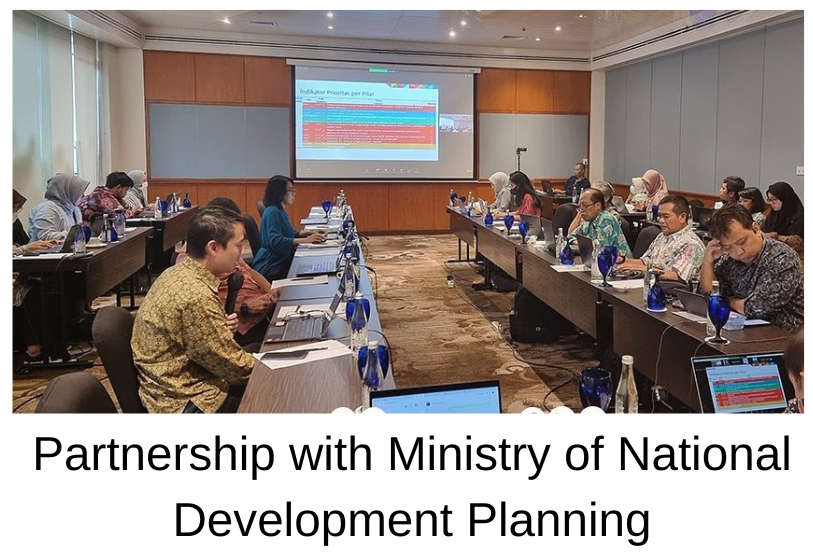
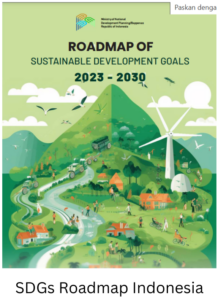
Efforts to accelerate the achievement of the SDGs over the next 7 years require strategic elaboration as a benchmark and reference for various stakeholders. For this reason, the Ministry of National Development Planning/Bappenas revised the previous SDGs Roadmap. In collaboration with the SDGs Center Universitas Padjadjaran, supported by the Asian Development Bank, KfW, and the European Union, the 2023-2030 SDGs Roadmap has been prepared. Contributors from Universitas Padjadjaran include Prof. Dr. Zuzy Anna, Prof. Dr. Arief Anshory Yusuf, Dr. Ahmad Komarulzaman, Restu Almiati, S.T., M.T., Wahida Kumala Tuta, S.E., Wiartini Citrasari, S.E., and Megananda, S.E.
This Roadmap includes:
- A global SDGs agreement translated at the national level
- National Targets and Strategy for achieving SGDs until 2030
- A reference for preparing National and Regional Development Plans
In accordance with Presidential Decree No. 111/2022, the SDGs Roadmap 2023-2030 has been established by the Minister of National Development Planning/Head of Bappenas. The document includes a complete version with a detailed methodology and indicator projections.
The 2023–2030 SDGs Roadmap is a revision of Indonesia’s prior roadmap due to (a) feedback from SDGs monitoring and (b) unforeseen external factors such as the COVID-19 pandemic. This roadmap outlines policies and programs, identifies areas for optimization, and highlights priority indicators to support SDGs achievement programs. The goal is for this roadmap to guide the remaining seven years of SDGs efforts by helping to prioritize resources effectively, synchronize actions across stakeholders, and provide a monitoring and evaluation framework to track progress. The milestones in this roadmap reflect consensus among stakeholders and expert input.
Below are links of roadmap SDGs 2023-2030 and information of workshop
Study of West Bandung Regency SDGs Achievement, Problems, and Challenges
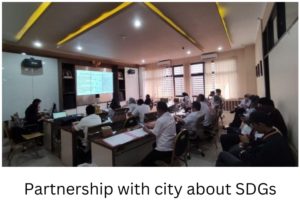
To support SDGs achievement, local governments align targets and programs with the central government. Monitoring and evaluation of the SDGs Regional Action Plan are conducted every six months or as needed, using data from the Regency/City government. For several years, including 2023, West Bandung Regency collaborated with the SDGs Center of Universitas Padjadjaran to document Sustainable Development Goals achievement.
The study aims to report projections for SDG indicators, measure SDG achievement with business-as-usual (BAU), and communicate projections of SDG achievement in West Bandung Regency. 66 indicators are projected based on data availability; SDGs 12, 13, 14, and 15 were not projected in this study. Data sources include the Central Statistics Agency, Ministry of Manpower, Ministry of Health, West Java Province Health Research, and others.
Projections are categorized as:
- SCOR A: Reaches/almost reaches 97.5% of SDGs target
- SCOR B: Approaches SDGs target by at least 90%
- SCOR C: Over 75% towards SDGs target
- SCORE D: Reaches 50% of SDGs target
- SCOR E: Below 50% of SDGs target
Several indicators scored C, D, and E, suggesting a need for targeted attention from the West Bandung Regency government. Additional efforts, innovations, and cross-sector collaboration are necessary, particularly given limited resources. Priority can be focused on poverty and stunting, with attention to supporting indicators like access to adequate drinking water, sanitation, and school completion rates.
Related links:
Universitas Padjadjaran has conducted and participated in cross-sectoral dialogues focused on the Sustainable Development Goals (SDGs). These activities typically involve collaboration with government agencies, NGOs, academics, and other stakeholders. Some examples includes conferences, seminars, workshops, and public forums. In 2023, Universitas Padjadjaran conducted Global SDGs Conferences parterning with UNESCAP to host conferences on global SDGs challenges, fostering a multi-stakeholder dialogue that includes regional impacts and actions.
Panel Discussion between the SDGs Center of Universitas Padjadjaran, the Indonesian Ministry of National Development Planning, and the UN’s UNESCAP “Achieving the Sustainable Development Goals through Government and Universities Partnership”
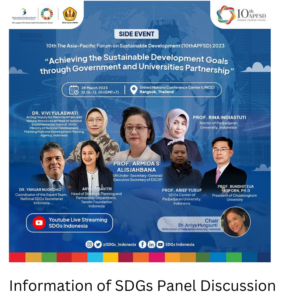
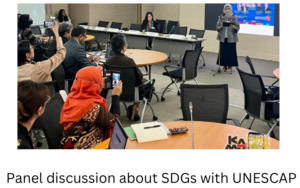
This event occurred at the UN Headquarters in Bangkok, Thailand, on Tuesday, March 28, 2023. The SDGs Center of Universitas Padjadjaran, in collaboration with the Ministry of National Development Planning of the Republic of Indonesia and UNESCAP UN, held a Panel Discussion activity with the theme “Achieving the Sustainable Development Goals through Government and Universities Partnership”. Representatives of the SDGs Center said that this discussion was held to see the role of Higher Education in facing various methodological challenges in achieving the Sustainable Development Goals (SDGs) by 2030. Unpad Chancellor Prof. Rina Indiastuti, who was directly present at the discussion, emphasized the importance of universities mobilizing their resources to make the challenges of achieving the SDGs a success, including methodological challenges.
Secretary General of UNESCAP, Prof. Armida Alisjahbana, hopes that the partnership between universities and the government will continue to be strengthened because they are complementary. Several speakers attended this panel discussion, including:
- Plt. Deputy for Maritime Affairs and Natural Resources at the Indonesian Ministry of National Development Planning Vivi Yulaswati
- Coordinator of the SDGs National Secretariat Expert Team Yanuar Nugroho
- UNESCAP representative Rajan Ratna
- SDGs Center senior researcher Dr. Arriya Mungsunti moderated this discussion.
Related Links:
SDGs Center Universitas Padjadjaran was involved in the Workshop to Update the Indonesian SDGs Roadmap
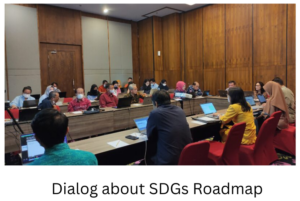
On April 10-11, 2023, the SDGs Center of Universitas Padjadjaran was involved in a workshop on Projection, Exercise Results, Policy Strategy, Financing and Interlinkages for SDGs Indicators. This activity is an initiative of the Indonesian Ministry of National Development Planning. Apart from the opening speech by the Head of the Indonesian SDGs National Secretariat, the Asian Development Bank (ADB), represented by Mohd Sani Ismail, also gave a speech supporting the 2030 SDGs update.
This two-day activity began with a discussion of the four pillars of the SDGs, namely the pillars of social development, law and governance, economics, and environment. There was also a presentation on SDG interlinkages on the second day. Various parties attended this activity, including experts according to their respective goals and multiple deputies from the Ministry of National Planning and Development.
The SDGs Roadmap aims to guide stakeholders on how best to navigate the complex task of achieving the goals and targets of the 2030 Agenda. The Roadmap can be used in communication with other stakeholders involved in the implementation of the SDGs, such as policymakers, academia, civil society, the private sector, and the media, to explain issues related to the SDGs and the critical role of all stakeholders.
Related Links:
Universitas Padjadjaran has engaged in international partnerships to collect and measure data aligned with the Sustainable Development Goals (SDGs). These collaborations play a crucial role in supporting informed decision-making and monitoring progress toward SDG objectives. The university works alongside global academic and research institutions to gather and analyze data on key issues such as climate change, public health, education, and other SDG-focused areas.
International Collaboration in Indonesian Sea Large Marine Ecosystem (ISLME) Transboundary Diagnostic Analysis (TDA)
Universitas Padjadjaran became a technical consultant in the collaboration between Indonesia and Timor Leste to complete the Indonesian Sea Large Marine Ecosystem (ISLME) Transboundary Diagnostic Analysis (TDA) and support the formulation of the Strategic Action Program (SAP) in an intensive three-day regional meeting in Bali from 25 to 27 May 2023. The TDA is a scientific, technical process identifying transboundary threats to ISLME sustainability.
The TDA findings will be used to formulate the SAP, which will highlight concrete priority policies and interventions to address the threats. Dr. Ridwan Mulyana, MMAF Director of Fish Resources Management, expressed Indonesia’s commitment to the TDA-SAP process, stressing that the overall goal of SAP development based on the TDA findings is crucial to reduce pressure on marine ecosystems in the region. Mr. Chavakat Manghat Muralidharan, ISLME Regional Coordinator, stated that a participatory approach is adopted for SAP formulation, involving expert participants to develop a long-term vision and set ecosystem-based fisheries goals based on five identified Priority Environmental Concerns (PECs):
- Unsustainable fishing and aquaculture practices
- Degradation and loss of marine habitat
- Marine and land-based pollution
- Decline of biodiversity and key species
- Impacts of climate change
Related Link: FAO Indonesia News
International Collaboration in Marine Governance in Island Countries through the Padjadjaran Oceanographic Data Center
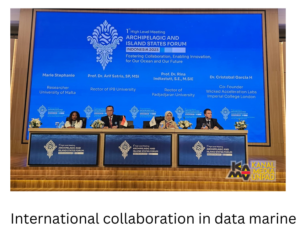
Universitas Padjadjaran collaborates with the University of Toliara, Madagascar, in the “1st High-Level Meeting Archipelagic and Island States (AIS) Forum” in Denpasar, Bali, on Tuesday, 10 October 2023. This forum was attended by 51 AIS member countries and led by the Indonesian Minister of Foreign Affairs, Retno Marsudi. Unpad developed the Padjadjaran Oceanographic Data Center (PODC) information system for marine governance, focusing on data to support marine socio-economic development. The three main areas measured by PODC include:
- Economic valuation of tropical marine ecosystems (mangroves, seagrass, coral reefs) on the coast of Indonesia
- Coral reef transplantation in Pangandaran
- Monitoring of the marine environment, including ocean acidification and water quality
Related Link: Unpad News Article
Development of Autonomous Multi-Sensor Ocean Monitoring Instrument for Archipelagic Waters
Universitas Padjadjaran, through the Department of Marine Science, collaborated with institutions including the Marine Science Institute at the University of the Philippines, Marine Technology Centre at Universiti Teknologi Malaysia, and National Cheng Kung University in Taiwan. Together, they developed low-cost, multi-sensor ocean monitoring instruments designed for complex archipelagic waters, allowing both vertical and horizontal measurements.
This instrument, which includes removable sensors, rechargeable batteries, and a satellite system, measures acidity level (pH), water temperature, salinity, conductivity, turbidity, and depth. Data is stored on an SD card and transmitted to a web portal via satellite. Validation tests have shown satisfactory results, and future upgrades will include additional sensors and power enhancements.
Related Links:
Faculty of Geological Engineering, Universitas Padjadjaran and IPG Timor Leste Collaboration on Field Survey of Metal and Non-Metal Potential in Timor Leste
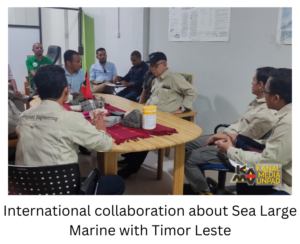
In early July 2023, the Faculty of Geological Engineering at Universitas Padjadjaran, in collaboration with Instituto Do Petroleo E Geologia-Instituto Publico (IPG) Timor Leste, conducted a field survey of metal and non-metal potential in Timor Leste. Led by Prof. Dr. Ir. Children, DEA, with field coordinator Cecep Yandri Sunarie, S.T., M.T., and PIC Dr. Mohamad Sapari Dwi Hadian, the team performed geological mapping and sample collection to assess mineral deposits.
This exploration aims to identify deposits of metals like gold, nickel, and copper, as well as non-metal materials such as kaolin and industrial rocks. Preliminary results indicate potential for development in Timor Leste, prompting further research by the Unpad FTG team.
Related Link: Unpad News on Field Survey
Universitas Padjadjaran has engaged in international collaborations and research to review comparative strategies and develop global best practices for addressing the Sustainable Development Goals (SDGs). These efforts involve exchanging knowledge with international institutions, analyzing diverse approaches to SDG implementation, and identifying effective methods that can be adapted to local contexts. Through these partnerships, Unpad contributes to advancing innovative solutions and fostering global cooperation in achieving the SDGs.
Roadmap SDGs 2023-2030 Indonesia
Collaboration between The Ministry of National Development Planning/Bappenas, the SDGs Center at Universitas Padjadjaran, the Asian Development Bank, KfW and the European Union
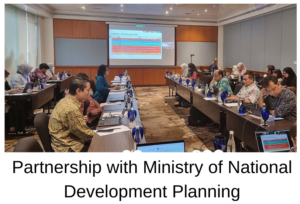
Efforts to accelerate the achievement of the SDGs over the next 7 years certainly require strategic elaboration that can become a benchmark and reference for various stakeholders. For this reason, the Ministry of National Development Planning/Bappenas took the initiative to revise the previous SDGs Roadmap. Through collaboration with the SDGs Center Universitas Padjadjaran, supported by the Asian Development Bank, KfW, and the European Union, as well as through a series of inclusive preparation processes, the 2023-2030 SDGs Roadmap has been prepared. This Roadmap is:
- A global SDGs agreement translated at the National level
- National Targets and Strategy for achieving SGDs until 2030
- Reference in preparing National and Regional Development Plans
In accordance with the mandate of Presidential Decree No. 111/2022 concerning Implementation of the Achievement of Sustainable Development Goals, the SDGs Roadmap 2023-2030 was determined by the Minister of National Development Planning/Head of Bappenas.
Related Links:
AHEC 2023 Produces Three Declarations to Strengthen the Role of ASEAN Universities
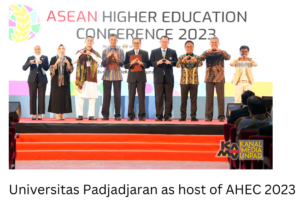
Universitas Padjadjaran hosted the 2023 ASEAN Higher Education Conference (AHEC), held from 24-26 August 2023. This activity was initiated by the Ministry of Education, Culture, Research, and Technology of the Republic of Indonesia to position Jakarta and Indonesia as benchmarks for higher education in ASEAN.
The conference resulted in three declarations:
Bandung Declaration on ASEAN Higher Education
- Improving digital infrastructure and connectivity throughout ASEAN
- Supporting inclusiveness and fair access to quality education
- Collaborating with stakeholders to support technology transfer
ASEAN Alumni Meeting Declaration
- Develop ASEAN campuses into Centers of Excellence
- Encourage interdisciplinary research among ASEAN universities
AHEC Communique Webinar Series and Ambassador Town Hall Meeting Declaration
- Emphasize developing digital innovation in academics
- Improve quality assurance with digital innovation
Related Links:
Development of Autonomous Multi-Sensor Ocean Monitoring Instrument
Universitas Padjadjaran through Department of Marine Science, Faculty of Fishery and Marine Science, Universitas Padjadjaran, Bandung. collaborated with Marine Science Institute, University of The Philippines; Marine Technology Centre, Institute for Vehicle System & Engineering, Universiti Teknologi Malaysia; Department of System and Naval Mechatronic Engineering, National Cheng Kung University, Taiwan.
The development of low-cost multi-sensor ocean monitoring instruments to measure oceanographic parameters. The aim of this instrument is to fulfill the monitoring specially for archipelagic countries with complex waters, and it allows for both vertical and horizontal measurements. The platform contains removable sensors, rechargeable batteries, satellite system, and microcontroller. Inside the instrument, the probes are primarily to measure acidity level (pH), water temperature, salinity (ppt), conductivity (ms/cm), turbidity (NTU), and depth (m). Furthermore, data is stored in an internal SD card and simultaneously transmitted to a website portal data via satellite after it goes to the surface water. For validation, several tests had been conducted in controlled laboratory conditions and field settings, in which the test results had shown satisfactory results. In the future, the system will be upgraded by adding extra units of antenna, chlorophyll sensor, and a power changer made from thrusters.
Related Link: ResearchGate Publication
Best Practice for Respiratory Health “RESPIRE” in Asia
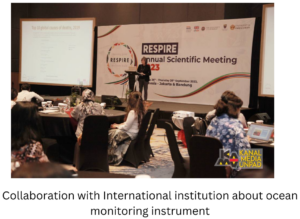
Respiratory health problems, especially asthma, have received global attention following the Covid-19 pandemic. In Indonesia, asthma is not considered as serious as tuberculosis. To increase awareness about asthma, the “RESPIRE” research unit collaborates with several Asian countries, including Indonesia, under the coordination of Universitas Padjadjaran. Prof. Dr Cissy B. Kartasasmita emphasized that asthma can be dangerous and as severe as TB, even though people are more afraid of TB. RESPIRE, based at the University of Edinburgh, has collaborated since 2016 with academics from Bangladesh, India, Malaysia and Pakistan and has involved Indonesia, Bhutan and Sri Lanka in respiratory health studies. Universitas Padjadjaran plays a vital role in implementing this collaboration.
The RESPIRE team has visited SMPN 1 and SMPN 9 in Bandung City as research subjects to create a healthy environment for teenagers. Prof. Aziz Sheikh from RESPIRE Bangladesh emphasized the importance of parental support and an educational curriculum that supports healthy behaviour. Prof. Ee Ming Khoo from RESPIRE Malaysia added that school regulations to prevent smoking and reduce pollution are very important. By creating a clean environment, teenagers can positively influence their families.
Related Links:
Universitas Padjadjaran collaborates with NGOs to advance the Sustainable Development Goals (SDGs) through student volunteering programs, research partnerships, and the creation of educational resources. These collaborations enhance the university’s impact by leveraging specialized knowledge and networks, empowering students with practical skills and leadership opportunities, and implementing effective solutions to local challenges such as poverty, environmental conservation, and public health. In 2023, There are student volunteering collaborated with AIESEC, research program about tuberculosis granted by Bill and Melinda Gates Foundation, and collaboration with Markplus to develop educational resources.
Global Volunteer Program at Universitas Padjadjaran with AIESEC
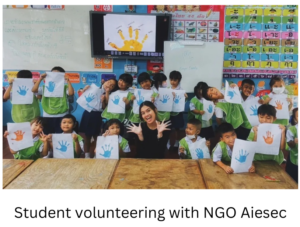
For students passionate about creating change in the world, the Global Volunteer Program by AIESEC at Universitas Padjadjaran (Unpad) offers a unique opportunity. This program provides students with an adventure that hones their skills, opens doors to global leadership, and enables them to make a meaningful impact.
One inspiring example is Ruth Frederica, a student at Universitas Padjadjaran. In 2023, she participated in the Global Volunteer program, where she served as a teacher in Thailand, working on a project to develop education in a rural village. Through this experience, Ruth enhanced her leadership skills and embraced the warmth of the local culture. She feels proud to have contributed to positive change, particularly in improving education for rural communities in Thailand, aligning with SDG no. 4 (quality education).
Related Link: Global Volunteer Program by AIESEC
Tuberculosis Research – Unpad Lecturer Received Grant from Bill and Melinda Gates Foundation
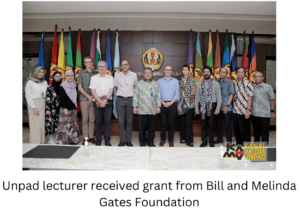
Tuberculosis (TB) research is crucial, as TB remains one of the leading causes of death from infectious diseases globally. This research is essential for understanding epidemiological trends, risk factors, and for developing new vaccines, given the limitations of the existing BCG vaccine. Additionally, drug-resistant TB strains like MDR and XDR-TB require new therapeutic approaches. Research also contributes to faster diagnostics, effective prevention, and better control strategies.
Dr. Bachti Alisjahbana from the Department of Internal Medicine at Universitas Padjadjaran received a grant from the Bill & Melinda Gates Foundation in 2023 for TB research. His work assesses the prevalence of TB infection in communities to support the development of a more effective vaccine than the BCG vaccine. The grant was awarded based on recommendations from researchers at McGill University, Unpad’s research partner in Canada.
Related Link: Research on TB by Unpad Lecturer
Collaboration with MarkPlus and Lokatekno for Massive Open Online Course (MOOC)
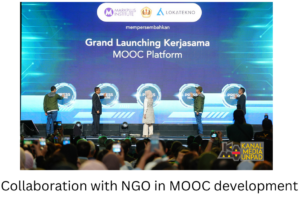
Universitas Padjadjaran, in collaboration with MarkPlus Institute and Lokatekno, launched an online learning program based on the Massive Open Online Course (MOOC) concept. This platform, known as “Unpad Luhung,” is accessible to learners worldwide and aims to support unlimited learning opportunities. The Unpad-MarkPlus Institute-Lokatekno MOOC program was officially launched during The Annual 18th MarkPlus Conference 2024 at the Ritz Carlton, Jakarta, on December 7, 2023.
The “Unpad Luhung” platform serves as the Universitas Padjadjaran Learning and Upskilling Hub for Next Generation. This MOOC platform offers certified classes for State Civil Apparatus (ASN), Micro, Small and Medium Enterprises (MSMEs), and students.
Available classes include:
- WOW Public Service in the Digital Era: Targeted at ASNs to enhance public service skills and communication proficiency.
- Digital Branding for MSMEs: Designed to improve business skills for MSMEs, focusing on digital marketing and branding.
- Entrepreneurship and Leadership for Students: Aimed at equipping students with entrepreneurial and leadership skills for future success.
Related Link: Unpad-MarkPlus Institute-Lokatekno MOOC Launch


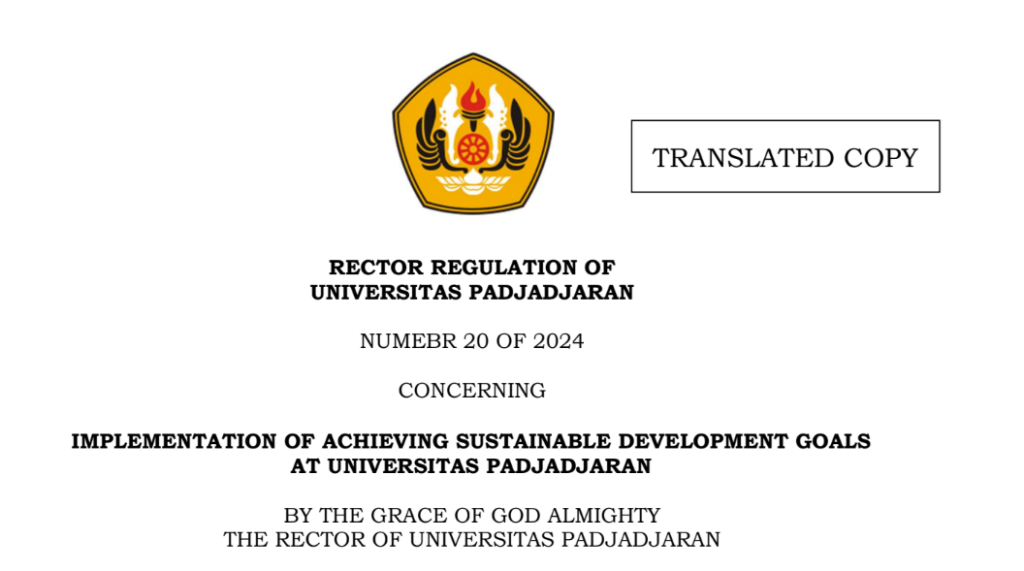
Universitas Padjadjaran showcases a firm commitment to embedding meaningful education on the Sustainable Development Goals (SDGs) throughout its curriculum. By incorporating SDG principles and themes into diverse academic programs and courses, the university ensures that students from all disciplines acquire the knowledge and skills needed to tackle global challenges effectively. Universitas Padjadjaran demonstrates a strong commitment to implementing the Sustainable Development Goals (SDGs) on campus. This commitment is embodied in Rector’s Regulation Number 20 of 2024, which outlines the implementation of SDG achievement at Universitas Padjadjaran. The SDGs at Universitas Padjadjaran aim to serve as a foundation and driving force for Unpad community members to pursue sustainability in fulfilling the tri dharma of higher education, both on and off campus.
Universitas Padjadjaran’s Commitment to Implementing SDGs on Campus
SDGs Integration in Education
Article 5 of the regulation emphasizes the integration of SDG education across the entire Universitas Padjadjaran curriculum. Even in Community Outreach activities, students’ social issues must align with the SDGs. Unpad promotes the SDGs in the educational and teaching processes across various faculties, where each SDG goal is embedded into teaching activities based on the respective fields of study. This approach ensures that students develop a holistic understanding of sustainable development.
Furthermore, the existence of a sustainability team at both the University and Faculty levels serves as proof of Universitas Padjadjaran’s commitment to the SDGs. This team is responsible for implementing SDG-related commitments in all campus activities.
SDGs Center and SDG Education Initiatives
Universitas Padjadjaran is the first university in Indonesia to establish an SDGs Center in Higher Education, founded in 2016. This SDGs Center is a testament to Universitas Padjadjaran’s commitment to mainstreaming SDGs within the campus environment. All students are introduced to the SDGs during the Joint Preparation Stage in their first semester, and student group projects are organized with tags corresponding to SDG goals.
Related Links:
Universitas Padjadjaran offers several special courses related to sustainability, particularly in programs supporting the achievement of the Sustainable Development Goals (SDGs). Currently, there are 3,702 specific courses on sustainability taught by lecturers across 17 Faculties/Schools. Some of the notable course topics include:
- Environmental Policy and SDGs: This course covers policy studies and the implementation of SDGs in the environmental sector, including the role of public policy in supporting these goals.
- Sustainable Development and Natural Resource Management: Offered by the Faculty of Economics and Business, this course focuses on the management and conservation of natural resources from an economic sustainability perspective.
- Environmental Economics: This course addresses the financial impacts of environmental change and aspects of sustainability, with a focus on the monetary elements of the SDGs.
- Law and Sustainability: Provided by the Faculty of Law, this course explores the role of law in supporting sustainable development, including environmental regulation, climate change, and social policy.
Special Courses on Sustainability at Universitas Padjadjaran
These courses are integrated into the curriculum with a cross-disciplinary approach to equip students with a comprehensive understanding of sustainability that aligns with national development needs. Apart from the educational staff, students are also involved in the sustainability team, actively contributing to sustainability initiatives on campus.
Related Links:
Master’s Study Program in Sustainability Science
In addition to sustainability-related courses, Universitas Padjadjaran offers a Master’s Study Program in Sustainability Science at its Postgraduate School. This program covers interdisciplinary approaches to environmental, economic, and social sustainability. Key features and primary focuses of this program include:
- Multidisciplinary Approach: Combining various scientific disciplines, this program helps students understand human-environment dynamics, providing holistic solutions to sustainability challenges.
- Strengthening SDG Competencies: Students learn about the Sustainable Development Goals (SDGs) and how to apply them in both local and global contexts, focusing on issues such as climate change, natural resource conservation, and social justice.
- Research Collaboration: The program encourages collaboration in research, both domestically and internationally, with an emphasis on applying sustainability science to policy and field practices.
- Engagement with the Community: Students are required to conduct community service projects to promote sustainable practices, linking academic studies with community engagement.
This program aims to prepare graduates as professionals and researchers who can contribute effectively to various sectors, including public policy, business, environmental protection, and international development.
Related Links:
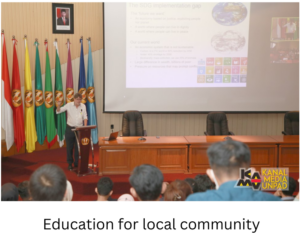
Universitas Padjadjaran is actively engaged in outreach educational initiatives that benefit the broader community, including alumni and local residents. These efforts are focused on fostering knowledge sharing, empowering communities, and promoting sustainable development, with a particular emphasis on education related to the Sustainable Development Goals (SDGs) in the wider community.
SDGs Education for Local Community through Community Service
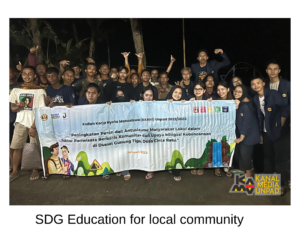
The Universitas Padjadjaran Community Service Team carried out activities to foster enthusiasm and community participation in Gunung Tiga Hamlet, Cintaratu Village, Parigi District, Pangandaran Regency, to revitalize the Jojogan Pangandaran Wonderhill tourist attraction, last January 2023. The Unpad Community Outreach team uses a community-based tourism (CBT) approach, which is sustainable tourism development that emphasizes the role of local communities and the benefits they will obtain. Previously, the team conducted research and interviews with stakeholders and local communities and made program plans using the design thinking method to develop appropriate programs according to community needs.
The team also took an emotional and sociocultural approach to the community and youth during the initial existence of the Unpad Community Outreach team in the village. Furthermore, the Unpad Community Outreach team conducted tourism awareness outreach on January 17, 2023, to apply behavioral science to youth organizations. This activity resulted in the formation of the Gunung Tiga Hamlet Tourism Awareness Group (Pokdarwis). The formation of this institution was then optimized through training conducted by the Community Outreach Team for local Pokdarwis on 23-30 January 2023. This training was adapted to the Pokdarwis sector, including tourism promotion training, copywriting, analysis of increasing tourist attractions through the SWOT method, making tourism promotional videography, optimizing social media, managing tourism cleanliness, security and order, and tourism cooperation processes. The Unpad Community Outreach team and Pokdarwis held a Forum Group Discussion to discuss long-term work programs for each field section in Pokdarwis Dusun Gunung Tiga. The Community Service Team saw that Gunung Tiga Hamlet and Jojogan Tourism are areas that are very rich in local wisdom. The art of tapping tilu/Ronggeng Gunung is one of them.
Related Link: Unpad Community Outreach on Jojogan Tourism Potential
Alumni Education on SDGs
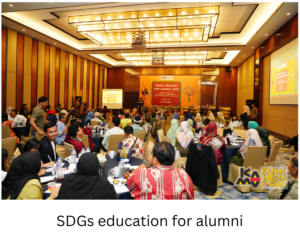
The Faculty of Agricultural Industrial Technology, Universitas Padjadjaran, held the x` at the Mason Pine Hotel, Kota Baru Parahyangan, on Saturday (14/10/2023). This activity was attended by FTIP alums from the class of 1985 to the class of 2018, and some of them have become prominent alums. The Chancellor of Unpad, Prof. Rina Indiastuti, attended this alum meeting event. On this occasion, the Chancellor hopes that this activity can provide input from various parties for the institution’s progress and make Unpad a world-class university.
An explanation of Unpad’s achievements in the two rankings was delivered by the Director of Research and Community Service (DRPM) Unpad, Prof. Rizky Abdullah, Apt., Ph.D. He explained that Unpad was ranked 427th in the subject of agriculture out of around 1,200 universities that focus on this field. He emphasized that this depends not only on academic reputation but also on the performance of alums, both as users and graduates. Prof. Rizky added that positive assessments from graduate users and alums’ performance greatly influenced Unpad’s reputation in the THE ranking.
Related Link: FTIP Unpad Alumni Gathering
Universitas Padjadjaran has assessment of sustainability knowledge. The assessment of sustainability knowledge at Universitas Padjadjaran aims to gauge the understanding and awareness of sustainable development principles among students, faculty, and the wider community. This evaluation helps identify knowledge gaps, refine the curriculum to better integrate sustainability across disciplines, and promote awareness and engagement in sustainable practices. Additionally, it tracks progress in aligning educational efforts with sustainability goals and the SDGs, while also guiding future research by highlighting areas for further exploration and innovation to address sustainability challenges.
Universitas Padjadjaran’s Commitment to Sustainability Literacy
As a campus committed to sustainability, Universitas Padjadjaran focuses on programs and education regarding sustainability. The delivery of sustainability literacy is integrated into classroom learning, with additional support from the SDGs Center at Universitas Padjadjaran.
An important indicator of the effectiveness of sustainability education is the assessment of sustainability literacy among students and staff. To monitor this, Universitas Padjadjaran encourages students and staff to complete the Assessment of Sustainability Knowledge (ASK). This assessment tool, developed by Zwickle and Jones (2018), measures insights related to three core aspects of sustainability:
- Environmental
- Economic
- Social
Respondents are asked to complete multiple-choice questions that align with their knowledge in these areas. This assessment helps monitor and promote sustainability literacy achievement at Universitas Padjadjaran.
Related Link: Assessment of Sustainability Knowledge (ASK)